What Is So Special About Hainanese Chicken Rice?
Ask ten Singaporeans what the national dish is and nine will say the same three words. It costs about the same as a bus ride at a hawker stall and just as easily costs thirty dollars on a hotel menu.
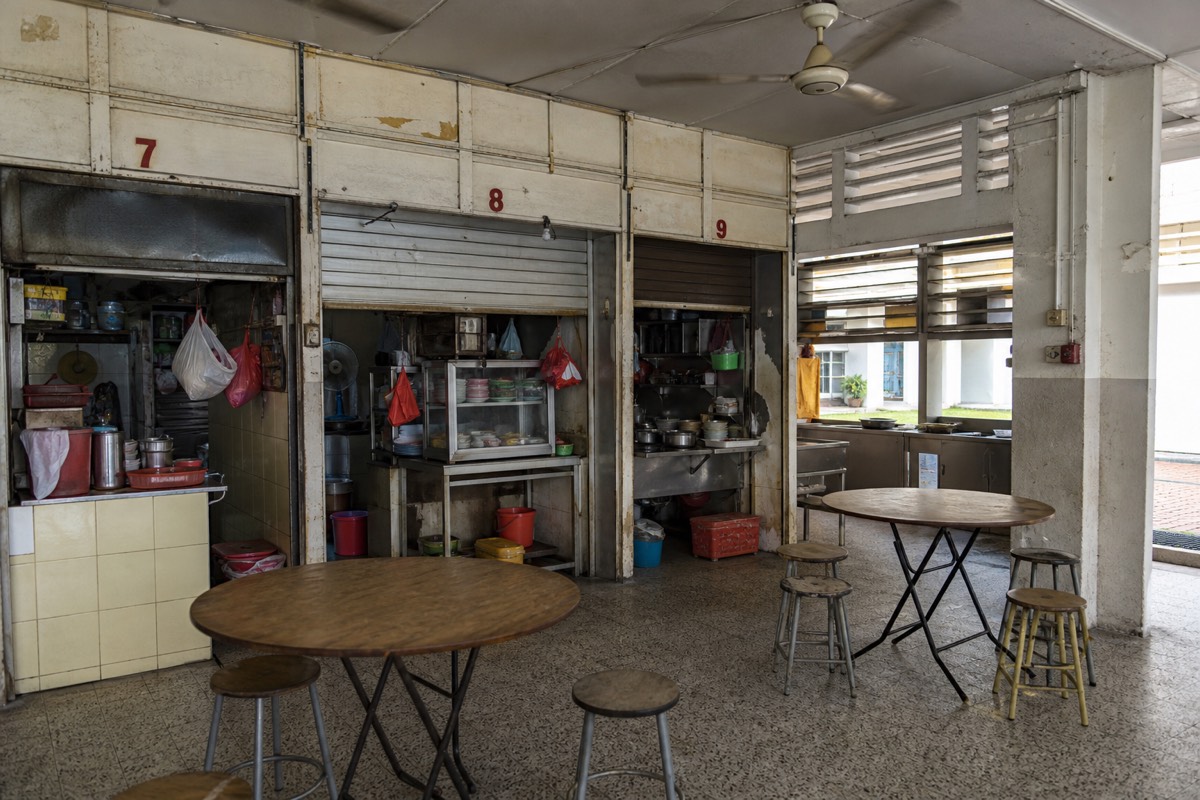
Ask ten Singaporeans what the national dish is and nine will say the same three words. It costs about the same as a bus ride at a hawker stall and just as easily costs thirty dollars on a hotel menu, and somehow both versions get ordered without complaint.
Why Did Such a Simple Dish Become Singapore's National Dish?
Hainanese chicken rice earned its status less because it's elaborate and more because it's everywhere and reliably good: Hainanese immigrants adapted Hainan Island's Wenchang chicken, once a dish served to higher-ranking officials, into a cheap, satisfying meal for early-20th-century Singapore, and the combination of poached chicken, rice cooked in the poaching stock and chicken fat, and a trio of dipping sauces became the dish nearly every hawker centre, food court and hotel restaurant in the country now serves in some form. The National Library Board's Infopedia entry notes that in the West the dish is sometimes known simply as "Singapore chicken rice," a sign of how completely the country made an imported recipe its own. Singapore's Roots portal, run by the National Heritage Board, also lists chicken rice as intangible cultural heritage in its own right. The rice itself is not an afterthought either: it's typically a fragrant long-grain rice cooked with pandan leaf, ginger and garlic in the reserved poaching stock and a spoonful of the chicken's own rendered fat, which is why plain steamed rice on its own can't really substitute for it. The dish has also spread well beyond Singapore itself, with dedicated chicken rice restaurants now common across the region and within the Singaporean diaspora abroad.
What Actually Separates a Great Plate From a Mediocre One?
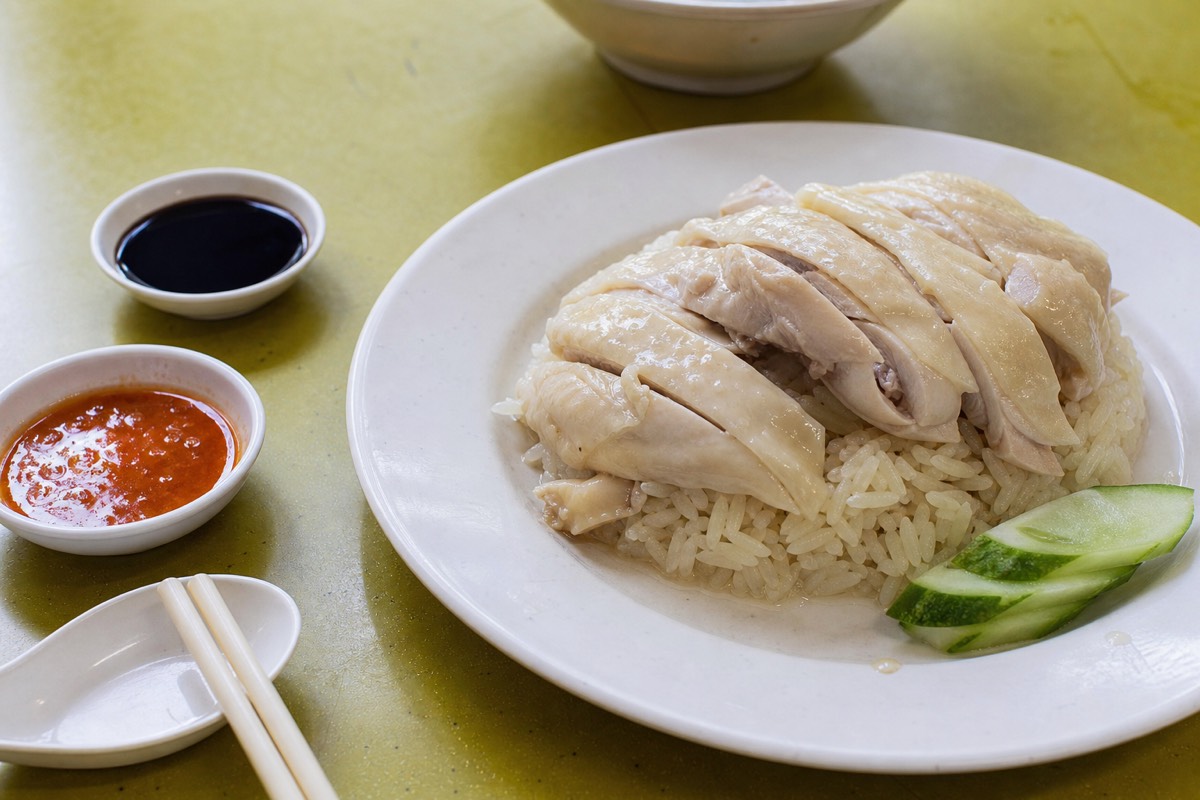
Three things separate a great chicken rice from an average one: the rice's fragrance, cooked in the poaching stock and chicken fat until every grain tastes faintly of the chicken itself, the chicken's texture, gently poached and then shocked in ice water for a silky, barely-set skin that's never dry or stringy, and a properly balanced trio of dipping sauces rather than one dominant condiment. Skip any one of the three and the dish falls apart: bland rice makes even a perfectly poached chicken taste unfinished, and an overcooked, dry chicken can't be rescued by good rice or good sauce. Many stalls also offer a roasted or soy-marinated chicken alongside the classic steamed version, for diners who want a firmer texture and a more savoury, caramelised skin; it's a legitimate variation rather than a lesser option, and regulars often order a mix of both on the same plate. Portion and cut matter as well: a stall that hand-chops the chicken to order, rather than pre-cutting a batch that sits under a heat lamp, tends to serve meat that's noticeably juicier by the time it reaches the table.
What Are the Three Sauces, and What Do They Actually Do?
A proper serving comes with three separate condiments: a garlicky ginger-scallion paste for aromatic richness, a chilli-garlic sauce usually sharpened with lime for heat, and a dark, slightly sweet soy sauce for a savoury base, and the intended way to eat the dish is to mix small amounts of all three into each bite rather than pick a favorite. Each sauce is doing a different job, and a stall that serves a weak or watered-down version of any one of the three is usually cutting a corner somewhere else in the kitchen too. The chilli sauce in particular varies more than the other two: some stalls blend in ginger for extra sharpness, others lean harder on garlic or add a touch of the poaching stock to loosen the texture, which is part of why the same three-sauce format can taste noticeably different from one stall to the next.

| Sauce | Main ingredients | What it adds |
|---|---|---|
| Ginger-scallion | Ginger, scallion, oil, salt | Aromatic richness |
| Chilli-garlic | Chilli, garlic, lime, sugar | Heat and acidity |
| Dark soy | Soy sauce, sometimes sugar | Savoury-sweet base |
What's the Michelin Connection?
Tian Tian Hainanese Chicken Rice at Maxwell Food Centre earned a Michelin Bib Gourmand in 2017, and its stall was previously praised on Anthony Bourdain's travel shows, both of which turned an already-popular stall into one with a queue that regularly stretches well past lunchtime. Per the Michelin Guide's own profile of the stall, it remains one of the most recognizable single-dish success stories to come out of Singapore's hawker scene. Tian Tian isn't the only Singapore chicken rice stall Michelin has recognised, either: the Bib Gourmand list has included other well-regarded chicken rice specialists in various years, among them Tiong Bahru Hainanese Boneless Chicken Rice, which suggests the competition among stalls has stayed genuinely close rather than settling on one undisputed best. For a full rundown of where Tian Tian sits within Maxwell Food Centre and what else is worth ordering there, see our Maxwell Food Centre guide, and for a wider list of stalls, cuts and where-to-eat advice for chicken rice specifically, our complete Hainanese chicken rice guide goes deeper than this piece is trying to.
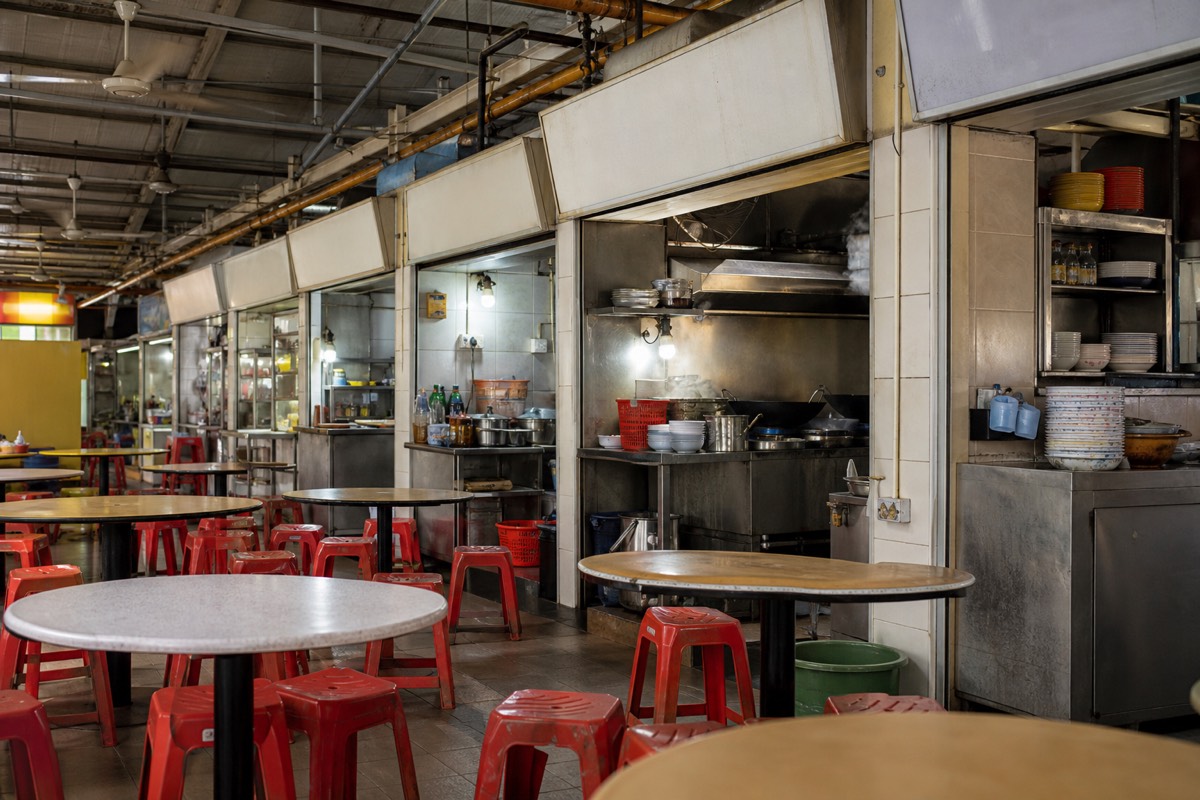
Chicken rice isn't the only hawker dish carrying Michelin recognition either; our guide to what the Bib Gourmand actually means and where to find it covers the wider list, and our roundup of Singapore's best hawker centres is a good starting point if Maxwell isn't convenient for where you're staying. Either way, the dish rewards patience over speed: a stall with a genuine queue is usually cooking each batch of chicken to order rather than holding a large batch under a heat lamp, which is exactly the kind of small operational choice that separates the memorable plates from the merely fine ones.