Best Hawker Centres in Singapore: Maxwell, Lau Pa Sat, Chinatown Complex & More
Twenty minutes on foot can take you from a Victorian cast-iron market serving satay under string lights to a plain three-storey hawker complex with more Michelin recognition per floor than anywhere else on the island.
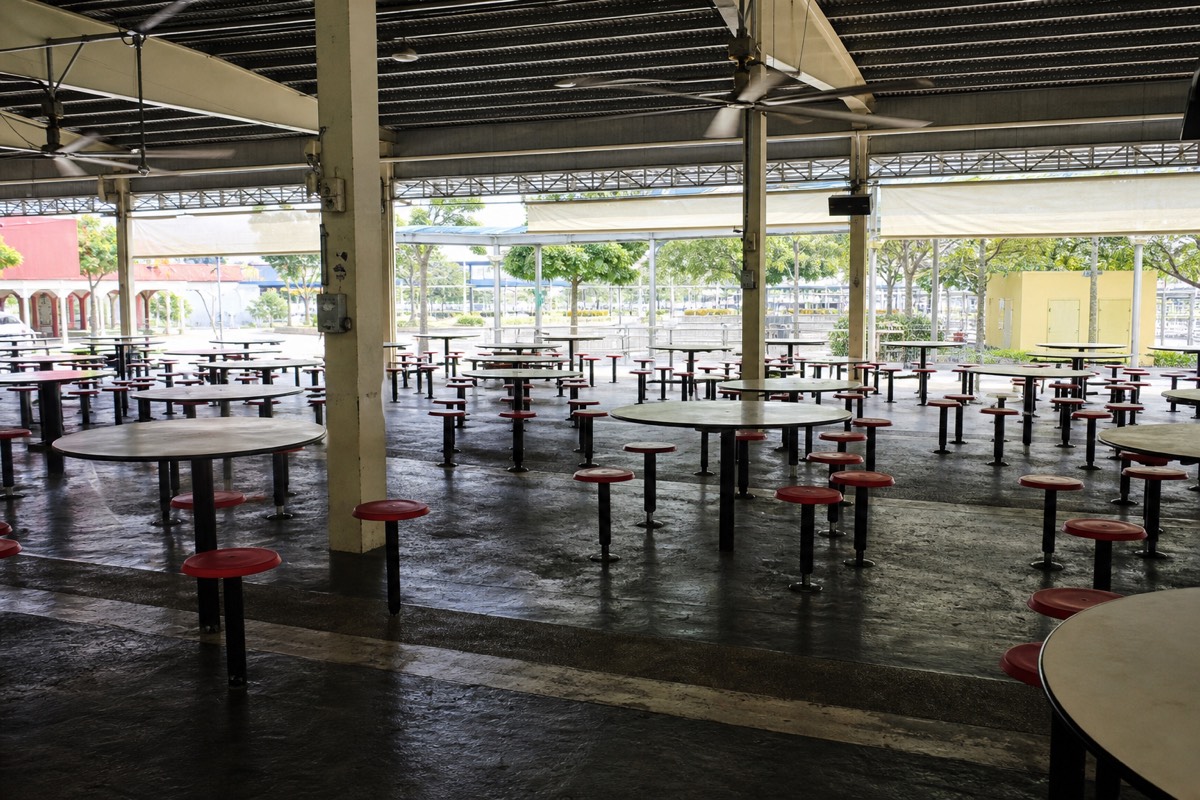
Singapore's hawker centres aren't interchangeable, and treating them that way is how visitors end up standing in the wrong queue at the wrong hour. Some buildings are effectively lunch-only. One turns into a completely different place after 7pm. Another spent the first half of 2026 closed for renovation and only reopened in May. This roundup lines up the ones that actually matter for a short trip, compares them honestly, and points to the deeper guide for each so you're not relying on a single paragraph to plan an entire afternoon.
There are dozens of hawker centres scattered across Singapore's neighbourhoods, and most of them serve their immediate residents perfectly well without ever showing up on a visitor's radar, which is exactly as it should be. The eight covered here earned their place on this list for a specific reason each, whether that's Michelin recognition, film history, architecture, or simply being where a particular dish is done best. This isn't an exhaustive directory. It's a shortlist built for someone with limited days in the city and a real appetite to spend well, whether that means one focused afternoon or a longer trip stretched across several neighbourhoods.
Singapore Hawker Landmarks by Age
Years of history calculated from each landmark's known opening or reopening date to 2026; approximate, for illustration.
What Makes a Hawker Centre Worth the Trip?
The hawker centres worth prioritising combine three things: a genuine cluster of well-regarded or Michelin-recognised stalls, a manageable size so you're not lost among two hundred near-identical counters, and a time window when the place is actually lively rather than half-shuttered. Size alone is a trap. Singapore's largest hawker centres can run past two hundred stalls, and without a plan you'll wander past dozens of forgettable ones before finding anything worth the calories. Timing matters just as much as the building itself: some centres are effectively lunch-only, thinning out to almost nothing by evening, while others don't properly wake up until well after dark. Matching your visit to a centre's own rhythm, rather than assuming every hawker centre works the same way, is the single biggest difference between a good afternoon and a wasted one.
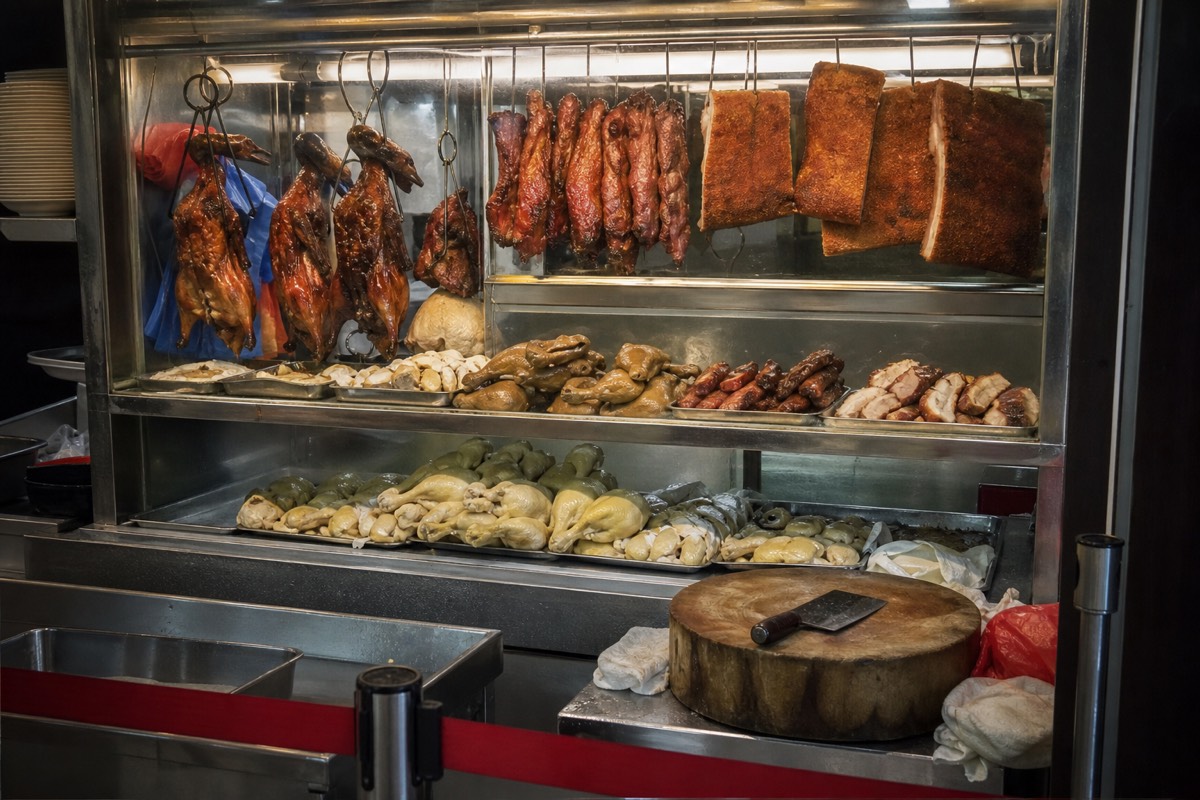
It also helps to decide in advance what you're actually optimising for on a given visit. Someone chasing Michelin-recognised stalls wants Chinatown Complex or Maxwell. Someone chasing atmosphere and photographs wants Lau Pa Sat after dark or Newton's neon-lit satay stalls. Someone who just wants an honest, unpretentious meal away from any tour group wants Old Airport Road or Tiong Bahru Market. None of these goals are wrong, but conflating them, expecting a quiet neighbourhood market to feel like a bucket-list landmark, or expecting a famous tourist stop to feel undiscovered, is where disappointment usually comes from. Pick one primary goal for each hawker centre visit rather than trying to have all three at once, and the choice of which one to visit next tends to make itself.
Singapore's Best Hawker Centres Compared at a Glance
Maxwell, Lau Pa Sat and Chinatown Complex cover most of what a short trip needs, while Newton, Old Airport Road, Tekka, Amoy Street and Tiong Bahru Market round out the picture for anyone with a few extra afternoons to spend. The table below lines up location, what each is actually known for, and the best time to show up, based on each centre's real operating pattern rather than a generic "hawker centres are open all day" assumption that doesn't hold for several of these.
Read the crowd-level column as seriously as the location column. A hawker centre that's "very high" at its peak isn't a warning to avoid it, most of these earn that crowding, but it is a reason to build in extra time for queuing, or to deliberately arrive thirty to sixty minutes before the peak window starts. The centres marked moderate throughout the day are generally the easier ones to slot into a packed itinerary without needing to plan around a specific hour.
Notice, too, how differently these eight sit on the map. Maxwell, Lau Pa Sat, Chinatown Complex and Amoy Street all cluster within a walkable stretch of the CBD and Chinatown, close enough that an ambitious visitor could realistically string two or three of them into one day. Newton, Old Airport Road, Tekka and Tiong Bahru Market are each a deliberate separate trip, further out and worth planning around rather than squeezing in as an afterthought. Knowing which category a hawker centre falls into before you set out saves a surprising amount of wasted transit time.
| Hawker centre | Location / MRT | Known for | Best time | Crowd level |
|---|---|---|---|---|
| Maxwell Food Centre | Chinatown; Tanjong Pagar MRT (1 min) or Chinatown MRT (5-10 min) | Tian Tian chicken rice, Bib Gourmand stalls | Weekday mid-morning, before the lunch rush | High at lunch, moderate other times |
| Lau Pa Sat | Raffles Place / CBD; Raffles Place MRT Exit B (3 min) or Telok Ayer MRT (5 min) | Satay Street, Victorian cast-iron architecture | Weekday lunch for hawker fare, after 7pm for satay | Very high on weekday lunch and evening satay hours |
| Chinatown Complex | Chinatown; Chinatown MRT | Singapore's largest hawker centre, densest Michelin Bib Gourmand cluster | Weekday late morning | High, busiest on weekends |
| Newton Food Centre | Newton Circus; Newton MRT | Satay, Hokkien mee, sambal stingray, Crazy Rich Asians filming location | After 6pm | High evenings; watch pricing at unmarked stalls |
| Old Airport Road Food Centre | Geylang / Mountbatten; Dakota MRT (5 min walk) | Char kway teow, prawn noodles, satay, a genuine local favourite | Lunch or dinner | Moderate to high, mostly locals |
| Tekka Centre | Little India; Little India MRT (right outside) | Indian and halal food, biryani, prata; also a wet market | Morning to early afternoon | Moderate, busiest late morning |
| Amoy Street Food Centre | Tanjong Pagar / CBD; Tanjong Pagar MRT (7 min) or Telok Ayer MRT (5 min) | Michelin-listed lunch spots for the office crowd | Weekday lunch only | Very high weekday lunch, near-empty evenings and weekends |
| Tiong Bahru Market | Tiong Bahru; Tiong Bahru MRT Exit B (under 10 min) | Chwee kueh, combined wet market and hawker centre | Early morning, breakfast hours | Moderate, busiest before 9am |
Maxwell Food Centre: Best for Chicken Rice in a Compact Space
Maxwell Food Centre is small enough to cover in under an hour, centred on Tian Tian Hainanese Chicken Rice, and has quietly become a celebrity magnet in its own right. Dua Lipa named it among her favourite food spots worldwide in a Google Maps collaboration and visited before a Singapore concert, posting about coconut juice, soya beancurd and, inevitably, chicken rice. Lady Gaga made a surprise stop of her own, sitting near the Fortune Popiah stall and ordering Tian Tian's chicken rice alongside a Milo Dinosaur. Neither visit changed what the food actually is, which is the point: Maxwell earned its reputation through consistency long before either singer showed up. For the full stall-by-stall breakdown, queue timing and what to order beyond the chicken rice, see the Maxwell Food Centre visitor guide, and for more on who else has eaten here, where did Dua Lipa and Lady Gaga eat in Singapore covers both visits in full.
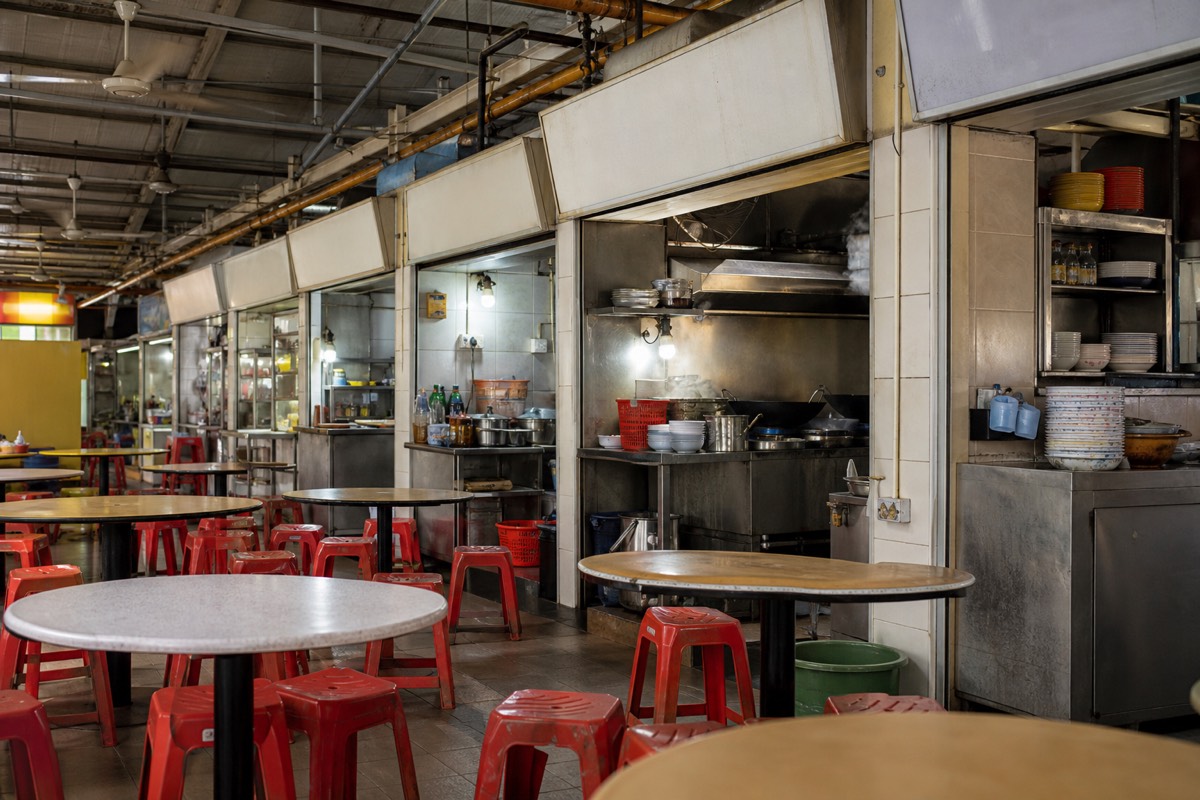
What actually makes Maxwell work for a first-time visit is scale. It's one open hall rather than a multi-storey maze, so you can walk the full perimeter, see roughly what's on offer, and commit to an order within about ten minutes, something that's genuinely difficult at a two-hundred-stall complex on a first visit. Beyond Tian Tian, the centre also carries a reasonable spread of other cuisines, so a group with different preferences isn't stuck ordering the same dish four times.
| Maxwell Food Centre | Detail |
|---|---|
| Nearest MRT | Tanjong Pagar (1 min walk) or Chinatown (5-10 min) |
| Signature stall | Tian Tian Hainanese Chicken Rice, Michelin Bib Gourmand since 2017 |
| Best for | A focused, first-visit hawker experience without an overwhelming stall count |
Lau Pa Sat: Best for Satay Street and Colonial Architecture
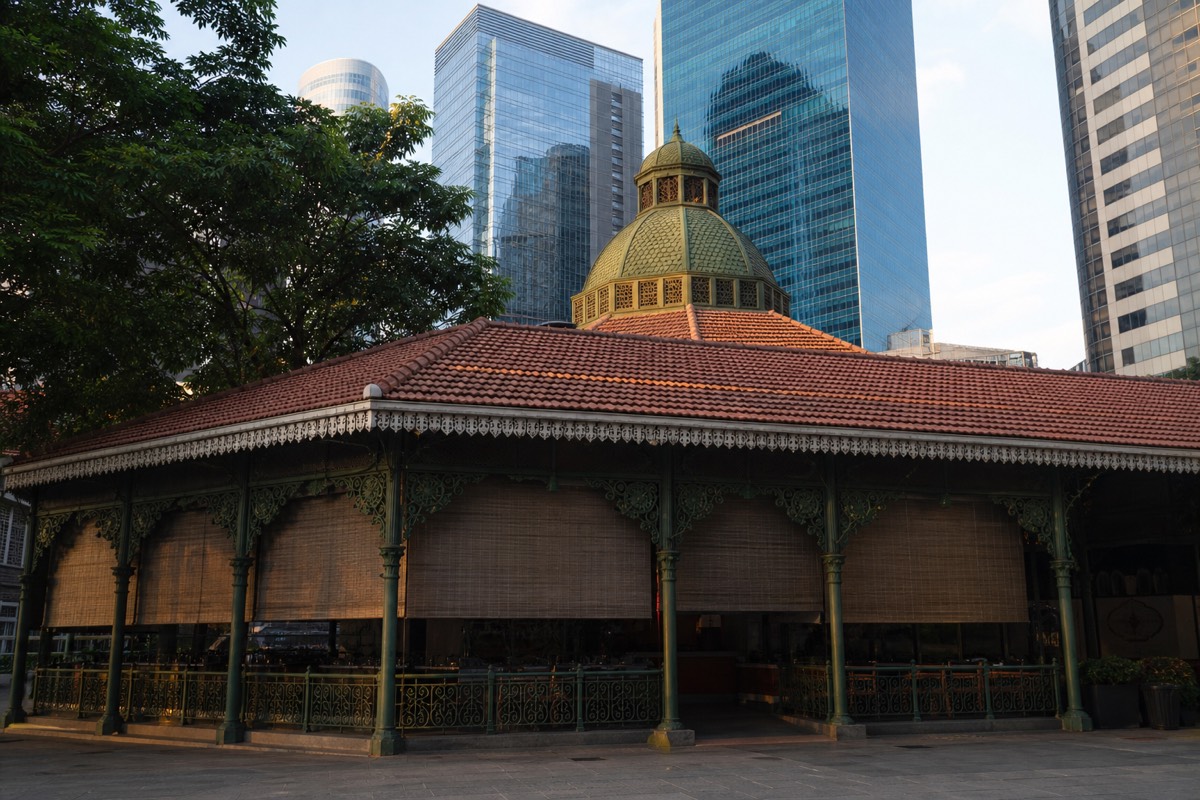
Lau Pa Sat is a Victorian-era cast-iron market building completed in 1894, gazetted a national monument, and by night it hosts Satay Street, where Boon Tat Street closes to traffic for open-air charcoal grills. The building itself, formerly Telok Ayer Market, was one of the first structures in Asia built from prefabricated cast iron shipped in from Glasgow, according to the National Library Board's account of its history, and it earned national monument status in 1973, decades before it became a food destination. During the day it functions as a fairly ordinary CBD hawker centre serving the surrounding office towers. After roughly 7pm on weekdays, and from mid-afternoon on weekends, Satay Street takes over the street outside and the atmosphere shifts entirely. The full visitor guide, including hours, parking and which MRT exit to use, is at the Lau Pa Sat guide.
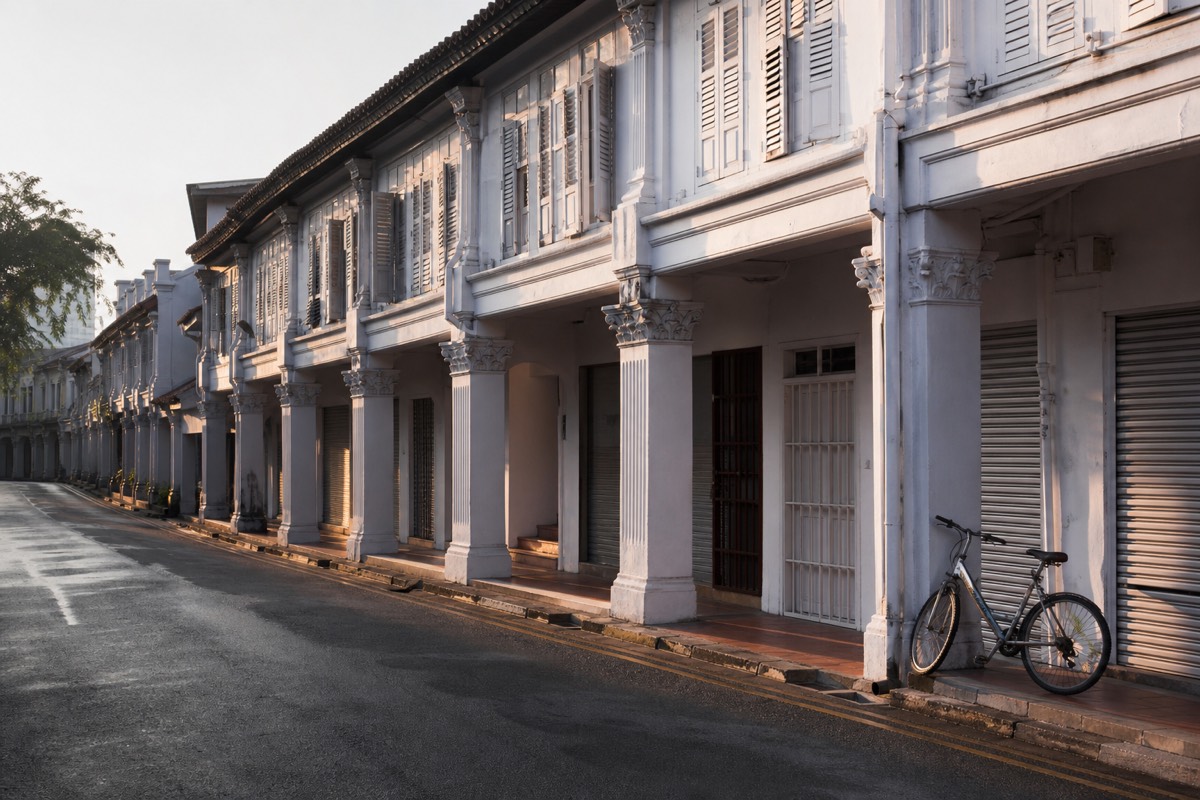
Lau Pa Sat is also the rare hawker centre where the building itself is worth the visit independent of the food. The octagonal cast-iron frame and clock tower are genuinely photogenic in a way that a functional 1970s or 1980s hawker block generally isn't, which is part of why it appears so often in Singapore's own tourism marketing. Just be aware that daytime hawker fare inside the market and evening satay outside on the street are, in effect, two different experiences under one name, and confusing the two is a common first-timer mistake.
| Lau Pa Sat | Detail |
|---|---|
| Built | 1894, national monument since 1973 |
| Satay Street hours | Roughly 7pm-3am weekdays, 3pm-3am weekends |
| Best for | Evening satay and the most photogenic building of the bunch |
Chinatown Complex: Best for Michelin Bib Gourmand Density
Chinatown Complex Food Centre is Singapore's largest hawker centre, with roughly 260 cooked-food stalls, and it holds the highest concentration of Michelin-recognised names of any single hawker building in the city. Earlier in 2026 the complex closed for a three-month "R&R Plus" renovation overseen jointly by HDB and NEA, adding more lifts, better lighting and higher-velocity fans, and it reopened on 31 May 2026. It's operating normally now, and the upgrades are a genuine improvement rather than something to work around. This is also where hawker culture made global headlines: Liao Fan Hawker Chan won the world's first Michelin star ever awarded to a hawker stall here in 2016. The full history and current stall picture is in the Chinatown Complex food centre guide, and the Michelin angle specifically is covered in the Michelin Bib Gourmand Singapore guide.
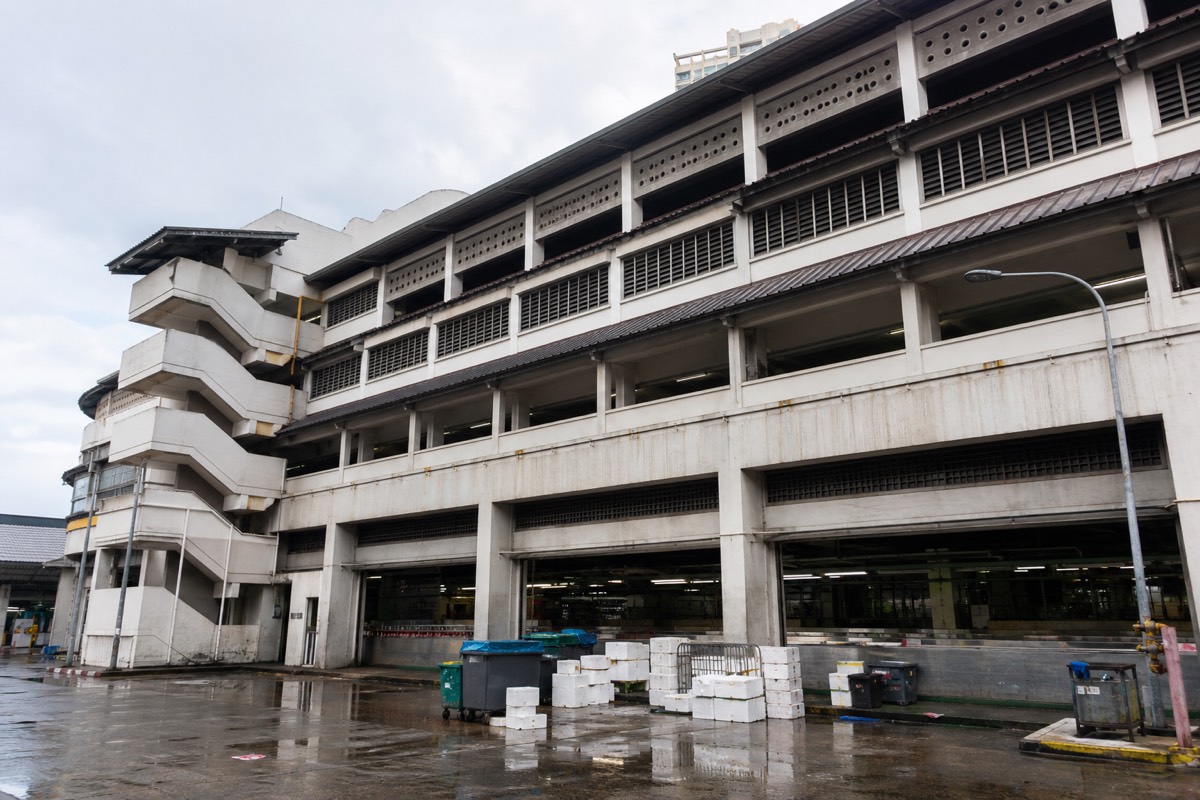
The scale here is the real challenge for a visitor. Two hundred and sixty cooked-food stalls spread across two upper floors, plus a wet market on the ground floor, is genuinely disorienting without at least a rough plan, and the building's layout hasn't always been praised for being intuitive, part of why the 2026 renovation specifically targeted signage and lighting rather than just cosmetics. Going in with three or four specific stall names already picked out, rather than hoping to wing it, is the difference between an efficient two-hour visit and an hour lost circling the same floor.
| Chinatown Complex | Detail |
|---|---|
| Size | Roughly 260 cooked-food stalls, Singapore's largest hawker centre |
| 2026 status | Closed for renovation, reopened 31 May 2026, open normally now |
| Best for | The densest cluster of Michelin-recognised hawker stalls anywhere in Singapore |
Newton, Old Airport Road and Tekka: Three More Worth a Detour
Newton Food Centre earns its fame from film and satay, Old Airport Road is where locals send visiting friends rather than tourists, and Tekka Centre is the place to go for Indian and halal hawker food near Little India. Newton is the hawker centre where the eating-spree scene from Crazy Rich Asians was filmed, with Nick, Rachel, Colin and Araminta working through Hokkien mee, satay and sambal stingray, according to reporting on the film's Singapore filming locations; it also carries a longstanding reputation for touting and overcharging at a handful of unmarked stalls, so it rewards going with a specific plan rather than wandering in cold. Old Airport Road, by contrast, has been called one of the best hawker centres in Singapore by local food writers precisely because it skews toward residents rather than visitors, and its char kway teow and prawn noodle stalls back that reputation up. Tekka Centre sits right outside Little India MRT and functions as both a wet market and a hawker centre, its stalls leaning heavily Indian and halal, strong on biryani, prata and rojak. All three get the fuller stall-by-stall treatment in Newton, Old Airport Road and Tekka: three more hawker centres worth a detour, and the Crazy Rich Asians connection specifically is unpacked in which hawker centre was featured in Crazy Rich Asians.
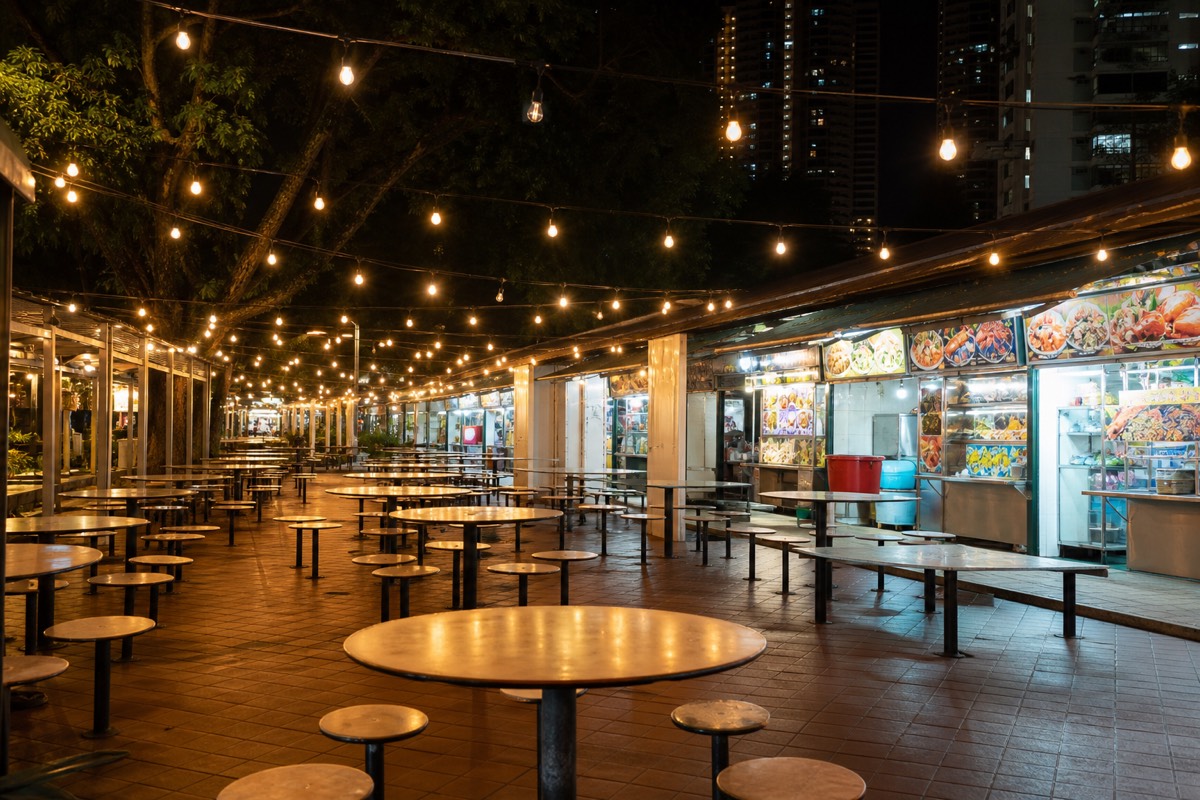
These three don't cluster near each other geographically the way Maxwell and Chinatown Complex do, so treat them as separate outings rather than one combined route. Newton pairs naturally with an evening in the Orchard Road area given its proximity to Newton and Novena MRT. Old Airport Road sits further east and rewards a visitor who's already spending a day around Katong or the East Coast. Tekka slots naturally into a morning spent exploring Little India on foot, market included, since it functions as much as a neighbourhood market as a food destination.
| Hawker centre | Known for | Watch out for |
|---|---|---|
| Newton Food Centre | Satay, Hokkien mee, sambal stingray, film history | Touting and overcharging at some unmarked stalls |
| Old Airport Road Food Centre | Char kway teow, prawn noodles, a strong local following | Less central, plan a bit of extra travel time |
| Tekka Centre | Indian and halal food, biryani, prata, also a wet market | Ground floor market can be crowded and pungent for the unprepared |
Amoy Street and Tiong Bahru Market: Where Office Workers and Locals Actually Eat
Amoy Street Food Centre is a CBD lunch spot built around the office crowd rather than tourists, while Tiong Bahru Market is Singapore's first purpose-built hawker centre, dating to 1951, and still runs as a genuine neighbourhood market. Amoy Street opened on 11 April 1983 with 134 stalls and today counts several Michelin-listed names among them, but it empties out almost completely once the CBD's offices close for the evening, so it only really makes sense as a weekday lunch stop. Tiong Bahru Market operates on the opposite rhythm: mornings, not lunch, are when it's busiest, largely because of Jian Bo Shui Kueh, a stall founded in 1958 and considered by many food writers to be Singapore's benchmark for chwee kueh, the steamed rice cakes topped with preserved radish and dried-shrimp sambal. Both centres reward visitors willing to work around a local schedule rather than a tourist one.
Neither Amoy Street nor Tiong Bahru Market markets itself to tourists the way Lau Pa Sat or Chinatown Complex increasingly does, and that's exactly their appeal for a visitor who's already covered the bigger names. Amoy Street's lunchtime crowd is almost entirely office workers from the surrounding CBD towers, which means portion sizes, pacing and pricing are all geared toward someone with a forty-five-minute lunch break rather than a leisurely food crawl, worth knowing before you sit down expecting to linger. Tiong Bahru Market sits inside one of Singapore's oldest public housing estates, and the neighbourhood around it, art deco apartment blocks, independent cafes, secondhand bookshops, is worth the trip even on a morning when the chwee kueh queue is short.
| Hawker centre | Opened | Best time |
|---|---|---|
| Amoy Street Food Centre | 1983 | Weekday lunch, CBD office hours |
| Tiong Bahru Market | 1951, first purpose-built hawker centre | Early morning, before 9am |
Hawker Centre Etiquette and First-Timer Tips
The two rules that trip up most first-timers are chope culture, reserving a table with a packet of tissues rather than by sitting at it, and tray return, which is now expected at every hawker centre rather than optional. Beyond those two, the basics carry across every hawker centre on this list: queue single file, have small notes ready since many stalls are still cash-preferred, and don't assume a stall is open just because the building is, since individual vendors keep their own hours and rest days on top of the centre's schedule. If you're trying to decide whether a hawker centre or an air-conditioned food court better suits a particular meal, what's the difference between a hawker centre and a food court breaks that down directly. For the complete rundown of unwritten rules before your first visit, the hawker centre etiquette guide covers it in full, and the best hawker food in Singapore guide is a good next stop for a dish-by-dish primer once you've picked a centre.
A short mention of budget is worth making here too, since it varies more than first-time visitors expect. A plate of noodles or rice at any of these eight centres typically runs a few dollars, but specialty items, whole crabs, larger seafood orders, satay sold by the stick, add up quickly if you're not tracking it, and Newton in particular has a documented history of unmarked pricing catching tourists off guard. Asking the price before ordering anything without a menu board is a habit worth carrying into every hawker centre on this list, not just the ones with a reputation for it.
One last practical note that applies across every hawker centre on this list: none of them run on air conditioning the way a mall food court does. Ceiling fans and open sides keep the air moving, but Singapore's heat and humidity are a real factor in how long you'll want to stay in one sitting, especially over a plate of something hot like bak kut teh or char kway teow straight off the wok. Locals manage this by ordering a cold drink alongside their meal as a matter of course, and pacing a longer hawker crawl around the coolest parts of the day is a genuinely useful habit to borrow rather than a tourist affectation.
| First-timer tip | What to know |
|---|---|
| Chope | A packet of tissues on a table reserves it while you order; it's a real, widely respected convention |
| Tray return | Clear your own tray and used tableware to a designated point when you finish |
| Payment | Carry cash; card and PayNow acceptance still varies stall by stall |
| Rest days | Individual stalls and entire centres rotate cleaning and rest days, check before a special trip |