Hainanese Chicken Rice: Singapore's National Dish Explained
Order chicken rice anywhere outside Singapore and you'll get confused looks. Order it here and someone will ask back: poached or roasted, thigh or breast, and which stall you're planning to queue at.
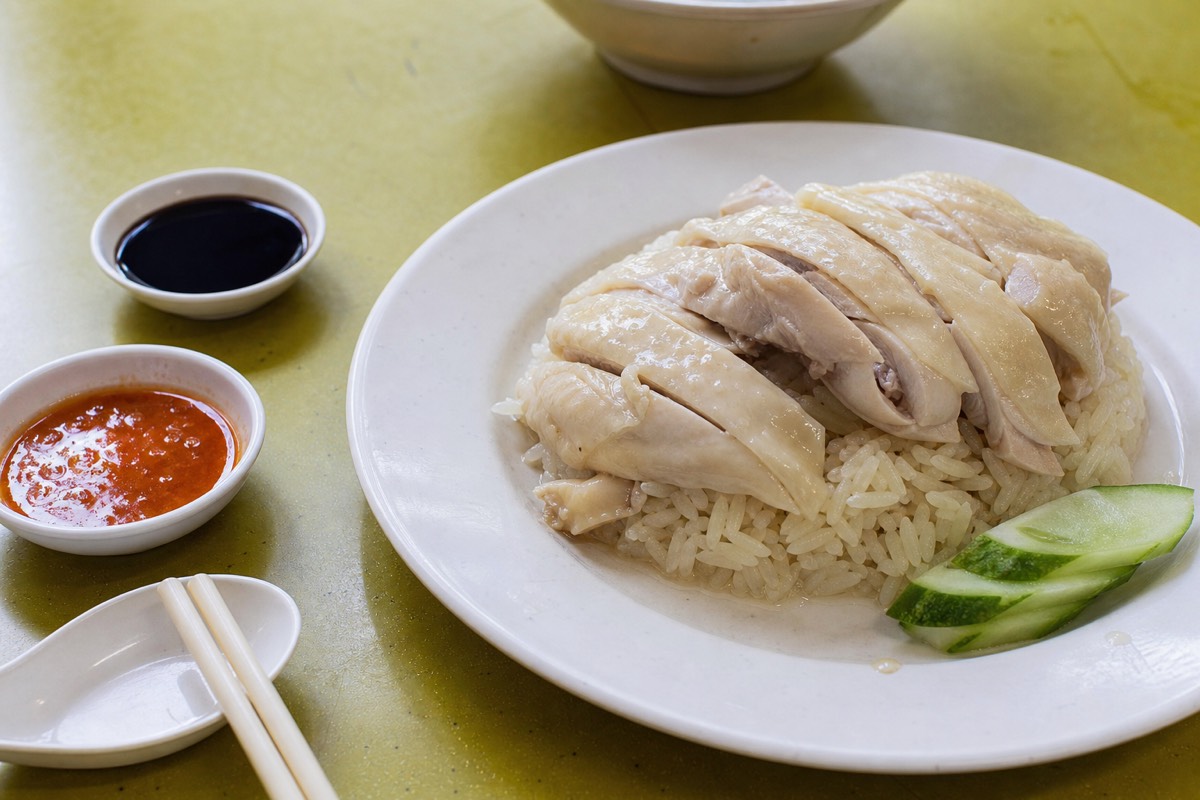
What lands on the plate is simple to describe: a whole chicken, usually poached gently, sometimes roasted, a mound of rice cooked in the chicken's own fat and stock, a few slices of cucumber, and three small sauces that do most of the flavour work. It costs a few dollars, takes minutes to eat, and somehow carries more than a century of migration history in every spoonful.
Locals rank stalls, argue about poached versus roasted, and treat the dish as a kind of shorthand for what Singapore food is supposed to taste like. None of that is exaggeration for a guidebook. Ask ten Singaporeans for their favourite chicken rice and you'll likely get ten different answers, each defended at length.
It also travels unusually well as a subject, for a dish this plain-looking. Chicken rice shows up on best-of-Asia food lists, in television segments filmed thousands of miles from Singapore, and in the sort of debate that food writers return to every few years without ever quite resolving it. This guide covers where the dish came from, how it's actually made, which stalls carry real recognition, and what a first-time visitor should expect to pay and order.
How chicken rice became Singapore's national dish: a rough timeline
Dates are drawn from Singapore's Roots heritage portal, the Michelin Guide and UNESCO records; the earliest immigration and shop-opening years are approximate ranges rather than exact dates.
What Exactly Is Hainanese Chicken Rice?
Hainanese chicken rice is a plate of chicken, either gently poached or roasted, served over rice cooked in rendered chicken fat, garlic, ginger and stock, plated with sliced cucumber and three sauces: dark soy, chilli-ginger and pounded ginger. It's the dish most Singaporeans point to first when asked what to eat, and it's widely treated as the country's national dish.
The name gives away the origin without quite explaining it. It's Hainanese in style, not a dish eaten in exactly this form on Hainan itself, but an adaptation built by Hainanese cooks after they settled in Singapore. What separates it from a generic "steamed chicken with rice" found elsewhere in Asia is the specific loop of ingredients: the fat rendered from the chicken skin goes into the rice pot rather than down a drain, and the stock the chicken poaches in becomes the cooking liquid for that same rice. Nothing about the dish is wasted, and that frugality, one chicken flavouring both the meat and the starch, is part of what makes it feel complete on a plate that costs so little.
Portion size matters too. A single serving is usually built around a quarter or half chicken, cut through the bone into pieces small enough to eat with chopsticks, arranged over or beside the rice rather than mixed into it. Presentation stays plain by design: no garnish beyond cucumber, maybe a sprig of coriander. The dish doesn't need dressing up, because the rice and the sauces carry most of the flavour that visitors mistake for coming from the chicken alone.
Most stalls also serve a small bowl of clear soup alongside the plate, usually made from the same poaching stock, sometimes with a few slices of winter melon or a scattering of spring onion. It isn't strictly part of the dish and it's rarely charged separately, but skipping it means missing a second, quieter demonstration of how far one chicken and one pot of stock can be stretched across a meal.
Quick fact: Singapore's hawker culture, the tradition of open-air food centres that chicken rice is most closely associated with, was inscribed on UNESCO's Representative List of the Intangible Cultural Heritage of Humanity on 16 December 2020, Singapore's first item on that list.
Where Did Hainanese Chicken Rice Actually Come From?
Hainanese chicken rice descends from Wenchang chicken, a poached-chicken dish from Wenchang in Hainan, China, that Hainanese immigrants brought to Singapore roughly between the 1860s and the 1930s and adapted using local ingredients and technique. It doesn't exist in that exact form in Hainan today; it became distinctly Singaporean over the following century.
Wenchang chicken uses a specific chicken breed with a documented history running back more than 400 years, poached whole and served simply with rice cooked in the poaching stock, according to Singapore's Roots portal for intangible cultural heritage, which traces the dish's lineage. When Hainanese migrants arrived in Singapore during the tail end of the 19th century and into the 1930s, many found work as domestic cooks in colonial households, in hotel kitchens, and eventually running their own small eating houses. Fresh Wenchang chickens weren't available locally, so cooks substituted what was, adjusting the seasoning, the rice technique and the accompanying sauces to match Singapore's markets and its multicultural customer base.
Some of the earliest dedicated chicken rice businesses in Singapore date to the 1930s and 1940s. Yet Con, Chin Chin Eating House and Swee Kee Chicken Rice are among the names most often cited as pioneers of the dish's local form. By the time purpose-built hawker centres began housing street food vendors from the 1970s onward, chicken rice was already an everyday dish rather than a specialty item, which is a large part of why it ended up on the menu of nearly every one of them. Today it's common to hear the dish described, sometimes only half-jokingly, as Singapore's national dish, a status that reflects the same story on repeat: an immigrant recipe reshaped by a new home until it belonged there more than anywhere else.
It's worth remembering, too, that Hainanese immigration was one thread among several. Cantonese, Hokkien, Teochew and Hakka communities arrived in overlapping waves and each left their own dishes on Singapore's hawker menus. Chicken rice happens to be the one that crossed over hardest into becoming a shared, everyday meal rather than staying inside one dialect group's food culture, eaten today by Singaporeans of every background rather than treated as a specifically Hainanese specialty.
The Hainanese community itself was, historically, one of the smaller Chinese dialect groups in Singapore, arriving later than the Hokkien and Teochew communities who had already claimed much of the established trade and shipping work by the time larger numbers of Hainanese migrants landed. That timing pushed many toward domestic service and food work almost by necessity rather than by trade tradition, which is part of why a dish built for hospitality work, cooking to please someone else's table, ended up becoming the community's most lasting culinary export.
Poached or Roasted: What's the Difference?
Poached chicken rice, sometimes called bai zhan or "white cut," uses chicken gently simmered then shocked in ice water for silky, almost jelly-like skin and delicate flavour. Roasted chicken rice is marinated and roasted or char-grilled for firmer meat, a deeper savoury crust and more assertive seasoning. Most stalls that offer both will also sell soy-sauce braised chicken as a third option.
Poached is the older, more traditional version, and the one most closely tied to the dish's Hainanese roots. The gentle cooking keeps the meat tender and the skin slippery rather than crisp, and the flavour depends almost entirely on the quality of the stock and the freshness of the bird. Roasted chicken rice developed later, borrowing technique from Cantonese roast-meat traditions: the skin gets brushed with a maltose or soy glaze before roasting, so it comes out with more colour, more chew and a smokier edge. Neither version is more "correct." They're different enough that regulars tend to pick one early and stick with it for years.
A handful of stalls also sell drunken chicken or ginger-scallion chicken as further variations, but poached, roasted and soy-braised cover what's on offer at the large majority of hawker stalls across the island.
Spotting the difference at the counter is easier than it sounds once you know what to look for. Poached chicken hangs pale, almost translucent at the skin, often with a light sheen of oil brushed on after cooking to keep it from drying out under the display lamp. Roasted chicken is visibly darker, with a glazed, sometimes lacquered-looking skin and occasional char marks where the glaze caught heat unevenly. Soy-braised chicken sits somewhere between the two in colour but leans distinctly reddish-brown rather than golden, closer to what a Cantonese soy chicken looks like.
| Style | How it's cooked | What it tastes and feels like | Good choice if... |
|---|---|---|---|
| Poached (bai zhan) | Simmered gently in stock, then shocked in ice water | Silky, tender, delicate, skin slightly gelatinous | You want the classic, original-style version |
| Roasted | Marinated, then roasted or char-grilled | Firmer meat, crisp glazed skin, smokier and more seasoned | You prefer more char and bolder flavour |
| Soy-sauce braised | Braised whole in a dark soy and spice marinade | Deep mahogany skin, sweet-salty, softer texture | You want something closer to soy chicken found elsewhere in Asia |
The Rice and the Three Sauces: What Actually Makes It Taste Like Chicken Rice
Cooks fry rice grains in rendered chicken fat and garlic before cooking them in the stock the chicken poached in, often with a knot of pandan leaf and a few slices of ginger, so the rice absorbs the bird's flavour before the meat even arrives at the table. Three sauces on the side, dark soy, chilli-ginger and pounded ginger paste, let diners adjust salt, heat and warmth to their own taste.
Ask most Singaporeans what actually separates a good chicken rice stall from an average one, and they'll talk about the rice before the chicken. It's the harder thing to get right: too little fat and it tastes bland, too much and it turns heavy. The grains need to stay separate and glossy rather than clumping, and the pandan and ginger should register as background aroma, not as flavours a diner can pick out directly. A stall that nails the rice can get away with slightly ordinary chicken; the reverse rarely works nearly as well.
The sauces matter almost as much as the rice. Dark soy is the simplest, a slightly sweetened, thickened soy sauce spooned directly over the chicken or the rice for savoury depth and colour. The chilli sauce is where individual stalls tend to differentiate themselves: fresh red chilli blended with garlic, a splash of lime or vinegar and usually a touch of ginger, meant to be tangy and bright rather than simply hot, and used as a dip piece by piece rather than poured over everything at once. Ginger paste, made from pounded fresh old ginger with a little oil and salt, is the most polarising of the three. Some diners skip it entirely; others consider it essential for cutting through the richness of the rice and the fattier cuts of chicken. A small dab goes further than it looks like it should.
Every stall guards its own version of the chilli sauce in particular, and it's often the detail that decides which stall a regular returns to. Some make it thin and vinegar-forward, closer to a dipping sauce than a condiment; others blend it thicker, almost like a paste, meant to be smeared rather than dipped into. None of these differences show up on a menu board, which is part of why trying more than one stall over a trip reveals more about the dish than reading any single description of it.
| Sauce | Main ingredients | What it adds | How it's typically used |
|---|---|---|---|
| Dark soy sauce | Thick soy sauce, sometimes a touch of sesame oil | Savoury depth and colour | Drizzled directly over chicken or rice |
| Chilli-ginger sauce | Fresh red chilli, garlic, lime or vinegar, ginger | Heat and brightness | Used as a dip, piece by piece |
| Ginger paste | Pounded old ginger, oil, salt | Warmth, cuts richness | A small dab per bite, not spread over the whole plate |
Tian Tian and the Story Behind Its Michelin Bib Gourmand
Tian Tian Hainanese Chicken Rice, a stall at Maxwell Food Centre open since 1987, earned a Michelin Bib Gourmand in 2017 and became internationally known after Anthony Bourdain featured it on "No Reservations" in 2008 and later on "Parts Unknown." It's arguably the single most famous chicken rice stall in Singapore, recognisable by the queue that forms well before lunch.
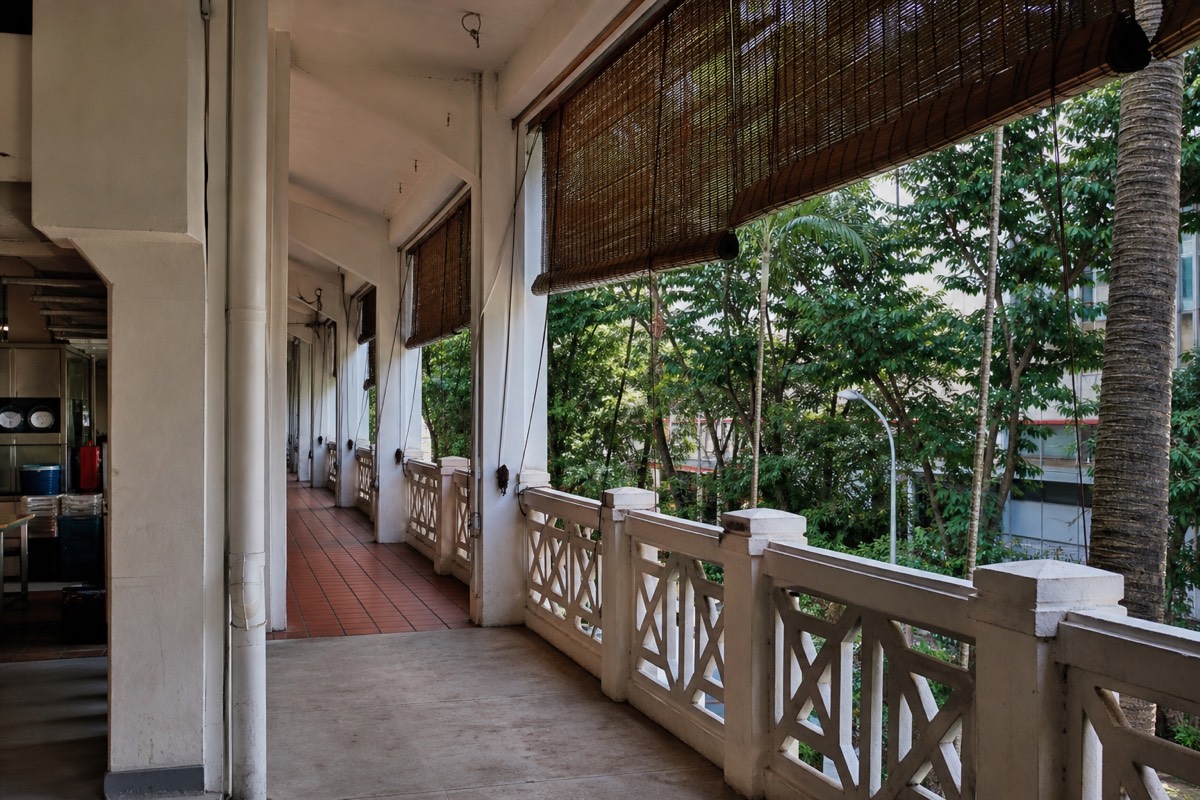
The Bib Gourmand isn't a Michelin star; it's the guide's separate recognition for good food at a moderate price, and Tian Tian has held it since 2017, according to the Michelin Guide's own writeup of the stall. What made the stall a household name outside Singapore, though, was television. Bourdain ate there on camera in 2008 and returned to explore Singapore's hawker scene in later years, and that exposure turned a neighbourhood lunch spot into something visitors now plan an itinerary around. The queue is genuinely worst around midday on weekdays, so an early or late lunch is usually the more comfortable time to try it.
Tian Tian isn't the only hawker stall that made Michelin history. A few stalls away in the wider hawker landscape, Liao Fan Hawker Chan at Chinatown Complex Food Centre made global headlines in 2016 as the world's first hawker stall or street food vendor to earn a Michelin star, a genuine landmark for hawker culture everywhere, not just in Singapore. The stall later expanded into a franchise renamed Hawker Chan and lost the star in a subsequent edition of the guide, according to CNN's reporting on the stall's history, so its lasting significance is historical rather than a current claim to a star. For the fuller picture of what the Bib Gourmand distinction means and which other stalls carry it, see our guide to Michelin Bib Gourmand hawker stalls, and for everything else worth eating at Tian Tian's home turf, our Maxwell Food Centre visitor guide covers the rest of the centre.
Other Notable Chicken Rice Stalls Worth Seeking Out
Tian Tian isn't the only chicken rice worth queuing for: Zi Jing Cheng Hainanese Boneless Chicken Rice in Bukit Merah, Tiong Bahru Hainanese Boneless Chicken Rice, and Ji De Lai Hainanese Chicken Rice in Yishun all carry Michelin recognition, and each does the dish a little differently.
Zi Jing Cheng specialises in a boneless preparation, the chicken deboned before serving so the whole plate can be eaten without picking around cartilage, and the Michelin Guide's own roundup of where to find the best chicken rice in Singapore notes queues forming there at almost any hour. Tiong Bahru Hainanese Boneless Chicken Rice follows the same boneless approach in one of Singapore's older residential estates, a useful stop if you're already exploring that neighbourhood's art deco blocks and independent cafes. Ji De Lai, further out in Yishun, is known for using larger, corn-fed chickens, which gives the meat a slightly richer, fattier bite than the leaner birds some stalls prefer.
None of these stalls will save a visitor from a queue at peak lunch hour, but they're a genuine alternative if Tian Tian's line at Maxwell looks too long, and trying more than one is really the only way to understand why Singaporeans argue about "the best" as much as they do. For a shorter explainer built specifically around why this one dish gets so much attention from visitors and food writers alike, see what makes Hainanese chicken rice so special.
| Stall | Neighbourhood | Known for |
|---|---|---|
| Tian Tian Hainanese Chicken Rice | Maxwell Food Centre | Michelin Bib Gourmand since 2017, Bourdain-famous |
| Zi Jing Cheng Hainanese Boneless Chicken Rice | Bukit Merah | Boneless chicken, queues at almost any hour |
| Tiong Bahru Hainanese Boneless Chicken Rice | Tiong Bahru | Boneless style in a historic residential estate |
| Ji De Lai Hainanese Chicken Rice | Yishun | Larger, corn-fed chicken for a richer bite |
Where to Find Great Chicken Rice Beyond Maxwell
Chicken rice is sold at nearly every hawker centre in Singapore, but Chinatown Complex Food Centre, Old Airport Road Food Centre and Tiong Bahru Market are three of the most reliable places to find a well-regarded stall outside Maxwell, each long established or recently upgraded as a serious food destination in its own right.
Chinatown Complex Food Centre, Singapore's largest hawker centre with roughly 260 cooked-food stalls, closed for three months in early 2026 for a renovation that added lifts, better lighting and improved ventilation, reopening on 31 May 2026 and now running normally with a noticeably more comfortable space to eat in. It's also home to Liao Fan Hawker Chan, mentioned above for its Michelin history, plus a wide spread of other stalls worth exploring. Our full guide to Chinatown Complex covers what to eat beyond chicken rice.
Old Airport Road Food Centre, in a residential estate away from the main tourist strip, is often cited by locals as having some of the most consistently good hawker food in Singapore, precisely because it isn't built around tourist traffic. Newton Food Centre and Tekka Centre round out a short list of centres worth a special trip if chicken rice is what you're chasing; we cover all three, plus a few more, in our guide to Newton, Old Airport Road and Tekka. If you're new to the format of a hawker centre altogether, our roundup of Singapore's best hawker centres is a reasonable starting point before picking a destination.
| Hawker centre | What's notable there | Good for |
|---|---|---|
| Maxwell Food Centre | Tian Tian, central Chinatown location | First-time visitors, short on time |
| Chinatown Complex Food Centre | Largest hawker centre, roughly 260 stalls, freshly renovated in 2026 | A longer browse, more variety in one stop |
| Old Airport Road Food Centre | Consistently high local reputation, off the tourist strip | A more local, less crowded experience |
| Tiong Bahru Market | Historic art deco estate, boneless chicken rice specialists | Pairing food with a walk through an older neighbourhood |
Beyond these four, dedicated food streets and smaller neighbourhood coffee shops often carry a single well-loved chicken rice stall that never makes any "best of" list simply because it never needed the publicity, its regulars already know where to find it. Asking a taxi driver or a local colleague for their own pick is a genuinely reliable way to find one of these, and it's part of why the debate over the "best" stall never really settles.
How to Order, What It Costs, and Whether It's Halal
Ordering chicken rice at a hawker stall is straightforward: state the chicken style, poached or roasted, whether a leg, thigh or breast piece is wanted, and how many portions of rice, then pay at the counter or, at some stalls, at the table after a runner takes the order. Expect to pay somewhere in the range of a few dollars for a hawker-stall plate, more at a food court or casual restaurant.
Most stalls list a base price for a plate that already includes rice, chicken and sauces, with an upcharge for extra rice, extra chicken, or a specific request like all-thigh-meat. It's common practice to point at the piece of chicken wanted if the vocabulary isn't familiar; stall staff are used to it, and pointing moves the queue faster than trying to order everything out loud. Payment methods vary: cash is still accepted everywhere, and most stalls in a well-trafficked hawker centre now also take PayNow or a card, though it's worth carrying a little cash as a backup regardless. Portions are rarely huge on their own, and it's common for a solo diner to order a single plate while a group might order two or three plates plus an extra rice to share, rather than one plate per person automatically.
One hawker-centre-specific habit worth knowing before a visit: "choping" a table, reserving it with a tissue packet or umbrella before ordering, is a real and broadly respected local custom rather than rudeness. Our guide to hawker centre etiquette covers chope culture and tray-return rules in more detail, both of which apply just as much when holding a plate of chicken rice as anything else.
Is Chicken Rice Halal?
Traditional Hainanese chicken rice contains no pork, but most well-known stalls, Tian Tian included, are not individually halal-certified, and they often sit inside hawker centres that also serve pork or alcohol at neighbouring stalls; travellers keeping strictly halal should look specifically for certified stalls rather than assuming any given chicken rice counter qualifies.
Halal certification in Singapore works stall by stall, not centre-wide. A single hawker centre can house both certified and non-certified stalls side by side, and certification depends on ingredients, preparation methods and cross-contamination controls that a stall has to apply for and actively maintain, not just what happens to be on the plate. If halal dining matters for a trip, don't assume: check the individual stall's certification signage before ordering. Our guide to halal hawker food in Singapore points to dishes and stalls built specifically around that requirement.
| Where it's bought | Typical price range | What's being paid for |
|---|---|---|
| Hawker stall | Around $3 to $5 for a standard plate, check the current listing | Chicken, rice, sauces, cucumber, no service charge |
| Hawker stall, boneless or premium cut | Around $5 to $8, check the current listing | Boneless preparation or a larger corn-fed portion |
| Food court or casual restaurant | Around $7 to $12, check the current listing | Air-conditioned seating, table service in some cases |
Hawker Stall, Food Court or Restaurant: Where Should You Actually Eat It?
For chicken rice specifically, a hawker stall is almost always the better choice over a food court or restaurant version: the dish depends on high daily turnover for fresh rice and chicken, and the stalls with the strongest reputations, Tian Tian included, are hawker-centre operations rather than sit-down restaurants.
That's not a knock on food courts, which are genuinely useful when air conditioning matters or there's no hawker centre nearby, but the chicken rice sold there is rarely made by the same specialists who've built a reputation over decades at one stall. Restaurant versions exist too, sometimes dressed up with better cuts or plated presentation, but a diner is largely paying for the seating and service rather than a meaningfully different dish underneath it.
If a first day in Singapore is being built around hawker food generally, not just chicken rice, our first-timer's guide to the best hawker food in Singapore is a reasonable place to start planning a route, since chicken rice is really just one stop among several dishes worth prioritising.
| Venue type | Wait time | Chicken rice quality |
|---|---|---|
| Hawker stall | Can be long at famous stalls, short elsewhere | Usually the strongest version, made by specialists |
| Food court | Short, air-conditioned | Serviceable, rarely a destination in itself |
| Casual restaurant | Short, seated service | More expensive, not usually better |