Michelin Bib Gourmand Singapore: What It Means & Where to Eat It
A round red sticker of a cartoon man licking his lips shows up next to some very unglamorous menu boards in Singapore, and it means the six-dollar plate under it made the same reference book as a six-hundred-dollar tasting menu.
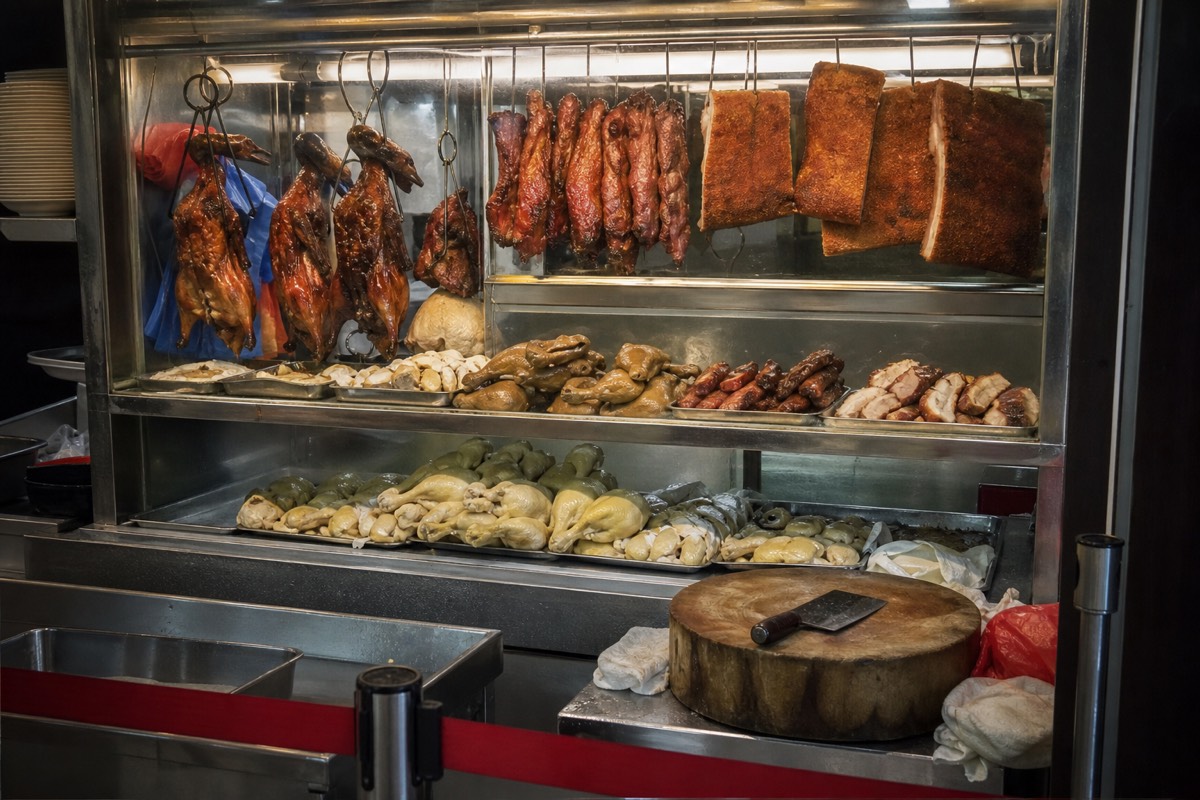
The Michelin Man's cartoon face turns up in some unglamorous places in Singapore: taped above a stainless-steel counter in Chinatown Complex, laminated onto a menu board next to a queue-number dispenser, stuck to a pillar at Maxwell Food Centre a few feet from a tray-return bin. That sticker is a Bib Gourmand, and it puts a hawker stall selling five-dollar chicken rice in the same guidebook as restaurants charging ten times that for a single course. Understanding what the award actually checks for, and which real stalls currently hold it, turns a random hawker crawl into one with an actual point to it.
Most visitors hear "Michelin" and picture white tablecloths, sommeliers and a bill that needs its own suitcase. Singapore is one of the few places on earth where that assumption gets overturned in a hawker centre with plastic stools and no air conditioning. The Bib Gourmand is the mechanism that makes that possible, and it's worth fifteen minutes to actually understand before you spend an afternoon chasing stickers around Chinatown.
Singapore Hawker Michelin Milestones, 1997 to 2026
Years since 1997, when the Bib Gourmand distinction was introduced globally; figures are approximate and for illustration.
What Does Michelin Bib Gourmand Actually Mean?
The Michelin Bib Gourmand is a distinction below the star system that recognizes "good quality, good value cooking": inspectors judge a place worth visiting for its food and fair pricing, not for the technical ambition, luxury or polish a star demands. The Michelin Guide introduced the category in 1997, naming it after Bibendum, the tire-shaped mascot better known as the Michelin Man, and gave it his own symbol: a cartoon of him licking his lips. A star asks whether a kitchen is doing something exceptional at any price. A Bib Gourmand asks whether a kitchen is doing something genuinely good at a price most people can afford on an ordinary Tuesday. That distinction matters enormously for hawker food, where the whole economic model runs on turnover and thin margins rather than tasting menus, so the two tiers end up measuring almost different things entirely.
Bibendum himself dates back to 1898, originally a mascot for Michelin's tyre business decades before the company ever printed a restaurant review. The Guide itself started in 1900 as a free booklet handed out with tyres, meant to encourage French motorists to drive further and, not coincidentally, wear out more rubber along the way. The Bib Gourmand borrowed that same mascot nearly a century later for a very different purpose: steering diners toward places that reward the trip without punishing the wallet. It's a strange lineage for a distinction that now decides which chicken rice stall gets a queue down the corridor, but it explains why the symbol is a grinning tyre man rather than anything culinary.
| Aspect | Bib Gourmand | Michelin star |
|---|---|---|
| What it rewards | Good food at a reasonable, locally set price | Exceptional cooking regardless of price |
| Introduced | 1997 | 1926, expanded to a three-star scale by 1931 |
| Typical setting | Hawker stalls, casual eateries, neighbourhood restaurants | Fine dining and high-end restaurants |
| Symbol | Bibendum licking his lips | A star |
| Singapore hawker relevance | Most hawker recognitions sit at this tier | Only one hawker stall has ever crossed into star territory |
How Do Michelin Inspectors Actually Judge a Bib Gourmand Stall?
Michelin applies the same five criteria across every tier of the Guide, stars and Bib Gourmand alike: quality of ingredients, mastery of flavour and technique, the personality the cook brings to the dish, value for money, and consistency between one visit and the next. For a Bib Gourmand entry, value for money simply carries more relative weight than sheer ambition. An anonymous inspector eats a plate the same way a regular customer would, pays the same price, and typically returns on a separate visit before anything gets written down. There is no application process and no fee involved: a stall cannot buy or request a Bib Gourmand, and it can lose one just as quietly as it earned it if standards slip between editions of the Guide.
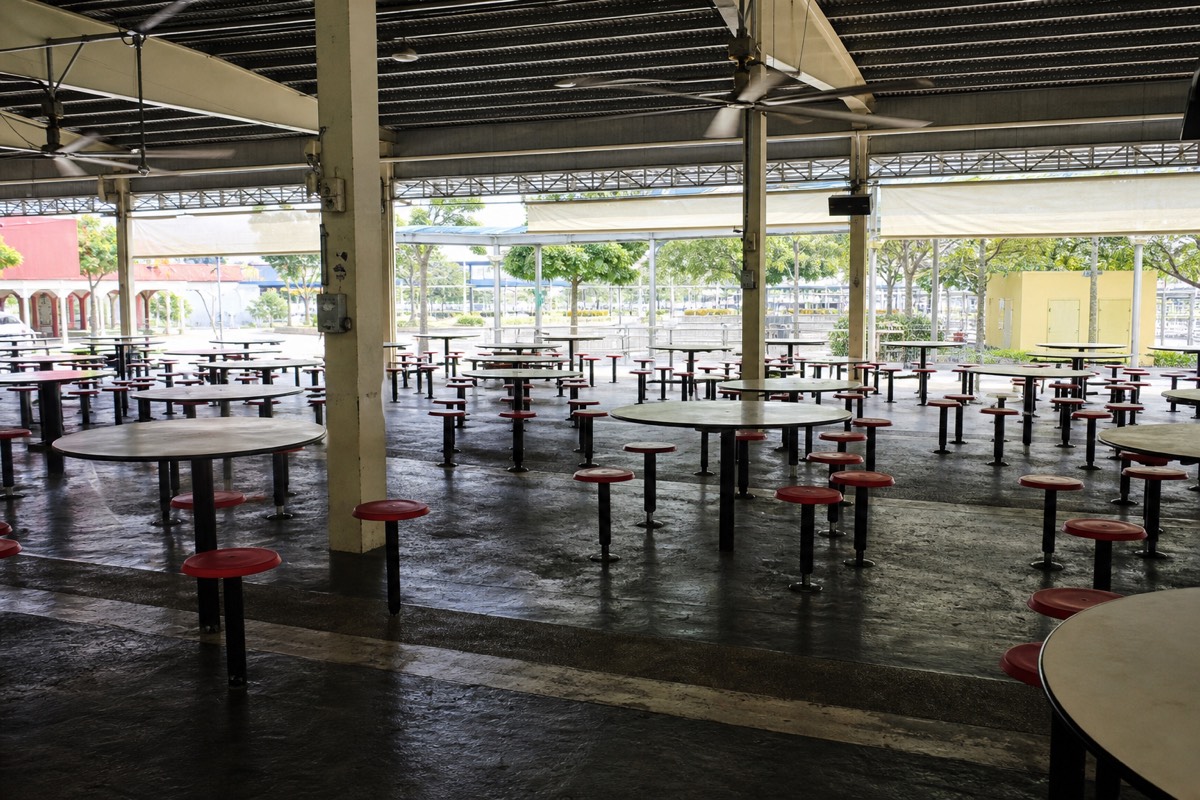
What that means in practice for a hawker stall is that the same auntie or uncle who's been running a wok since before the award existed doesn't change anything about how they cook once the sticker goes up. Inspectors are explicitly looking for cooking that already works, not potential or ambition. A stall that switches suppliers to cut cost, or starts pre-cooking batches to handle a longer queue instead of wok-frying to order, risks the exact consistency criterion that got it noticed in the first place. That's part of why a Bib Gourmand list turns over every year: it isn't measuring reputation, it's re-checking the plate.
| Criterion | What it means at a hawker stall |
|---|---|
| Quality of ingredients | Fresh, well-sourced components even at a low price point |
| Mastery of technique | Wok control, broth depth, timing, whatever the dish demands |
| Personality | A recognisable style or signature that isn't copied from the stall next door |
| Value for money | Weighted more heavily here than at the star tiers |
| Consistency | The same standard on a return, unannounced visit |
Michelin does not publish an exact dollar ceiling for Singapore's Bib Gourmand tier. The Guide states only that the value threshold is set locally, relative to the cost of living in each market. In practice, most Bib Gourmand hawker dishes here still land around the same $3 to $8 range as any other stall next door; check the current listing before you plan a special trip.
Why the Bib Gourmand Matters More Than the Star for Hawker Food
A hawker stall selling a five-dollar plate of noodles cannot support the kitchen brigade, imported ingredients and dining-room overhead a Michelin star typically implies, so the Bib Gourmand became the honest, workable way for the Guide to recognise excellent street food without pretending it is fine dining. Coverage of the 2025 Singapore selection reported that more than seven in ten of the eateries honoured that year were street-food stalls rather than sit-down restaurants, a proportion that would be unthinkable at the Guide's star tiers anywhere in the world. That ratio is really the point: Singapore's Michelin story has always been shaped more by hawker centres than by tasting menus, and reading the best hawker food in Singapore through a Bib Gourmand lens is a genuinely useful filter for a short trip, especially if you only have one or two meals to spend chasing it. It also reframes what a "cheat sheet" for what to eat in Singapore as a tourist should prioritise: chase the sticker before you chase whichever queue looks longest.
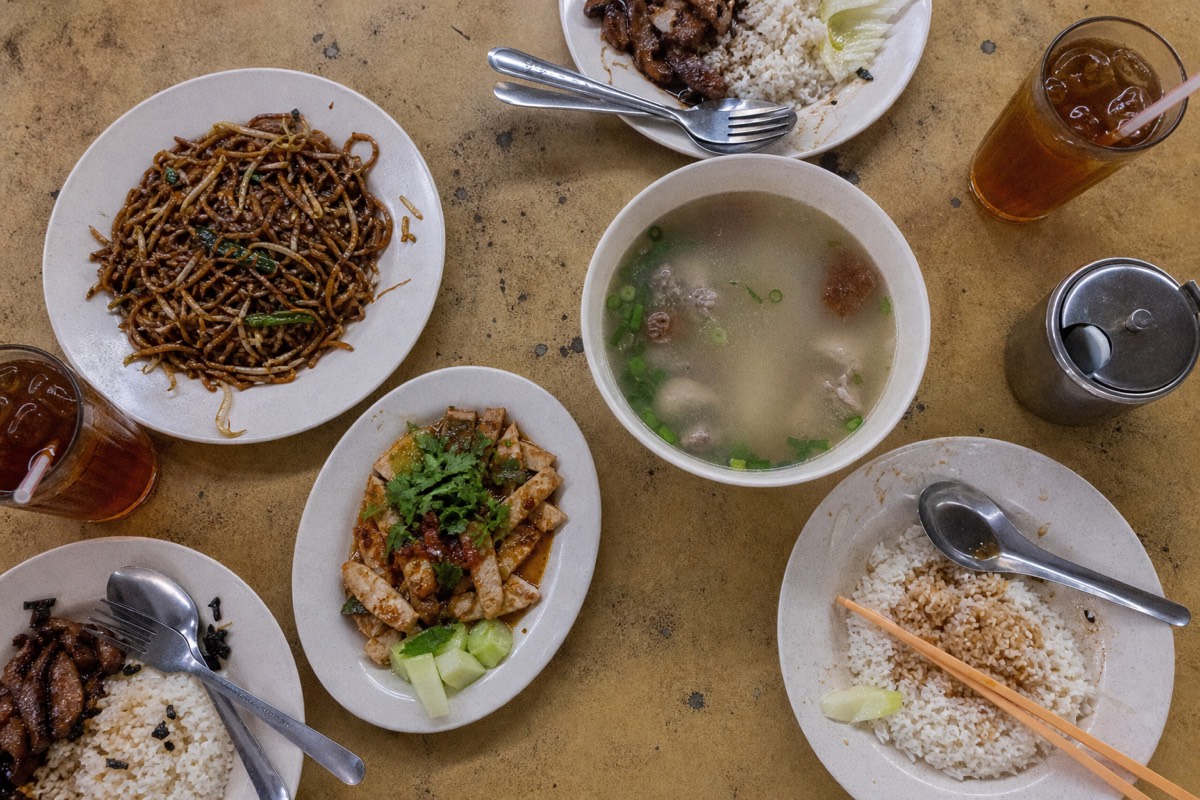
It's worth being honest about the flip side too: Singapore's Bib Gourmand selection includes both hawker stalls and restaurants across the island, beyond two central buildings. This guide focuses specifically on the hawker-stall subset, because that's the part most travellers can realistically build an afternoon around on foot, and because it's the part that makes Singapore's Michelin story genuinely different from London's or Paris's. If you're building a wider itinerary around the full list rather than just hawker food, the Michelin Guide's own searchable Singapore selection is the most current reference, since third-party roundups lag behind the yearly ceremony by months at a time.
Tian Tian Hainanese Chicken Rice: Maxwell's Bib Gourmand Icon
Tian Tian Hainanese Chicken Rice at Maxwell Food Centre earned a Michelin Bib Gourmand in 2017 and is arguably Singapore's most famous chicken rice stall, the one Anthony Bourdain praised on both "No Reservations" in 2008 and later on "Parts Unknown." The stall's fame predates its Michelin recognition by nearly a decade. Bourdain's endorsement alone was already sending tourists across town before the Bib Gourmand sticker went up, and the two reputations have reinforced each other ever since, each new wave of coverage pointing back at the other. What actually makes the plate work is unglamorous: rice cooked in chicken fat and stock rather than plain water, chicken poached rather than roasted so the meat stays silken, and a chilli-ginger sauce mixed fresh rather than bottled and shipped in. None of that requires an expensive kitchen, which is exactly the case for why this dish belongs in the Bib Gourmand conversation rather than the star one. For the full stall-by-stall picture of Maxwell, including queue timing and what else is worth ordering nearby, see the Maxwell Food Centre visitor guide, and for the dish's wider context across the island, the Hainanese chicken rice explainer covers how it became Singapore's de facto national dish, according to the Michelin Guide's own profile of the stall.
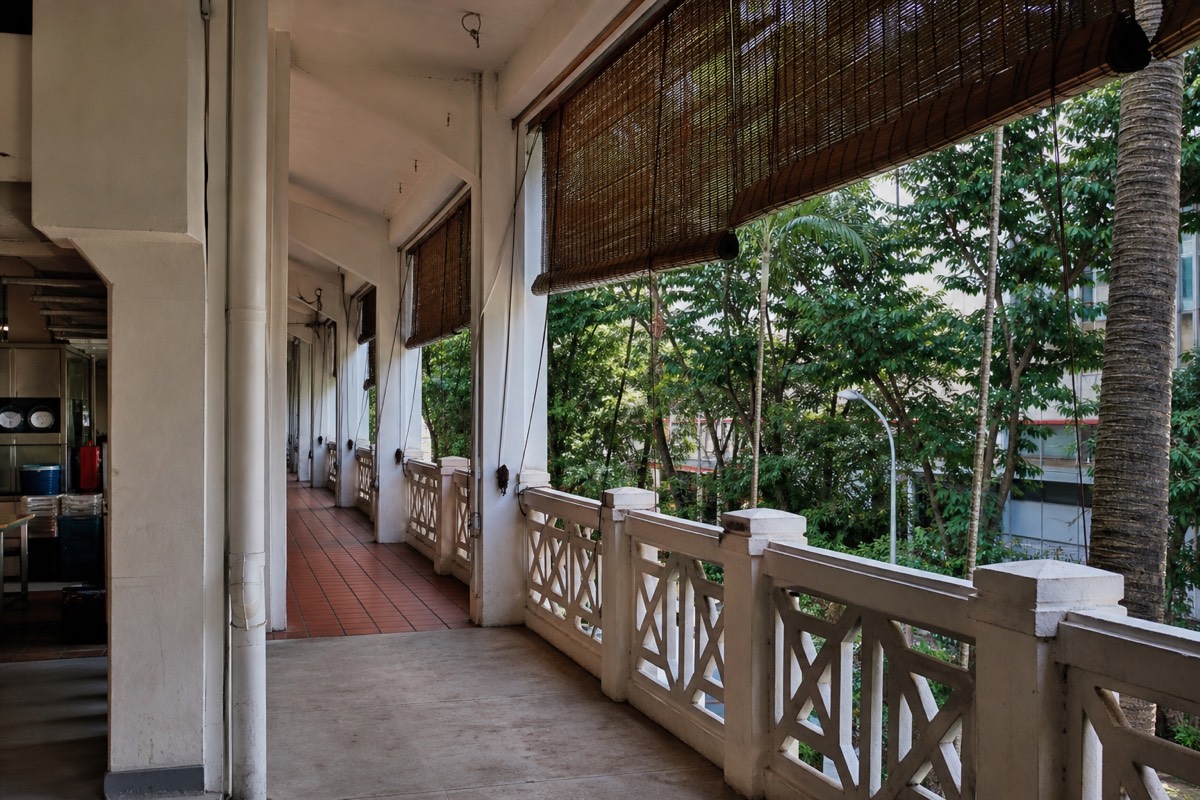
It's also worth naming what the Bib Gourmand doesn't do for a stall like Tian Tian: it doesn't shorten the line, and it never guarantees you'll get a table nearby to actually sit down and eat. Maxwell Food Centre is one large open hall shared by dozens of other stalls, most of them entirely unrelated to Tian Tian's queue, so factor in a search for seating separately from the wait for food. Regulars generally send one person to queue for the chicken rice while someone else claims a table, which is standard hawker-centre choreography rather than anything specific to a Bib Gourmand stall.
Liao Fan Hawker Chan: The Stall That Made Hawker History
Liao Fan Hawker Chan, a soya sauce chicken stall then based at Chinatown Complex, became the world's first hawker stall or street-food vendor to earn a Michelin star in 2016, a genuine landmark for hawker culture everywhere, not just in Singapore. Chef Chan Hon Meng had been selling his soya sauce chicken from a modest stall for years before the star arrived; afterward, queues stretched for hours and the story ran in food press worldwide as proof that extraordinary cooking doesn't require white tablecloths or a wine list. The stall later expanded into a franchise under the "Hawker Chan" name, and according to CNN Travel's reporting on the story, it subsequently lost its Michelin star in a later edition of the Guide as the business scaled beyond its original single-stall format. Be precise about the tense here: it made history winning the world's first hawker Michelin star in 2016, and that fact stands regardless of its current status, which changes edition to edition. Chinatown Complex, the hawker centre where it happened, is covered in full in the Chinatown Complex food centre guide, and if you're weighing whether the neighbourhood is worth your limited time at all, is Chinatown worth visiting answers that question directly.
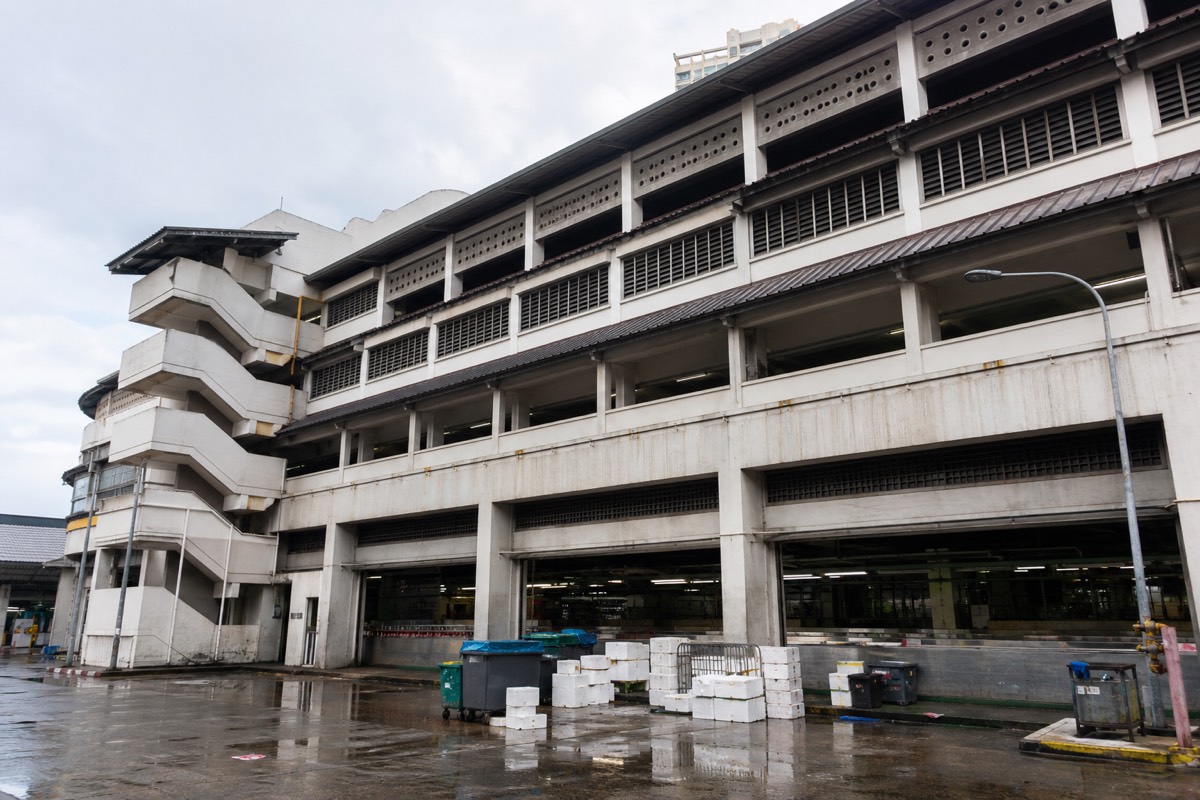
The 2016 award came four years before Singapore's hawker culture was inscribed on UNESCO's Representative List of the Intangible Cultural Heritage of Humanity in December 2020, the country's first item on that list. Placed in that order, Hawker Chan's star reads less like an isolated fluke and more like an early signal of the same argument UNESCO would later formalise: that hawker cooking deserved to be judged by the same standards as any other cuisine, not treated as a lesser, informal category by default. Whatever you make of the stall's current status, that shift in how the world talks about hawker food hasn't reversed.
It's a useful reminder for anyone building a broader Singapore itinerary around this corridor: the same neighbourhood that produced a world-first Michelin star also carries the UNESCO recognition for the entire hawker tradition, which is a rare overlap of two very different kinds of institutional validation landing on the same few city blocks within a single decade.
Other Real Bib Gourmand Hawker Stalls Worth Seeking Out
Beyond Tian Tian and the Hawker Chan legacy stall, Chinatown Complex alone holds several more genuine Bib Gourmand names worth building a route around, including Zhong Guo La Mian Xiao Long Bao for hand-pulled noodles and soup dumplings, and Lian He Ben Ji Claypot Rice for charcoal-fired claypot rice at the building's corner. Zhong Guo La Mian Xiao Long Bao first appeared on the Bib Gourmand list in 2018 and has held it since, a rarer feat than it sounds given how often the list actually turns over. Lian He Ben Ji is one of the hawker centre's most photographed stalls for a reason: the claypots come out charred and smoking, ladled to order rather than pre-cooked and reheated under a lamp. The 2026 Singapore Bib Gourmand selection runs to 97 establishments in total, including ten new additions announced for the year, which means the list is genuinely refreshed each cycle rather than being a static honour roll frozen in time. Most roundups of the most famous hawker centre in Singapore gravitate toward Maxwell or Chinatown Complex for exactly this reason: that's where the concentration of currently recognised stalls runs highest.
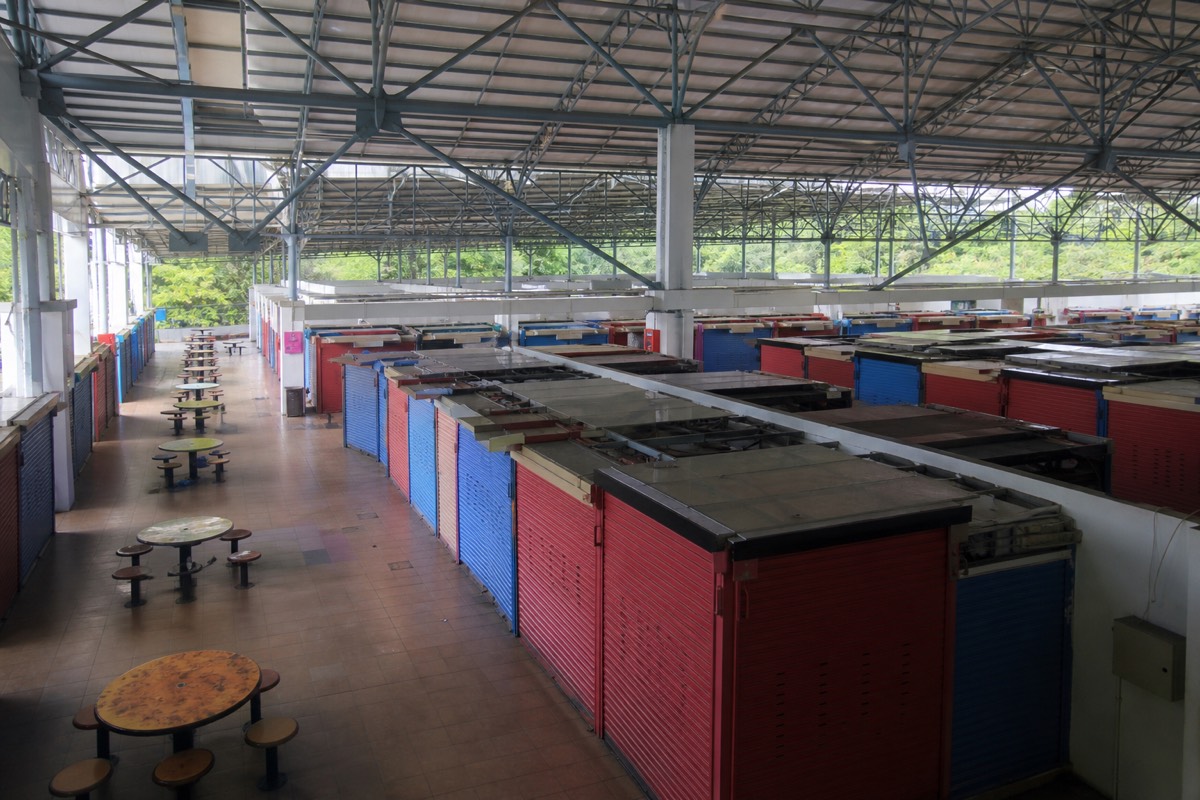
None of these four names showed up on the list by accident, and none of them are secret. Every one has been written up repeatedly by Singapore food press over the past decade, which is worth knowing before you go: expect other visitors doing exactly what you're doing, phones out, comparing notes with the same shortlist. That's not a reason to skip them, a stall doesn't stay on a value-driven, re-inspected list for years by coasting on hype. It's just a reason to show up with realistic expectations about the queue rather than assuming a hidden gem nobody else has found.
| Stall | Hawker centre | Known for | Michelin note |
|---|---|---|---|
| Tian Tian Hainanese Chicken Rice | Maxwell Food Centre | Hainanese chicken rice | Bib Gourmand since 2017 |
| Liao Fan Hawker Chan (Hawker Chan) | Chinatown Complex | Soya sauce chicken | World's first hawker Michelin star, 2016 |
| Zhong Guo La Mian Xiao Long Bao | Chinatown Complex | Hand-pulled noodles, xiao long bao | Bib Gourmand since 2018 |
| Lian He Ben Ji Claypot Rice | Chinatown Complex | Charcoal-fired claypot rice | Bib Gourmand listee |
| Metric | Figure |
|---|---|
| Year Bib Gourmand was introduced globally | 1997 |
| Total Singapore Bib Gourmand listings, 2026 selection | 97 |
| New additions in the 2026 selection | 10 |
| Share of the 2025 selection that were street-food stalls | More than 70% |
| Year Tian Tian first earned its Bib Gourmand | 2017 |
Michelin-Recommended vs Bib Gourmand: Don't Confuse the Two
The Michelin Guide has more than one non-star tier, and "Michelin-recommended" or "Michelin-selected" is not the same distinction as a Bib Gourmand: a recommended listing means inspectors think a stall is worth including in the Guide at all, while a Bib Gourmand specifically flags exceptional value for money. This gets blurred constantly in casual write-ups, where any stall that appears on the Michelin Guide's website ends up described loosely as "Michelin-starred" or "a Bib Gourmand" regardless of which tier it actually holds. It matters for a hawker crawl because a plain Michelin-recommended stall can be genuinely excellent without ever clearing the Bib Gourmand's value-driven bar, and the reverse is true too. When in doubt about a specific stall's current status, the Michelin Guide's own Singapore listings are the source that updates in step with the yearly ceremony, since third-party blog roundups can lag a year or two behind a stall gaining, keeping or losing its actual listing.
A useful habit: read any headline claiming a stall is "Michelin-starred" with a little suspicion if it's a hawker stall, because a historic star and a current Bib Gourmand are different awards. Nearly everything else described casually as "Michelin hawker food" is either a Bib Gourmand or a plain recommended listing, both genuinely worth seeking out, just not the same achievement, and not interchangeable claims to make about a stall in writing.
How to Plan a Bib Gourmand Hawker Crawl
The most efficient Bib Gourmand crawl runs through just two buildings: Chinatown Complex, which clusters the Hawker Chan legacy stall, Zhong Guo La Mian Xiao Long Bao and Lian He Ben Ji Claypot Rice under one roof, and Maxwell Food Centre a short walk away, home to Tian Tian. Both sit close enough to cover on foot in a single afternoon if you pace yourself and split dishes rather than ordering a full portion at every stop. Start at Chinatown Complex before midday, since its Bib Gourmand stalls tend to develop real queues by early afternoon; the claypot rice at Lian He Ben Ji in particular needs genuine cooking time per order, so arriving hungry at 1pm can mean a 30-to-40-minute wait just to place your order. From there, it's a walkable stretch down toward Maxwell for chicken rice, better treated as a late lunch than squeezed in as a second full meal stacked directly on top of Chinatown Complex. If you'd rather have someone else handle the routing and the ordering in Hokkien or Mandarin, the Singapore Small-Group Food Tour: Michelin Bibs & Iconic Hawker Dishes is built around Bib Gourmand and Michelin-listed stalls in this same Chinatown-Maxwell corridor. For a broader sense of how these two compare with Singapore's other major hawker centres, the best hawker centres in Singapore roundup lines all of them up side by side.
The walk between the two buildings is short, roughly ten minutes at an easy pace, which is exactly enough time to let a first plate settle before ordering a second one. Neither hawker centre is air-conditioned in the way a shopping mall food court is, so plan the crawl for the cooler parts of the day if the heat bothers you, generally before 11am or after 4pm. Bringing a water bottle or buying a cold drink from one of the beverage stalls along the way is normal practice, not a sign you're overdoing it; hawker centres in Singapore run hot and humid year-round, and pacing yourself across two buildings in one afternoon is a real endurance question, not just a logistics one.
| Stop | Approx. location in Chinatown Complex | Order |
|---|---|---|
| Liao Fan / Hawker Chan legacy stall | Second floor, stall 02-126 | Soya sauce chicken rice |
| Zhong Guo La Mian Xiao Long Bao | Second floor, stall 02-135 | Xiao long bao, hand-pulled noodles |
| Lian He Ben Ji Claypot Rice | Second floor corner, stalls 02-198/199 | Charcoal claypot rice |
Practical Tips: Queues, Cash and Closing Days
Expect a genuine queue at every Bib Gourmand stall during lunch and dinner peaks, bring cash since many hawker stalls still don't take cards even where PayNow or contactless is available, and check closing days before you go, since Singapore's hawker centres rotate rest days for cleaning rather than staying open every single day of the week. A Bib Gourmand sticker doesn't shorten a line, it lengthens it: these are, almost by definition, the busiest stalls in whichever hawker centre they sit in, and locals already know exactly which ones they are. Fifteen to thirty minutes at Tian Tian or the Hawker Chan stall around midday is normal, not a sign anything has gone wrong that day. Basic queue courtesy applies everywhere: a single person can "chope" a table with a packet of tissues while the rest of the group finishes ordering, but that convention does not extend to reserving a spot in a food queue itself, and trying it will get you an earful. Chinatown Complex itself is a good reminder of why checking ahead matters: the whole building closed for a three-month renovation earlier in 2026 before reopening, so a stall being "always there" is never quite a guarantee. For the fuller set of unwritten rules, the hawker centre etiquette guide covers chope culture, tray return and tipping in more depth, and if you've ever wondered why a favourite stall was shuttered on a random weekday, why hawker centres close for cleaning explains the rotating rest-day system behind it.
A few smaller details make the whole outing easier. Menus at Bib Gourmand hawker stalls are almost always in English alongside Chinese, so ordering doesn't require any language beyond pointing and holding up fingers for quantity. Most stalls will run out of their signature dish before closing on a good day, so if a specific plate is the whole reason for the trip, go earlier rather than later. And it's worth remembering these are still working kitchens serving regular customers, not attractions built for visitors: a queue moves fastest when everyone in it already knows what they want to order by the time they reach the counter.
| Tip | What to know |
|---|---|
| Peak queue times | 11:30am-1:30pm and 6pm-8pm; expect 15-40 minutes at the busiest Bib Gourmand stalls |
| Payment | Bring cash; card and PayNow acceptance still varies stall by stall |
| Closing days | Hawker centres rotate rest days for cleaning, and individual stalls take their own days off too, so check before a special trip |
| Portion strategy | Order smaller or shared portions across several stalls rather than one full meal per stop |