Katong Laksa: Singapore's Most Famous Laksa, Explained
Order laksa anywhere else in Singapore and you might get a fork, a spoon, and a fight over whether you're even eating the real thing. Order it in Katong and the rules are different: one spoon, no chopsticks, and a decades-old rivalry over who actually invented the bowl in front of you.
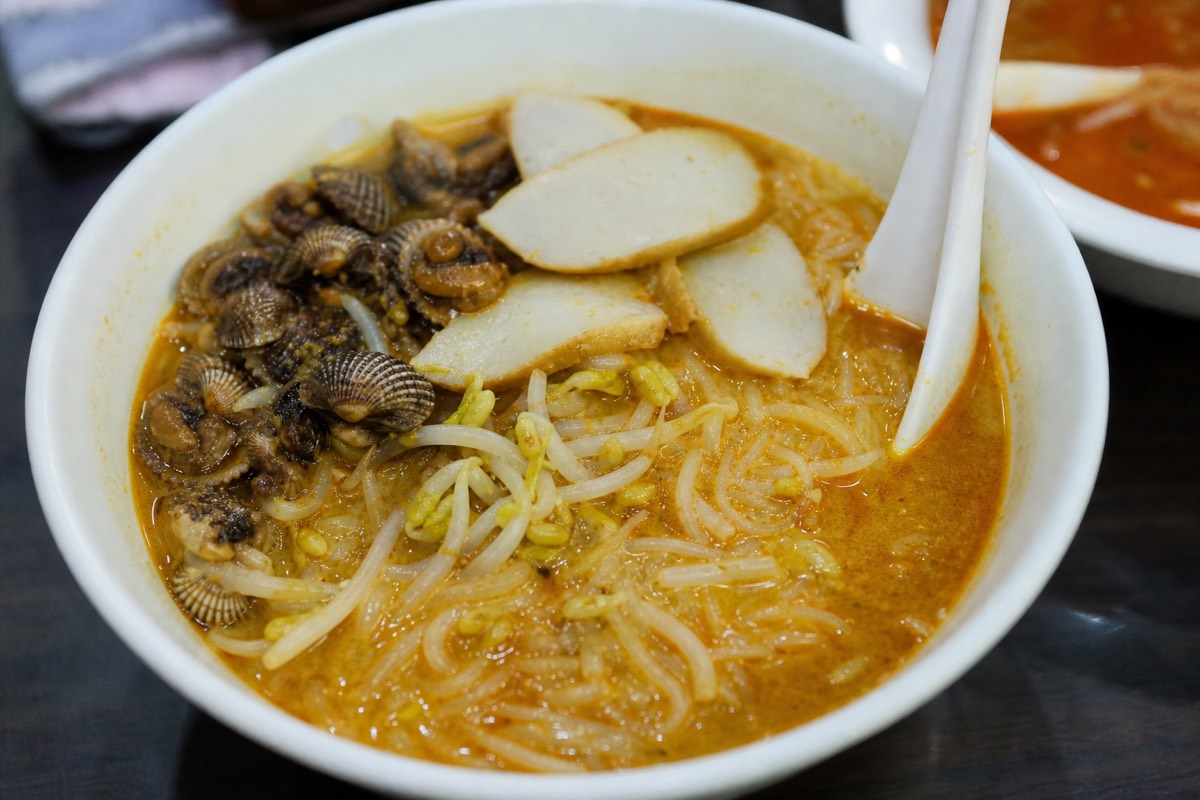
Laksa exists all over Singapore and Malaysia in a dozen regional forms, but ask a Singaporean to picture "laksa" and most will describe the Katong version: a thick, orange-red coconut curry broth, short stubby noodles you never have to twirl, and a spoon doing all the work. It's the style that gets photographed, exported to laksa pop-ups overseas, and argued about by two stalls a few doors apart on East Coast Road. This guide covers what actually makes Katong laksa different, what goes into the broth, what's true and what's folklore in the "original stall" dispute, and where to eat it if you're in the neighbourhood.
Katong Laksa vs Other Singapore Laksa Styles
Approximate comparison based on standard recipes and reporting cited in this guide, not a lab measurement.
What makes Katong laksa different from other laksa styles?
Katong laksa is a Peranakan (Nyonya) coconut curry laksa built around thick, cockle- and fish-cake-topped short-cut rice vermicelli in a rempah-spiced coconut broth, traditionally eaten with a spoon alone. The defining move is the noodle cut: instead of long bee hoon or yellow noodles you'd twirl onto chopsticks, Katong-style vendors chop the rice vermicelli into short lengths, usually a few centimetres, so the whole bowl can be scooped and eaten in one motion. The broth itself leans richer and more coconut-forward than the thinner, more sour asam laksa served in Penang, which skips coconut milk almost entirely in favour of tamarind and mackerel stock. Katong laksa's gravy is built on a spice paste, dried shrimp (hae bee), and coconut milk simmered until it thickens into something closer to a curry than a soup, which is why regulars sometimes call the broader family "laksa lemak," meaning rich or fatty laksa, to distinguish it from sourer regional cousins.
Standard toppings are cockles (see hum), fish cake slices, bean sprouts, a few prawns, and torn laksa leaf (daun kesum, sometimes spelled daun kesom) on top, sometimes with a wedge of sambal belacan stirred in for extra heat.
What actually goes into the rempah and broth?
A traditional Katong laksa rempah, the spice paste that gives the broth its colour and depth, is a ground blend of shallots, garlic, galangal, fresh turmeric, lemongrass, dried red chillies, candlenuts, dried shrimp, and belacan (fermented shrimp paste), fried off before coconut milk is added. Candlenuts are added mainly for body and a subtle richness rather than flavour on their own, and belacan supplies most of the savoury depth, so a rempah made without a properly toasted belacan tends to taste flat even if every other ingredient is right. Dried shrimp gets added twice in most versions of the recipe, once ground into the rempah itself and again as a garnish, which is part of why the finished broth reads as more "seafood forward" than curries built on chicken or beef stock. Laksa leaf, torn and scattered on top rather than cooked into the broth, is the ingredient most people can't quite place on a first taste: it's aromatic rather than spicy, closer to a cross between mint and coriander, and it's what gives a good bowl its distinctive fresh top note against all that rich coconut underneath.
| Ingredient | Role in the dish |
|---|---|
| Shallots, garlic, galangal, turmeric, lemongrass | Aromatic base of the rempah spice paste |
| Dried red chillies | Colour and background heat |
| Candlenuts | Body and richness, not flavour |
| Belacan (fermented shrimp paste) | Savoury depth, toasted before grinding |
| Dried shrimp (hae bee) | Umami, used in the paste and as garnish |
| Coconut milk | Thickens the broth into its signature curry-like texture |
| Laksa leaf (daun kesum) | Fresh aromatic garnish, torn and scattered on top |
Is it true you're only supposed to eat Katong laksa with a spoon?
Yes: the no-chopsticks, spoon-only style is a real and well-documented Katong tradition, credited to the hawker nicknamed "Janggut" (Malay for "beard"), who began selling laksa in the Marine Parade and East Coast Road area in the 1950s. Because the rice vermicelli is pre-cut into short pieces rather than left long, there's nothing to twirl or pick up with chopsticks. Singapore's National Library Board Infopedia records the style as originating with this vendor, who sold laksa near the Marine Parade jetty before settling into a stall on East Coast Road, and it's the detail most food writers point to first when explaining what separates Katong laksa from generic Singapore laksa. Some accounts tie the practice to practical hawking conditions in the era before purpose-built hawker centres existed, when street vendors needed customers to eat quickly and cheaply; whatever the exact origin, the short-noodle, spoon-only format is the single clearest test of whether what you're eating is genuinely "Katong style." If a stall serves you long noodles with chopsticks alongside your laksa, it's making a different, more generic curry laksa, not the Katong style, and that's not a criticism of the other version, just a different dish wearing a similar name.
What's the real story behind the 328 Katong Laksa vs Janggut Laksa rivalry?
Both stalls trace back to the same East Coast Road stretch and a shared recipe lineage from the original Janggut hawker tradition, but the businesses split after a rent dispute in the late 1990s, and each has marketed itself as "the original" ever since, a genuine and long-running commercial rivalry rather than a manufactured one. According to Timeout Singapore, the laksa's popularity in the area is often credited to brothers Ng Juat Swee and Ng Chwee Seng, who began hawking noodles along East Coast Road in the early 1960s under the Janggut name, a business later also referred to in some records as running from the 1950s onward depending on which stretch of their history is being cited. What's consistently reported across sources is that the rental at the original stall's address rose sharply, the family running Janggut moved premises, and a new operator took over the vacated site and rebranded it 328 Katong Laksa. Both businesses continued selling laksa from the same neighbourhood using recipes that descend from the same source, and both now claim the "original" title in their signage and marketing, a dispute Timeout describes as having "sparked a famous feud when rivals popped up in the area claiming to be the original Katong laksa."
| Detail | Janggut Laksa | 328 Katong Laksa |
|---|---|---|
| Traced back to | The Ng family, hawking in the area since the early 1950s to 1960s | Took over the original East Coast Road stall site in the late 1990s |
| Broth style commonly described as | Creamier, thicker, more coconut-forward | Spicier, sharper chilli edge |
| "Original" claim | Longer continuous family operating history | Occupies the historic original premises today |
Reasonable people who've eaten at both will tell you the honest answer is that neither claim is fully clean-cut, and the more useful approach as a visitor is to treat "the original" as marketing shorthand rather than a settled fact, and just try more than one stall. Timeout's own reporting on the rivalry concludes that "the dust has settled and the laksa wars are over," with the dish simply remaining a fixture of Singaporean cuisine regardless of which sign says "original." For the wider question of whether laksa itself is even a Singaporean or Malaysian invention in the first place, a separate rivalry with its own murky history, see our breakdown of the laksa nationality debate.
Where is Katong, and why does the neighbourhood matter to the dish?
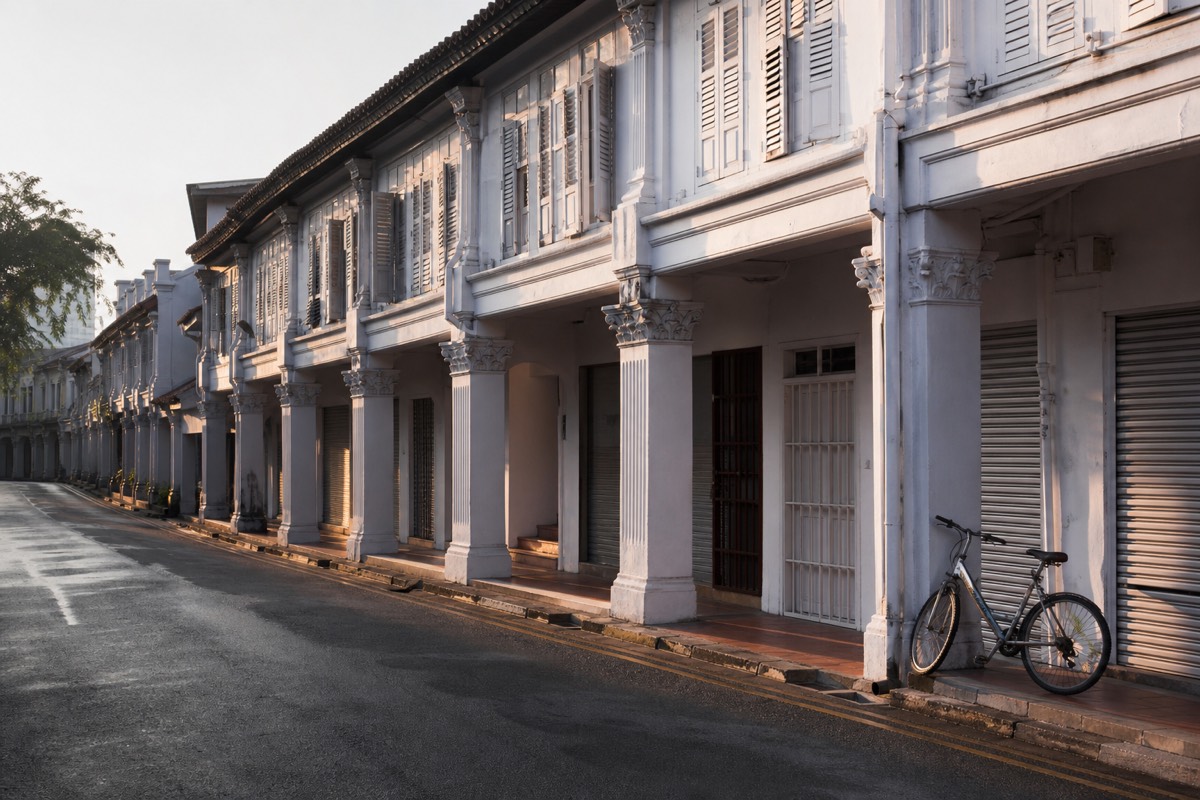
Katong and the adjoining Joo Chiat district on Singapore's east side are the historic heartland of Peranakan (Straits Chinese) culture, and the laksa style takes its name directly from the area where it was popularised. The neighbourhood was designated Singapore's first "Cultural Heritage District" and is best known for its rows of two-storey Peranakan shophouses, especially the pastel-painted terraces along Koon Seng Road, with hand-painted ceramic tiles, plaster motifs, and ornate French-style shutters, a style of building the Singapore Tourism Board's own visitor site describes as some of the best-preserved examples anywhere in the country. Peranakan families, descendants of early Chinese immigrants who intermarried with local Malay communities, settled the area from the early 20th century onward, and their fusion cooking, laksa among the most famous examples, developed alongside the shophouse architecture that still stands today. Walking East Coast Road past the rival laksa stalls, you'll pass Peranakan tile shops, kueh bakeries, and beading and embroidery stores that trace back to the same community, plus a scattering of newer cafes that have moved into restored shophouses over the last decade.
The area's food identity runs deeper than laksa alone, and that matters for understanding why the dish took root here specifically rather than anywhere else on the island. Peranakan cooking generally blends Chinese ingredients and techniques with Malay spicing and Indonesian-influenced pastes, a fusion that shows up across the neighbourhood's kueh stalls, its beef rendang, and its babi pongteh, not just in the laksa bowl. Singapore's hawker culture more broadly, of which Katong's laksa tradition is one well-known regional strand, was inscribed on UNESCO's Representative List of the Intangible Cultural Heritage of Humanity in December 2020, Singapore's first entry on that list, which is a useful bit of context for why a neighbourhood laksa rivalry gets written about with the seriousness usually reserved for much bigger culinary landmarks.
| Landmark or street | What you'll find there |
|---|---|
| Koon Seng Road | The most photographed row of pastel Peranakan shophouses in Singapore |
| East Coast Road | Home to both rival Katong laksa stalls, plus kueh and Peranakan goods shops |
| Joo Chiat Road | Older shopfronts, tile and antique dealers, a mix of eras of shophouse architecture |
| East Coast Park (nearby) | Beachfront park a short ride away, a common pairing with a Katong food stop |
Where can you actually get good Katong laksa?
Beyond the two rival East Coast Road stalls, Katong-style laksa is now served at hawker centres and standalone shops across Singapore, though purists still treat the Joo Chiat/Katong cluster as the reference point. Within the neighbourhood, both Janggut and 328 operate their own storefronts a short walk apart, and several smaller stalls in the same stretch also sell short-cut, spoon-only laksa under their own branding, some leaning on the same "original" language, which is worth reading with a healthy dose of skepticism given how contested the term has become. Outside Katong, you'll find laksa stalls in most major hawker centres, though the noodle-cutting and broth style vary stall to stall, so what's labelled "laksa" on a menu elsewhere in Singapore may follow a different regional format entirely, closer to a generic curry laksa than the specific Katong style described above. If you're food-touring rather than making a dedicated trip to the east side, a guided route through Chinatown, Little India, and the Arabic Quarter stalls will usually include a laksa tasting alongside other Peranakan and multicultural dishes; for general orientation before you go, see our guide to the best hawker food in Singapore for first-timers and our roundup of the best hawker centres across the island.
| Where | What to expect |
|---|---|
| Janggut Laksa, East Coast Road | Longer family operating lineage, creamier broth reputation |
| 328 Katong Laksa, East Coast Road | Occupies the historic original address, spicier broth reputation |
| Other Joo Chiat/Katong stalls | Several smaller operators nearby, quality varies, check reviews before committing |
| Hawker centres citywide | Generic "laksa" often served, may not follow Katong's short-noodle spoon style |
What does a bowl of Katong laksa cost?
Expect to pay somewhere in the region of a modest hawker-priced bowl, generally cheaper than a full seafood restaurant meal, though you should always check the current listed price at the stall since hawker prices shift year to year. Portion sizes at the rival East Coast Road stalls typically come in a couple of sizes, with the option to add extra cockles or prawns for a bit more, and both stalls tend to sit in a similar price bracket to each other since they're competing directly for the same customers. Because pricing at individual hawker stalls changes and isn't something we track in real time, treat any specific dollar figure you see elsewhere, including on other travel blogs, as approximate, and confirm what's posted at the stall itself before ordering. If you're joining a guided food tour instead of visiting independently, laksa tastings are typically bundled into the tour price rather than paid for separately, and the guide will usually route you to a stall the operator trusts rather than leaving you to pick blind.
| How you're eating it | What to expect on cost |
|---|---|
| Solo bowl at a Katong stall | Standard hawker-range pricing, confirm the current figure on site |
| Bowl with add-ons (extra cockles, prawns) | A few dollars more than the base bowl |
| Included as a tasting on a guided tour | Bundled into the tour price, not billed separately |
What should you know before your first bowl?
Come hungry rather than starving, since the broth is rich and a full bowl fills up fast, and be ready to eat with just a spoon if you're at a stall following the traditional Katong format. Cockles are a standard topping and a common allergen, or simply a texture some visitors don't expect, so it's worth knowing they're in there before you order if you'd rather skip them, and most stalls will leave them out if asked. Basic hawker centre norms apply here as everywhere else in Singapore: many stalls expect payment on ordering, seating can be shared with strangers at busy times, and using a tissue packet or item to "chope" (reserve) a table is a real and widely followed local custom rather than a myth; our hawker centre etiquette guide covers the unwritten rules in more detail, including tray return norms that apply just as much at a standalone laksa shop as at a big hawker centre. If you want the technical difference between what makes a laksa broth taste "right" against a thin or watery imitation, we've also broken down the ingredients and technique that separate a good bowl from a mediocre one in what actually makes a good laksa, which is worth reading alongside this guide if you're trying to judge quality on the spot.
How does Katong laksa stack up against curry laksa you'd find elsewhere in Singapore?
The two are close cousins rather than the same dish under different names: both use a coconut-based curry broth, but Katong laksa is defined by its short-cut noodles and spoon-only serving style, while generic curry laksa found across Singapore's hawker centres usually keeps noodles long and serves them with both chopsticks and a spoon. Curry laksa outside the Katong tradition also tends to vary more from stall to stall in its noodle mix, often combining thick yellow noodles with rice vermicelli in the same bowl rather than sticking to one noodle type, and toppings can range further afield to include tau pok (fried tofu puffs), sliced fish cake, and occasionally chicken. Neither version is more "correct" outside of the specific Katong lineage; they're simply different regional executions of the same broad Peranakan-influenced dish family, and a lot of visitors who've only tried one assume the other doesn't exist.
| Feature | Katong laksa | Generic curry laksa |
|---|---|---|
| Noodle length | Short-cut rice vermicelli | Usually long, sometimes mixed with yellow noodles |
| Utensil | Spoon only, traditionally | Chopsticks and spoon together |
| Where found | Concentrated around Joo Chiat/Katong | Widely available at hawker centres island-wide |
How does Katong laksa compare to other Peranakan-area dishes worth trying nearby?
Katong and Joo Chiat aren't a one-dish destination: the same stretch of East Coast Road and its side streets carry other Peranakan specialities worth ordering alongside laksa, from kueh (traditional Nyonya cakes) to beef rendang and ayam buah keluak, though laksa remains the dish most visitors come specifically for. A short walk from either laksa stall you'll find bakeries selling ondeh-ondeh, kueh salat, and other pandan-and-coconut desserts that use many of the same core Peranakan pantry ingredients as the laksa broth itself, just applied to sweets instead of soup. If you're building a half-day around the neighbourhood, pairing a laksa lunch with a slower browse through the shophouse streets and a kueh stop afterward makes better use of the trip than treating it as a quick in-and-out food stop.
What's the best time of day to visit the Katong laksa stalls?
Lunch hours draw the heaviest crowds at both rival East Coast Road stalls, so arriving mid-morning or mid-afternoon, outside the standard 12pm to 2pm lunch rush, generally means a shorter wait and a table without a scramble. Weekends bring an additional wave of local visitors on top of the regular tourist traffic, so a weekday visit tends to be noticeably calmer if your schedule allows it. Neither stall is a dinner-focused business in the way a seafood restaurant is, so don't plan a late-evening visit expecting the same energy as lunchtime; check current hours before you go, since hawker and shopfront hours do shift over time and aren't something worth assuming from an old blog post.
Is Katong laksa worth a special trip out of the main tourist area?
For most visitors already booked on a Chinatown, Little India, or hawker-heritage food tour, the honest answer is that the Katong trip is a worthwhile half-day detour rather than a must-do if your schedule is already tight. The neighbourhood itself, with its shophouses, Peranakan shops, and quieter residential streets, is a genuinely different side of Singapore from the dense hawker centres downtown, and laksa fans who care about provenance will find the comparison between the rival stalls worth the trip on its own. If your time in Singapore is limited, a downtown food tour covering Chinatown, Little India and Kampong Glam will still usually include a well-regarded laksa stop, just not necessarily the specific Katong lineage stalls, so weigh the tradeoff against what else is on your list. For a broader sense of whether an organised food tour is worth booking at all versus exploring independently, our related piece on whether a Singapore food tour is worth it covers the tradeoffs in more depth, including how a guide's local knowledge tends to matter most in exactly this kind of situation, where two competing claims to "the original" make it genuinely hard for a first-time visitor to choose on their own.
One reasonable compromise for a tight itinerary: treat Katong as a standalone half-day rather than folding it into a downtown tour day, since the neighbourhood rewards a slower pace, a walk past the shophouses, a stop at a kueh bakery, rather than a rushed in-and-out for a single bowl. Visitors who've built in that extra time consistently report it as one of the more memorable stops on a Singapore trip precisely because it feels less staged than some of the more heavily trafficked hawker centres downtown.