Hawker Centre Etiquette: Chope, Tray Return & Unwritten Rules
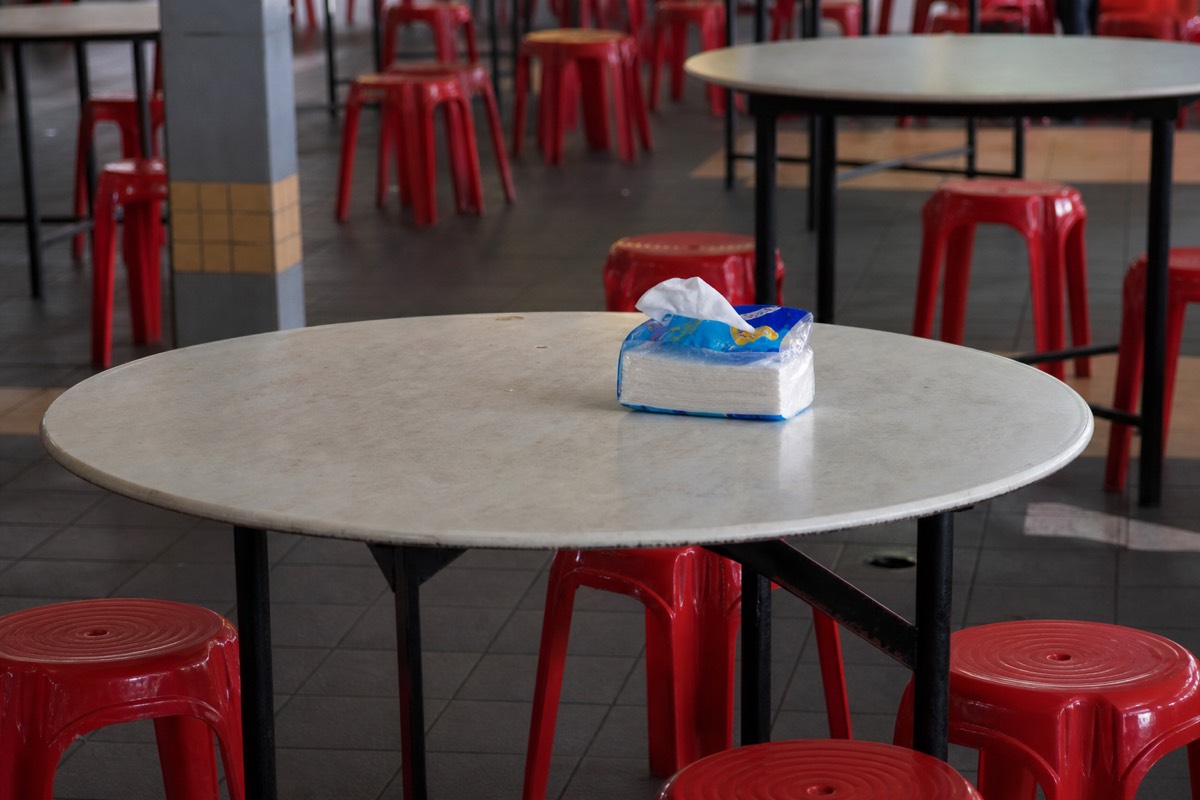
Walk into Chinatown Complex at 12:15pm and every free seat has a packet of tissues sitting on it. That is not litter. That is a table already spoken for, and knowing what it means is the fastest way to stop feeling lost at your first Singapore hawker centre.
Hawker centres run on habits nobody writes down, and most visitors only learn them by making a small mistake first: sitting on a choped seat, hunting for a till that doesn't exist, or leaving a tray on the table because that's what happens everywhere else. None of it is complicated once someone explains it plainly. This is that explanation, covering the things a local would tell a visiting friend before their first plate of chicken rice, grounded in the same hawker culture that UNESCO recognised as an Intangible Cultural Heritage of Humanity in December 2020.
Hawker Centre Rules at a Glance
Figures reflect NEA's published tray-return enforcement framework and general hawker centre norms as of 2026; treat as approximate guidance, not legal advice.
What does "chope" mean and how do you do it properly?
"Chope" is Singlish for reserving a table by leaving a small personal item, usually a packet of tissues, on the seat before you go and order food. It is one of the most recognisable pieces of Singapore hawker culture and every local understands it instantly: a lone tissue packet, umbrella or even a name card on a chair means that seat is taken, even though nobody is sitting in it. The system exists because ordering at a hawker centre can take ten or fifteen minutes if you're queuing at two or three different stalls, and nobody wants to lose their seat during the lunch rush.
To chope properly, find an empty table, place a small item on the seat or in the middle of the table (a single tissue packet is the standard, cheap enough that losing it isn't a disaster), then go order. It is understood to be temporary, ideally for a few minutes while you queue, not a way to hold a table for a friend who is running twenty minutes late. Choping a large table for a group that hasn't arrived yet, sometimes called a "ghost chope," is generally frowned on during busy periods, and you'll occasionally see irritated glances or a staff member move the item along if a table sits empty too long. If you see an item sitting alone on a seat, treat it exactly the way you'd want your own chope respected: leave it and find another spot. For a broader sense of which centres get busy enough that choping actually matters, our guide to the best hawker centres in Singapore breaks down which ones fill up fastest at lunch and dinner.
| Chope item | How common | Notes |
|---|---|---|
| Packet of tissues | Most common by far | Cheap, recognisable, the default choice |
| Umbrella | Common on rainy days | Same idea, more visible |
| Name card or ID card | Occasional, mostly office workers | Riskier to lose, still valid |
| Phone or wallet | Rare, not really advisable | Works but not worth the risk for a visitor |
If you arrive during a real crush and every table, choped or not, is already full, the practical move is to circle the centre once rather than hover anxiously near one spot. Turnover at hawker centres is fast, most people eat in fifteen to twenty-five minutes and leave, so a seat usually opens up within a few minutes if you keep an eye on tables where people are visibly finishing. Standing near a stall's collection counter with your food while you wait is normal and not considered awkward, and plenty of locals do exactly this during the worst of the lunch rush rather than choping preemptively.
When are hawker centres busiest, and does that change how you should behave?
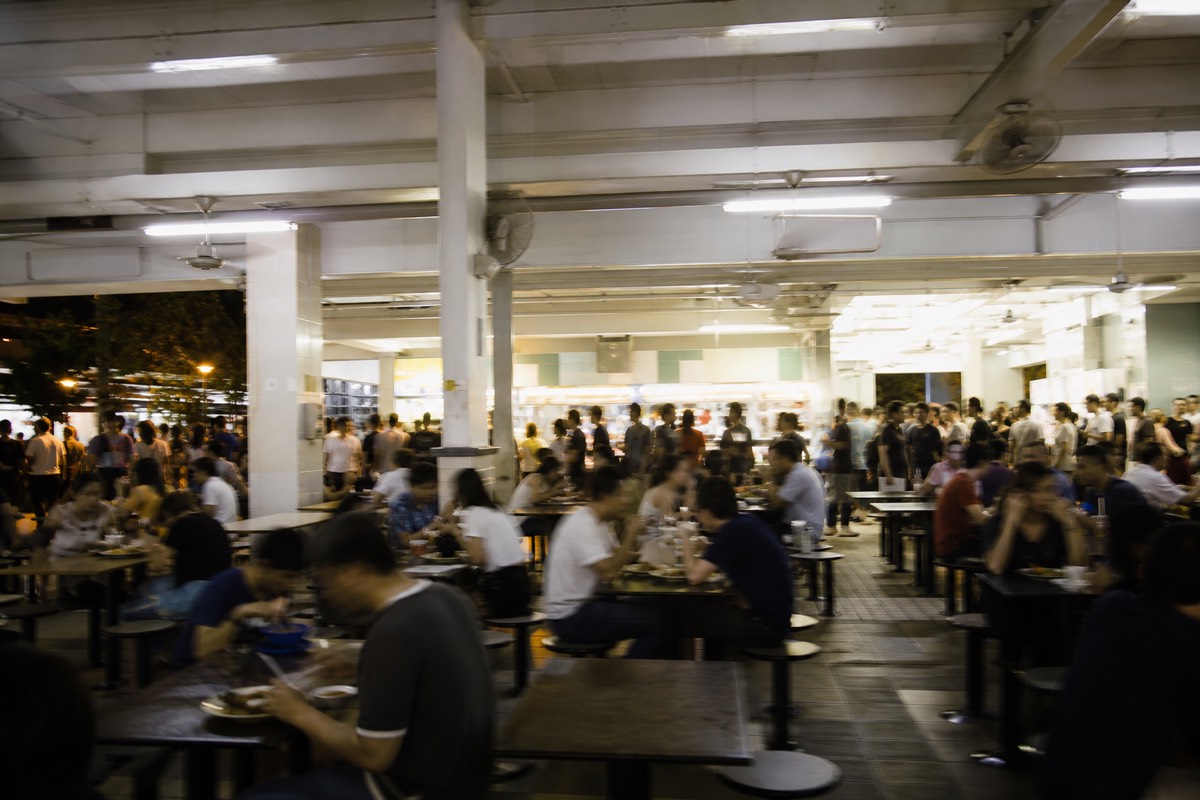
Hawker centres in business districts and near office clusters hit their hardest crowds around 12 to 1:30pm on weekdays for lunch and roughly 6:30 to 8pm for dinner, and etiquette gets stricter during those windows simply because there's less slack in the system. Outside peak hours, mid-morning around 10 to 11:30am or mid-afternoon around 2:30 to 5pm, most centres are noticeably calmer, tables are easy to find without choping at all, and queues at popular stalls shrink dramatically. Weekend patterns shift depending on the centre: neighbourhood hawker centres tend to be busiest for brunch on Saturday and Sunday mornings, while centres near office towers, like those around the Central Business District, go quiet on weekends because the lunch crowd they rely on isn't at work.
| Time window | Typical crowd level | What that means for you |
|---|---|---|
| 10am to 11:30am | Quiet | Easy seating, short or no queues |
| 12pm to 1:30pm (weekday) | Peak lunch | Chope early, expect queues at popular stalls |
| 2:30pm to 5pm | Quiet | Good window for a relaxed first visit |
| 6:30pm to 8pm | Peak dinner | Sharing tables becomes the norm |
| Weekend mornings, neighbourhood centres | Busy | Locals doing weekly breakfast routines |
Do you have to share a table with strangers at a hawker centre?
Yes, table sharing is completely normal and expected once a centre fills up, and nobody will think it's odd if you sit down at a table with an empty seat next to someone eating alone. Hawker centres are communal by design: long tables, close seating, and a fast turnover of diners who eat in twenty minutes and move on. At smaller centres and during peak lunch (roughly 12 to 1:30pm) or dinner (around 6:30 to 8pm), empty tables can be genuinely hard to find, especially near a famous stall with a queue.
If you spot an empty seat at an otherwise occupied table, it's fine to gesture and ask "is this seat free?" and sit down once someone nods or shrugs. There's no obligation to chat, though a friendly nod is normal. What you shouldn't do is sit at a table with a choped seat, or push items belonging to someone else out of the way to make room. If the centre is quiet, you have more choice, but during a genuine rush, sharing is simply how the system copes with limited seating and heavy footfall in a small footprint.
A few small courtesies make table sharing smoother for everyone. Keep your own condiments, tissues and bags on your side of the table rather than spreading across the whole surface. If the stranger you're sharing with is mid-meal, there's no need to make conversation, most locals eat quickly and quietly at a shared table without any expectation of chatting. And if your own group needs the whole table once more seats open up, it's fine to wait for the other diner to naturally finish rather than hovering in a way that rushes them.
Sharing a table is not considered an imposition in Singapore hawker culture. It's built into how these spaces function, and locals do it constantly without a second thought.
How does ordering and paying actually work?
You queue directly at the stall selling the dish you want, place your order and pay right there, not at a central till or with a single server for the whole centre. Each hawker centre houses dozens of independently run stalls, and each one takes its own orders and its own money. If your group wants chicken rice from one stall and laksa from another, you queue separately at each, and food usually gets delivered to your table by stall staff carrying a small paper number, or you carry it yourself on a tray.
Cash remains genuinely useful, particularly at older or smaller stalls, but SGQR-based cashless payment (PayNow, NETS QR, bank apps) has spread widely across hawker centres in the last few years and most stalls in the bigger, more tourist-visited centres now display a QR code you can scan with a Singapore-linked banking app. Card payment is far less common at hawker level than QR-based mobile payment. A visiting tourist without a Singapore bank account or PayNow-linked app should still carry small cash notes and coins, since not every stall has caught up to cashless yet and change from a $20 note can be awkward at a $4 stall. If you're on one of our guided food tours, this part is handled for you, the guide leads you straight to the right stall and often to the front of shorter lines.
| Payment method | How widely accepted | Best for |
|---|---|---|
| Cash (small notes/coins) | Universal, still the safest default | Older stalls, smaller neighbourhood centres |
| PayNow / SGQR | Increasingly common, especially larger centres | Locals and anyone with a Singapore bank app |
| NETS QR / bank apps | Common alongside PayNow | Same as above |
| Credit/debit card | Rare at individual stalls | Not something to count on |
What if you have dietary restrictions or allergies?
Hawker centres are not centrally managed kitchens, so dietary handling varies stall by stall: look for the official green MUIS halal certification sticker on the stall's signboard if you need halal food, ask directly about lard, shrimp paste and fish sauce if you're avoiding non-halal or non-vegetarian ingredients, and flag allergies clearly since English is widely understood but menus rarely list allergens. Halal certification in Singapore is issued and verified by MUIS, the Islamic Religious Council of Singapore, under its Eating Establishment scheme, and it's stall-specific rather than centre-wide, meaning a hawker centre can have both halal-certified and non-halal stalls side by side, so it's worth checking the individual stall rather than assuming the whole centre qualifies. MUIS maintains a live public register of every certified stall, searchable at muis.gov.sg/halal, which is useful to check in advance if a specific stall matters to you. Our roundup of the best halal hawker food in Singapore goes deeper into which centres and stalls are the most reliable options.
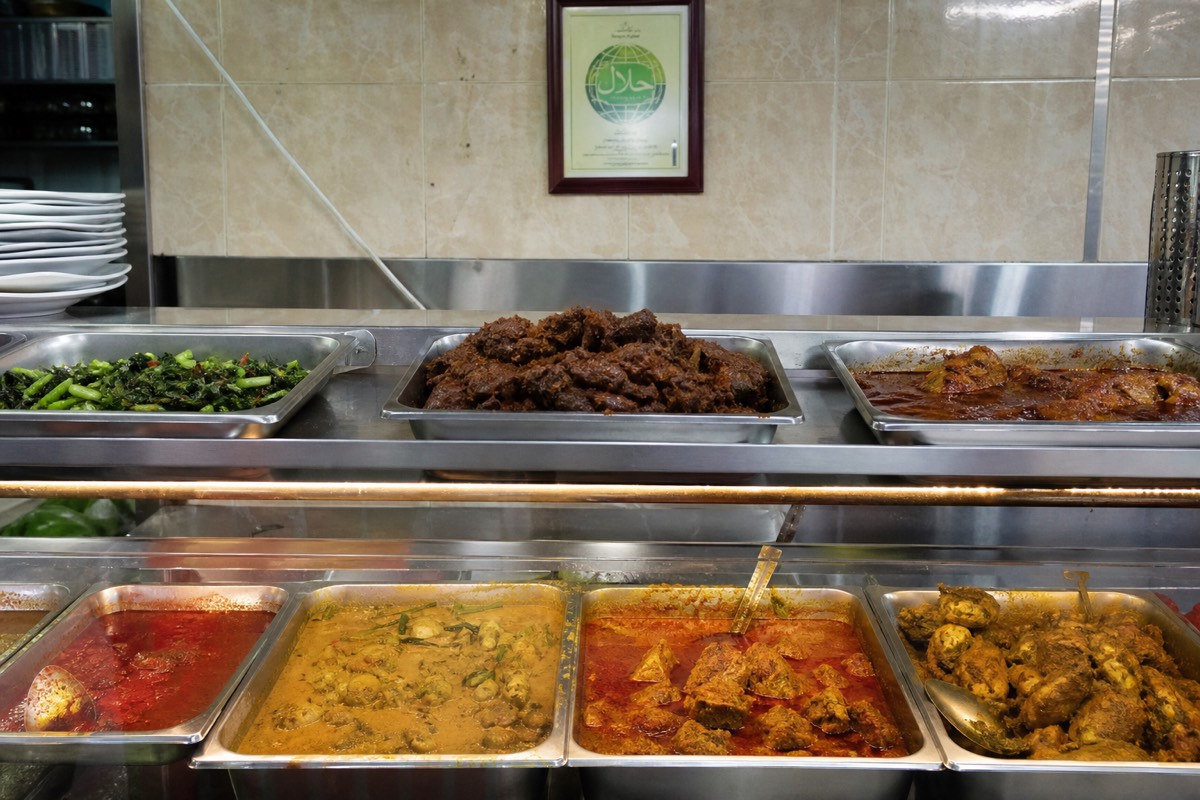
Vegetarian and vegan eating is more of a hunt than a given at a typical hawker centre, since many stalls cook meat, seafood and vegetable dishes on the same wok or in the same stock. Indian vegetarian stalls, often selling thosai, vadai or vegetarian biryani, tend to be the most reliably meat-free option, and some noodle stalls will prepare a version without meat or lard on request if asked plainly. Shellfish allergies deserve particular care around dishes like laksa, chili crab and prawn-based noodle soups, since shrimp paste and dried shrimp turn up in sauces and stocks that aren't always obvious from the dish name alone.
| Dietary need | What to look for | Practical tip |
|---|---|---|
| Halal | Green MUIS certification sticker on the stall board | Check muis.gov.sg/halal in advance for specific stalls |
| Vegetarian / vegan | Indian vegetarian stalls, thosai and vadai counters | Ask if a wok or stock is shared with meat dishes |
| Shellfish allergy | Laksa, chili crab, prawn noodle soups | Ask about shrimp paste and dried shrimp in the stock |
| Peanut allergy | Satay and its peanut dipping sauce | Order satay without sauce or skip it entirely |
Do you tip at a hawker centre?
No, tipping is not customary at Singapore hawker centres and stall owners don't expect it, so you can simply pay the price on the menu and move on. Singapore's food and service culture generally runs without tipping outside of higher-end restaurants that may add a service charge to the bill, and hawker stalls, being small independent operations with wafer-thin margins, are firmly in the no-tip category. Rounding up to the nearest dollar out of convenience (rather than obligation) happens occasionally but isn't expected either.
Where you can show appreciation is simply by clearing your own tray, which brings us to the rule that trips up more first-time visitors than any other.
Why do people scrape and stack their trays at the end of the meal?
Since 1 September 2021, Singapore has legally required diners at hawker centres, coffee shops and food courts to clear their own trays, crockery and litter after eating, enforced as a littering offence under the Environmental Public Health Act. The National Environment Agency (NEA) announced the rule in May 2021, ran a three-month advisory period with no fines from June through August 2021, and began real enforcement on 1 September 2021. First-time offenders get a written warning, second-time offenders face a S$300 composition fine, and repeat, persistent offenders can be taken to court where fines run up to S$2,000. NEA does not enforce the rule against the elderly, people with disabilities, or children under 12.
In practice this means every hawker centre has clearly marked tray-return points, usually a stack of trolleys or a conveyor-style return station, sometimes multiple scattered around a large centre like Chinatown Complex or Maxwell Food Centre. When you finish eating, stack your used plates, cutlery and cups onto your tray, walk it to the nearest return point, and slot the tray in. It takes under a minute and locals do it automatically. Not doing it, beyond the theoretical fine, marks you out instantly as someone who hasn't been told the rule yet, which is a small thing but worth avoiding on your first trip. This is a genuinely different pace of clearing than what many visitors are used to, which is part of why hawker centres still schedule periodic deep cleaning on top of the daily tray-return system.
The rule, per NEA's own framing, covers hawker centres, coffee shops and food courts alike, so the same expectation applies whether you're eating at a large NEA-run hawker centre or a smaller neighbourhood coffee shop under a void deck. Some coffee shops still have cleaning staff who go table to table, which can make it feel less necessary, but the legal expectation is the same everywhere the rule applies: clear your own tray first, and let any staff-run cleaning be a backup rather than something you rely on.
| Offence | Consequence |
|---|---|
| 1st time | Written warning, no fine |
| 2nd time | S$300 composition fine |
| Repeat / contested | Court fine of up to S$2,000 |
| Elderly, disabled, under-12 | Exempted from enforcement |
What actually separates a hawker centre from a food court?
Hawker centres are open-air or semi-open public facilities usually run or licensed by NEA with independent stall operators, while food courts are typically air-conditioned, privately run spaces inside malls with centrally managed cleaning and often a different fee and rental structure. Both share the same basic idea, order at the stall, pay at the stall, but the etiquette can feel slightly different: food courts sometimes handle tray return for you via staff who clear tables, and the choping culture is somewhat less rigid because there's usually more turnover management built in. For visitors comparing the two experiences directly, our breakdown of what actually separates a hawker centre from a food court goes through the practical differences in price, atmosphere and food quality.
| Feature | Hawker centre | Food court |
|---|---|---|
| Setting | Open-air or semi-open, often naturally ventilated | Air-conditioned, usually inside a mall |
| Operator | Independent stalls, NEA-managed or licensed venue | Privately managed, centrally run |
| Typical prices | Generally lower | Often somewhat higher for similar dishes |
| Tray clearing | Diner's legal responsibility since 2021 | Same rule applies, staff sometimes assist |
| Choping culture | Strong and widely practised | Present but less rigid |
Other small habits worth knowing before you go
Beyond choping and tray return, a handful of smaller habits make the first visit smoother: queue single file at popular stalls, have small change ready, expect shared communal tables rather than private booths, and don't expect table service beyond the stall bringing your number to you. Popular Michelin Bib Gourmand stalls, in particular, can draw queues of twenty or thirty people at peak times, and cutting in or hovering near the front isn't well received. If a stall has a numbering system with a bell or a called-out number, listen for it rather than pushing forward.
It also helps to know that some stalls sell out of their signature dish well before official closing time, so arriving early for a specific must-try item is often smarter than arriving right at opening or right before close. Many hawker centres also have a rest day built into the weekly schedule, either a full day the whole centre closes or a rotating set of stalls that close on different days, so it's worth checking a specific stall's hours rather than assuming every hawker centre runs seven days a week without exception.
None of these are rules with fines attached, they're just the small courtesies that make the difference between feeling like a tourist fumbling through the system and someone who clearly knows how a hawker centre works. Locals notice, in a quiet way, when a visitor already understands the choping and tray-return system, and it tends to make interactions at the stall itself a little warmer too.
| Do | Don't |
|---|---|
| Chope with a small, low-value item | Chope a table long before your group arrives |
| Queue directly at each stall you want food from | Wait for table service, it mostly doesn't exist |
| Return your tray when finished | Leave dirty plates on the table |
| Carry small cash alongside a QR-pay app | Assume every stall takes cards |
| Share a table if seats are free | Move someone else's choped item |
| Round up out of goodwill if you like | Feel obligated to tip |
How does a guided food tour change any of this?
A guided tour removes the guesswork entirely: the guide handles ordering, knows which stalls are worth the queue, and can explain choping, tray return and payment in real time as you go rather than you piecing it together from a guide like this one. For a first hawker centre visit, that hand-holding is genuinely useful, especially when you're also trying to figure out which of a dozen stalls actually deserves the wait. It also solves the awkward first-timer problem of not knowing what a dish is called well enough to order it confidently, since the guide does the ordering while explaining what's arriving and why it's worth trying.
That matters more than it sounds. Reading about choping and tray return in advance takes the edge off feeling lost, but actually watching someone else navigate a crowded stall, choose a table, and clear the tray without a second thought is what makes the habits click. The first-timer's guide to the best hawker food in Singapore pairs well with this one if you want the dish-by-dish picture before you land.
Small-group walks built around five tastings, with someone explaining the etiquette as you eat rather than after the fact, are exactly this kind of first-visit orientation. More tasting-dense private options exist too if you want a guide with you for the whole afternoon rather than a shorter walk.