Best Hawker Food in Singapore: A First-Timer's Guide
There's a specific kind of overwhelm that hits a first-time visitor standing in a hawker centre with forty stalls and no idea where to start. This is the dish-by-dish shortlist worth knowing before you land, what each one actually is, roughly what it costs, and where to eat it first.
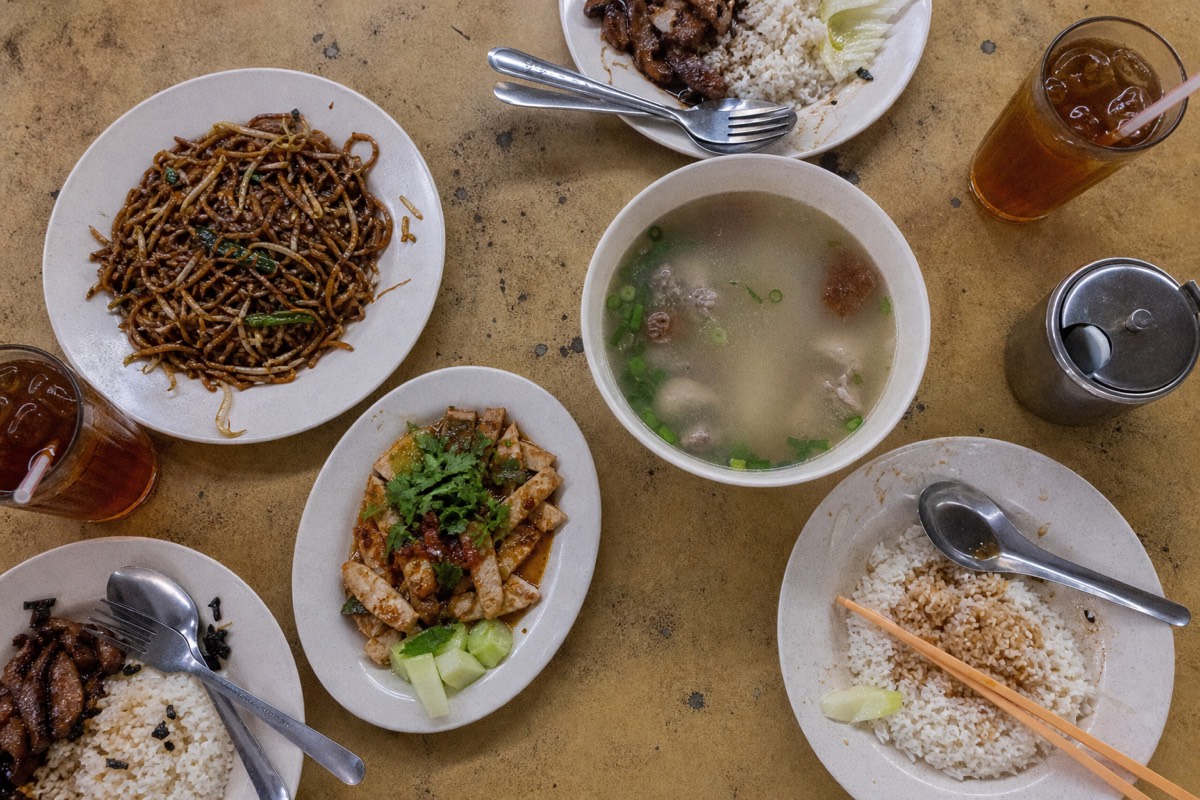
Singapore's hawker culture was inscribed on UNESCO's Representative List of Intangible Cultural Heritage in December 2020, the country's first item on that list, which tells you something about how central this food is to daily life here, not just to tourism. The dishes below are the ones that come up again and again in any serious first-timer's list, drawn from Chinese, Malay, Indian and Peranakan traditions that have shared kitchens and customers for generations. Treat this as your shortlist, not the whole menu.
Before diving into individual dishes, it helps to know that Singaporean hawker food isn't one cuisine wearing different costumes, it's several distinct culinary traditions that happen to sit stall by stall in the same building. A Hainanese chicken rice stall and a roti prata stall a few metres apart trace back to entirely different migration histories, different techniques and different ideas of what a proper meal looks like. That mix, more than any single dish, is what most first-time visitors end up remembering. It's also why the same word, "hawker food," can mean a completely different meal depending on which stall you happen to walk up to first.
First-Timer's Dish Price Ladder
Prices are rough hawker-stall ranges as of 2026, not guaranteed figures. Always check the board at the stall.
What is Hainanese chicken rice and why does everyone say it's Singapore's national dish?
Hainanese chicken rice is poached or roasted chicken served over rice cooked in chicken fat and stock, plated with chili sauce, ginger paste and dark soy, and it's widely treated as Singapore's unofficial national dish for good reason: nearly every hawker centre has at least one stall selling it, and quality varies enormously between them. The rice itself, fragrant and slightly savoury from the poaching liquid, is often what separates a forgettable plate from a genuinely great one, more than the chicken. Tian Tian Hainanese Chicken Rice at Maxwell Food Centre earned a Michelin Bib Gourmand in 2017 and is arguably the most famous single stall in the country, having been featured on Anthony Bourdain's "No Reservations" back in 2008 and later "Parts Unknown," per Michelin Guide's own coverage. Expect a genuine queue there at lunch.
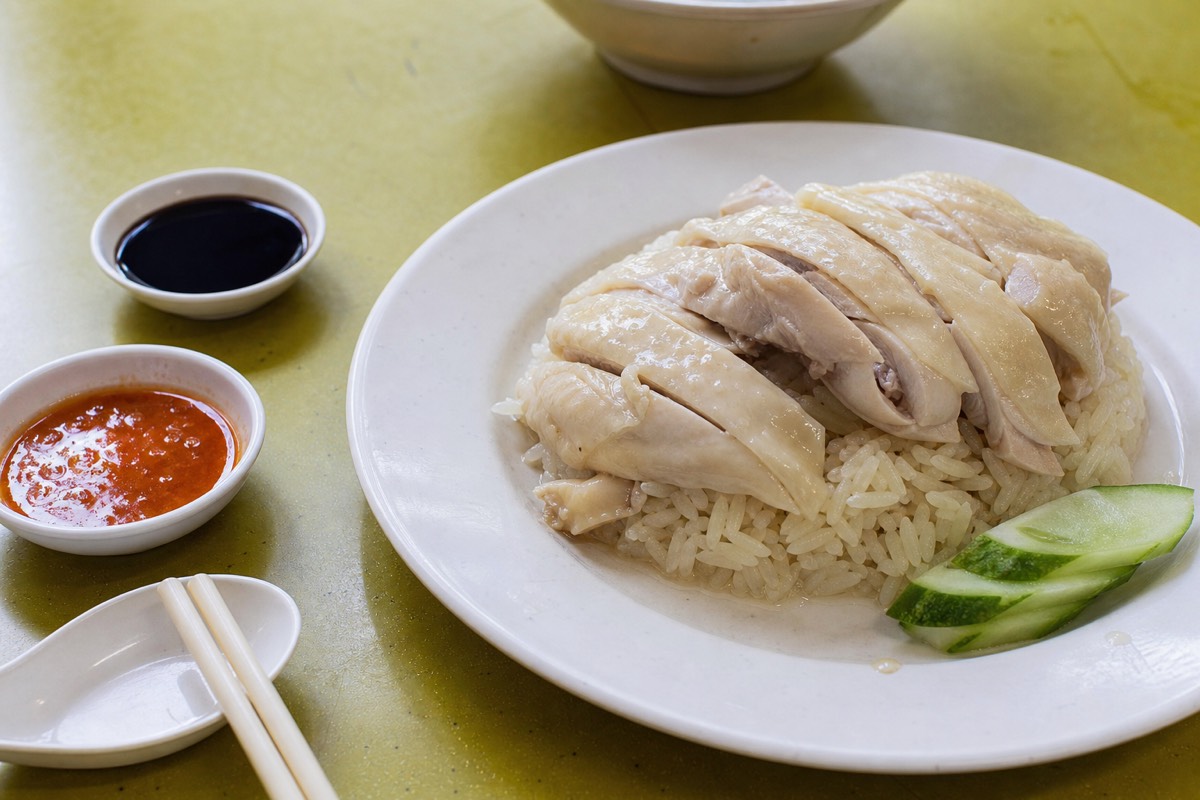
Most stalls sell both poached (steamed) and roasted chicken, and it's worth trying both if you're ordering for a group, since they eat quite differently. Poached chicken is tender, pale and gelatinous at the skin, served slightly cool rather than piping hot, which surprises some first-time visitors expecting hot meat. Roasted chicken has crisper skin and a deeper, savoury flavour closer to what most visitors expect from roast chicken elsewhere. Neither is more "authentic" than the other, they're simply two established styles sold side by side at most stalls. For the full picture on what to look for in a good plate and where else to try it, see the dedicated Hainanese chicken rice guide.
| Style | Texture | Best for |
|---|---|---|
| Poached (steamed) | Tender, silky, served cool | The traditional, most-ordered version |
| Roasted | Crisp skin, deeper savoury flavour | First-timers who prefer a more familiar texture |
| Half-and-half | Both styles on one plate | Groups wanting to compare in one order |
What is char kway teow and what makes a good version?
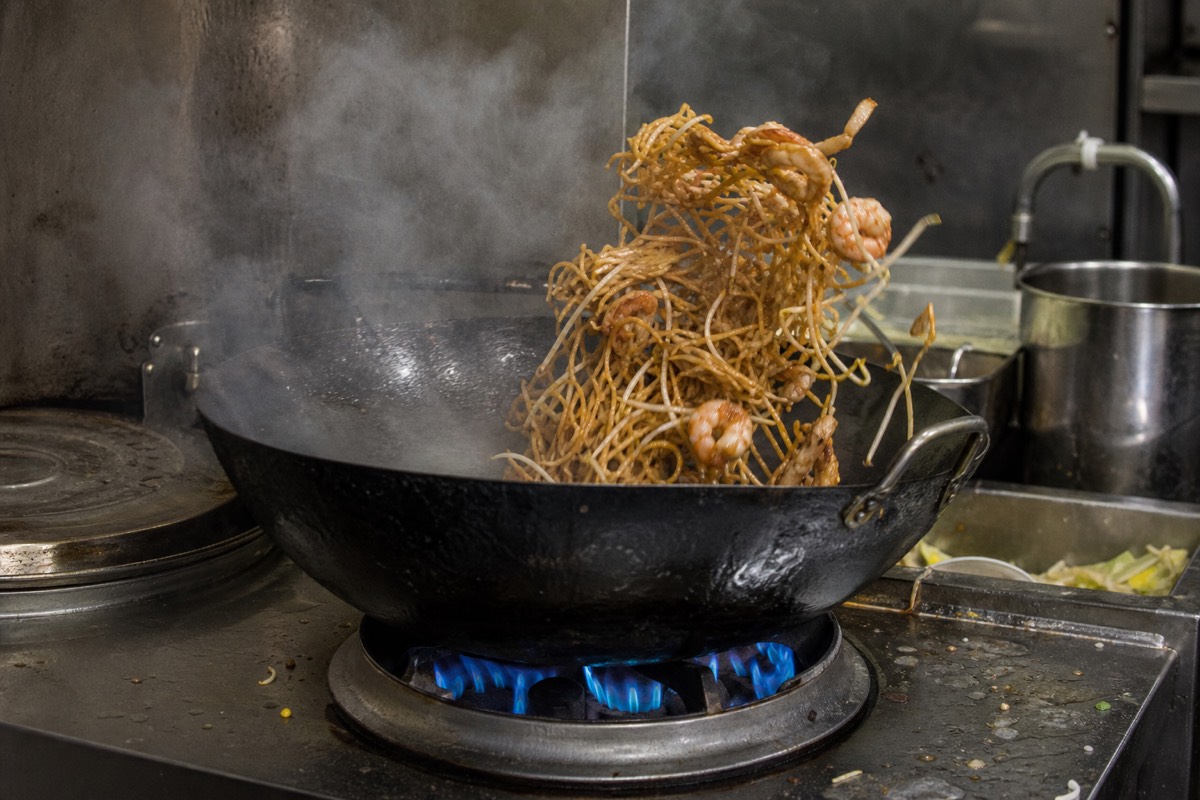
Char kway teow is flat rice noodles wok-fried at very high heat with dark and light soy sauce, chili paste, Chinese sausage, cockles, bean sprouts and egg, and the dish is judged almost entirely on "wok hei," the smoky char that only comes from a properly blazing hot wok. It's rich, a little smoky-sweet, and best eaten hot off the wok rather than after it's sat for ten minutes, since the noodles lose their bite quickly. Good stalls tend to have a visible queue and a cook working one order at a time rather than batching several plates together. Portion sizes and prices usually scale with how much cockle and Chinese sausage go into the dish, so a "small" order is a reasonable way to sample it before committing to a full plate. Our full char kway teow guide covers where to find versions with real wok hei and what a fair hawker price actually looks like.
What is chili crab and is it worth the price?
Chili crab is a whole crab, usually a mud crab, stir-fried in a thick, sweet-savoury tomato-and-chili gravy that's meant to be mopped up with fried mantou buns, and it's generally the most expensive dish on this list because it's priced by the crab's weight rather than as a flat plate price. It sits closer to a seafood-restaurant order than a quick hawker snack, so budget accordingly and expect to share a crab between two or more people. It's also arguably Singapore's most internationally recognisable dish, the one people who've never visited still know by name.
Because it's priced by weight, the final bill depends heavily on the crab's size and the season, and it's worth asking the price per hundred grams before ordering rather than after the crab arrives at your table. Fried mantou buns, usually ordered as a side, aren't optional in most people's eyes, they exist specifically to soak up the gravy and skipping them means leaving the best part of the sauce behind. The dedicated chili crab guide breaks down realistic pricing so you're not surprised by the bill.
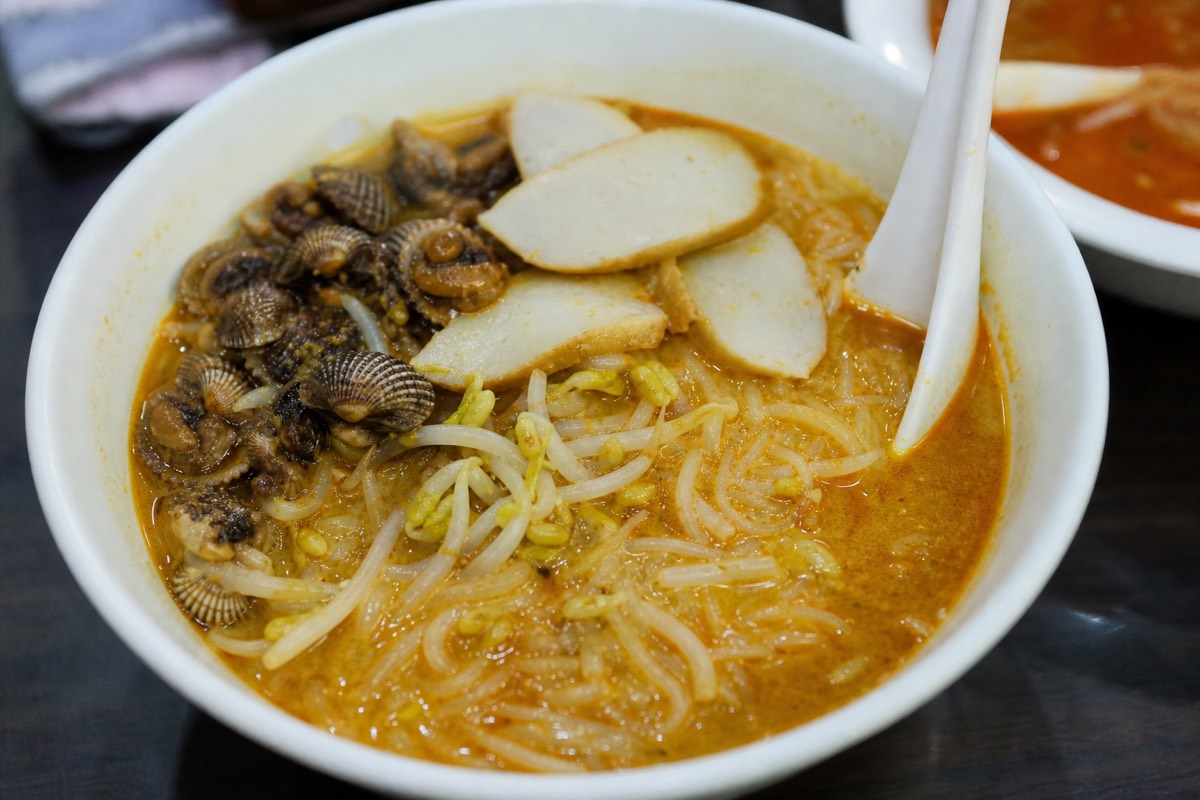
What is Katong laksa and how is it different from other laksas?
Katong laksa is a coconut-and-spice noodle soup served with the rice noodles pre-cut into short lengths specifically so it can be eaten with just a spoon, no chopsticks, a detail unique to the Katong neighbourhood's version of the dish. It's rich, orange-red from the spice paste, usually loaded with cockles, fish cake and prawn, and considerably creamier than many other regional laksas. It's also a dish with a genuine rivalry attached, more than one stall in the Katong area claims to be the "original," and the debate is part of the fun. Order it with cockles if you like a slightly briny edge to the broth, or ask for it without if shellfish isn't for you, most stalls will accommodate the request. The Katong laksa guide goes deep on the history and the competing claims, and if you're curious whether laksa is even a Singaporean dish to begin with, that's covered too.
What is bak kut teh and how do you choose between the two main styles?
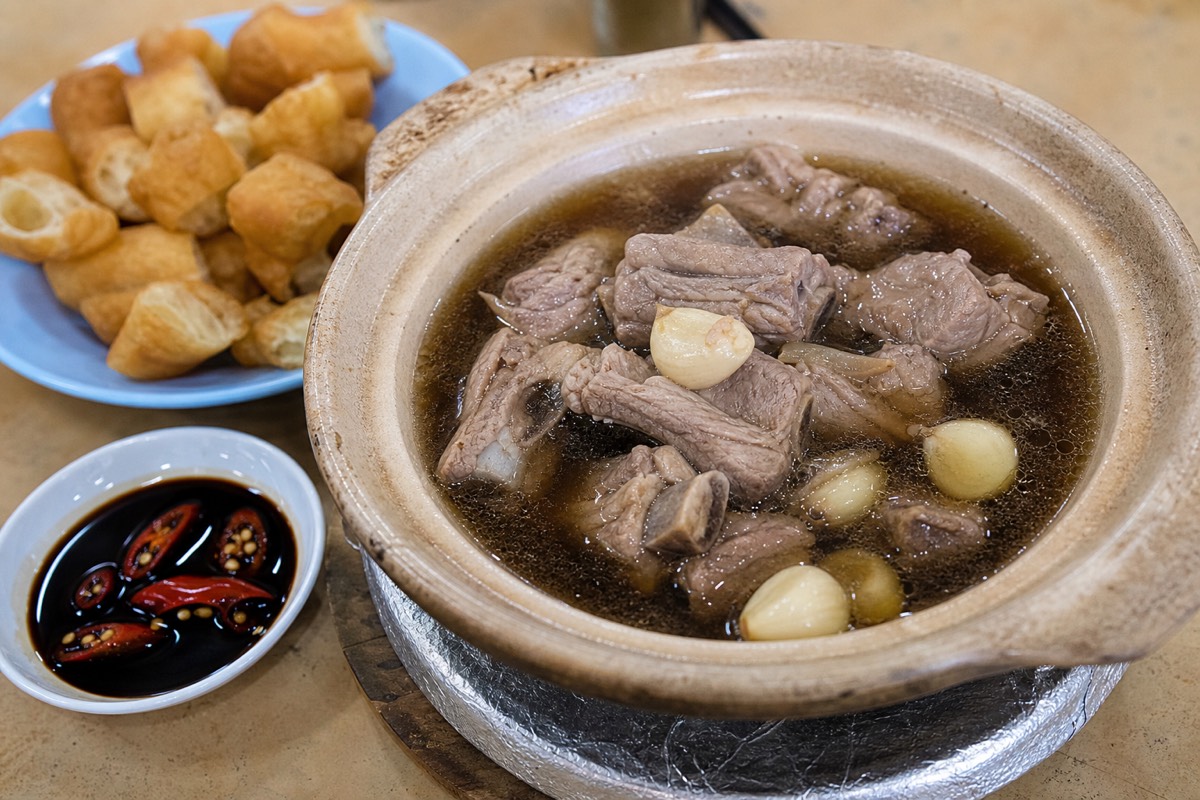
Bak kut teh, literally "meat bone tea," is a pork rib soup that comes in two genuinely different styles: a peppery, clear Teochew-style broth built almost entirely on white pepper and garlic, and a darker, herbal Hokkien-style broth built on a heavier mix of Chinese herbs and soy. It's typically eaten for breakfast or a hearty lunch, served with rice, youtiao (fried dough) for dipping, and sometimes braised pig's trotter or intestine on the side for the more adventurous. Which style is "better" is a genuine local debate rather than a settled question, roughly split along the same lines as the Teochew and Hokkien communities that popularised each version. For more on what the name actually means and where each style comes from, we cover that separately. The bak kut teh guide explains the peppery-versus-herbal split in detail and what to order at each style of stall.
| Style | Broth | Flavour profile |
|---|---|---|
| Peppery (Teochew-style) | Clear, light-coloured | Sharp white pepper and garlic, lighter body |
| Herbal (Hokkien-style) | Darker, soy-based | Layered Chinese herbs, deeper and slightly sweet |
What is satay and where should you eat it?
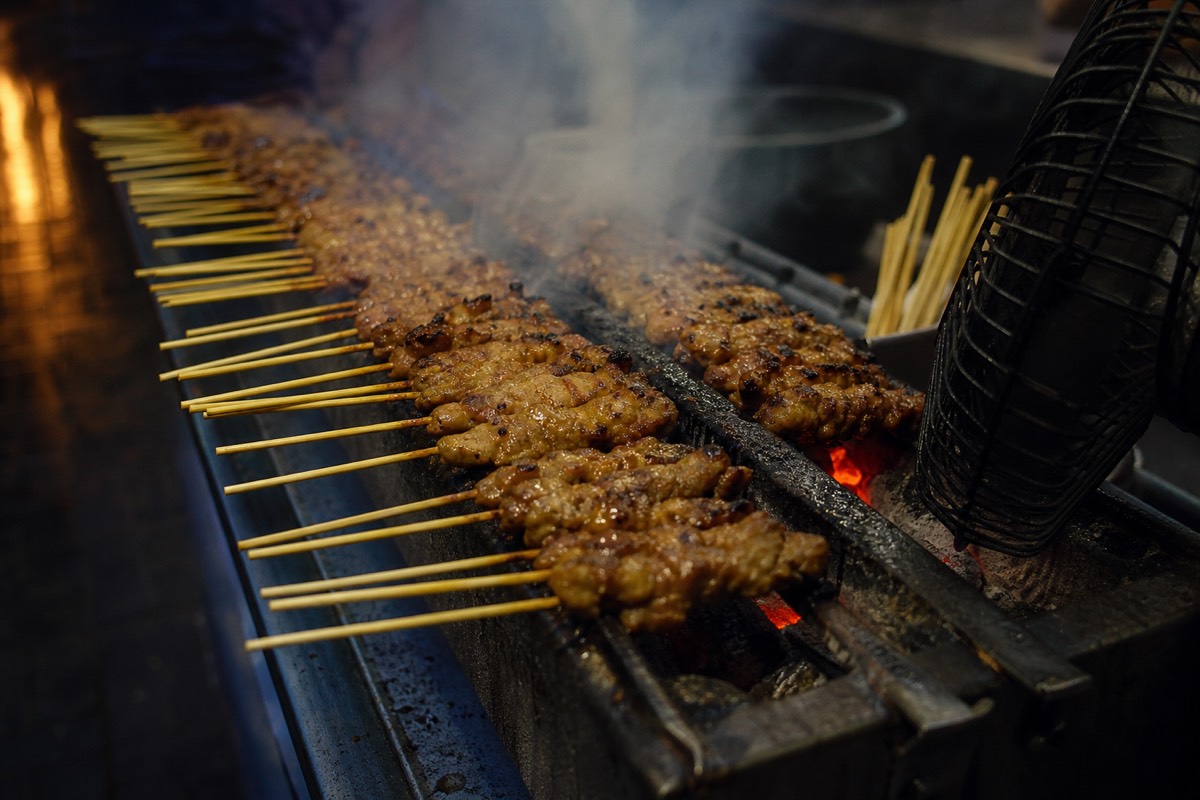
Satay is skewered, char-grilled meat, usually chicken, beef or mutton, marinated and basted while grilling, then served with a peanut dipping sauce, cucumber, onion and pressed rice cubes called ketupat. It's one of the most social hawker dishes in Singapore because it's almost always ordered in batches of ten or more skewers per person and shared across a table. The single most famous place to eat it is Lau Pa Sat's "Satay Street", where Boon Tat Street closes to traffic each evening and a row of open-air satay grills fires up along the road outside the historic 1894 cast-iron market building, gazetted a national monument. It's as much an experience, smoke, sizzle, a strip of grills lit up at night, as it is a meal.
| Meat | Typical order size | Roughly what it costs |
|---|---|---|
| Chicken satay | 10+ skewers per person | Priced per skewer, check current listing |
| Mutton satay | Usually ordered alongside chicken | Slightly higher per skewer, check current listing |
| Beef satay | Less common, still widely available | Similar to mutton pricing, check current listing |
What else should a first-timer try: roti prata, kaya toast and chai tow kway
Beyond the headline dishes, three more are genuinely essential to a complete first visit: roti prata, a flaky South Indian-origin flatbread served with curry, usually eaten for breakfast or supper; kaya toast, crisp toast with coconut jam and butter served alongside soft-boiled eggs and coffee; and chai tow kway, or "carrot cake," which despite the name contains no carrots at all and is actually stir-fried radish cake with egg and preserved radish, served in a "white" (plain, crisp) or "black" (sweet dark soy) style. Roti prata is best hot off the griddle, torn and dipped straight into curry. Kaya toast is the classic Singaporean breakfast pairing, often eaten alongside "kopi," strong local coffee with condensed milk, at an old-school coffee shop rather than a hawker centre specifically. Chai tow kway is a solid mid-afternoon snack, cheap, filling, and different enough from anything most first-time visitors have tried that it's worth actively seeking out rather than treating as a backup option.
Roti prata itself comes in more varieties than the plain version most visitors picture first. Egg prata, with a beaten egg cooked into the dough, is the most common upgrade, and cheese, onion or even chocolate versions show up at stalls aimed at a younger local crowd. The curry it's served with usually comes in a small bowl on the side rather than poured over, so tearing off a piece and dipping is the expected way to eat it rather than cutting it with a fork and knife.
What about drinks: how does kopi ordering actually work?
Singapore's traditional coffee, "kopi," has its own compact ordering vocabulary that's worth learning before you sit down at a coffee shop: "kopi" alone means coffee with condensed milk and sugar, "kopi-o" is black coffee with sugar, "kopi-c" uses evaporated milk instead of condensed, and adding "kosong" to any of those removes the sugar entirely. "Siew dai" asks for less sugar, "gah dai" asks for more, and most stalls understand these terms even from a visibly first-time visitor who mispronounces them slightly. It sounds like a lot to remember, but ordering "kopi-o kosong" or just "kopi" and letting the default arrive is a perfectly reasonable way to start.
Tea follows the same naming logic with "teh" swapped in for "kopi": "teh" is tea with condensed milk and sugar, "teh-o" is tea with sugar and no milk, and "teh-c" uses evaporated milk. Fresh sugarcane juice, lime juice and soya beancurd drinks are also widely sold at dedicated drink stalls within most hawker centres, ordered and paid for separately from your food, which is worth knowing so you're not searching for a drinks menu at the noodle stall itself.
| Order | What you get |
|---|---|
| Kopi | Coffee with condensed milk and sugar |
| Kopi-o | Black coffee with sugar, no milk |
| Kopi-c | Coffee with evaporated milk and sugar |
| Kopi-o kosong | Black coffee, no sugar, no milk |
| Dish | Roughly what it costs | Best eaten |
|---|---|---|
| Roti prata | Around $1 to 2 per piece, check current listing | Breakfast or late-night supper |
| Kaya toast set | Around $3 to 5, check current listing | Breakfast, with kopi |
| Chai tow kway (carrot cake) | Around $3 to 5, check current listing | Mid-morning or afternoon snack |
How do you know if a hawker stall is clean and safe to eat at?
Look for the food safety grade displayed at the stall: Singapore's Food Agency runs a licensing and inspection system covering roughly 45,000 food establishments including hawker stalls, and as of January 2026 rolled out a new "SAFE" framework grading stalls A, B or C based on their food safety track record, with newer stalls marked "NEW" until they build up a history. The old A-to-D letter grading that longtime visitors may remember has been phased out under this newer framework, per Mothership's coverage of the change. A lower grade doesn't necessarily mean the food is unsafe to eat, it triggers more frequent inspections, but as a simple visual check, a stall carrying a high grade and clearly displaying it is a reasonable signal of consistency.
In practice, most visitors never think about the grading system at all and simply follow the same signal locals do, a long, fast-moving queue. A queue means turnover, and turnover means fresh ingredients rather than food sitting out. It's a far more reliable real-time indicator than the grade sticker for a first-time visitor trying to choose between two similar stalls in the moment.
What should a first-timer's order look like at each stop?
A practical first-timer's order splits by meal: kaya toast and kopi for breakfast, chicken rice or char kway teow for lunch, chili crab or satay for a bigger evening meal, and laksa or bak kut teh whenever a warm, filling bowl sounds right. Nobody eats all of these dishes in one sitting, and trying to is the fastest way to end a trip too full to enjoy the last few meals. Pacing across a two or three day visit, one or two dishes a day alongside regular meals, tends to work far better than treating it as a single marathon.
Portion sizes at hawker stalls also tend to be smaller than a typical Western restaurant plate, which is exactly why sharing multiple dishes across a table works so well here. A group of three or four can reasonably order five or six different plates to share rather than one dish each, tasting far more of this list in a single sitting than a solo diner ever could. If you're travelling alone, ordering "small" portions where a stall offers the option keeps the same variety possible without excessive leftovers, and revisiting the same hawker centre on a later day to try what you skipped is a perfectly normal way to travel here.
| Dish | Where to look | Roughly what it costs | Dietary notes |
|---|---|---|---|
| Hainanese chicken rice | Any major hawker centre, Maxwell especially | Around $4 to 6, check current listing | Not halal-certified everywhere, ask the stall |
| Char kway teow | Most hawker centres | Around $4 to 7, check current listing | Usually contains pork lard and cockles, not vegetarian |
| Chili crab | Seafood-focused stalls or restaurants | Priced by weight, often $60 to $100+, check current listing | Shellfish allergy risk, ask about spice level |
| Katong laksa | Katong district and major centres | Around $5 to 8, check current listing | Contains shellfish and coconut milk |
| Bak kut teh | Dedicated bak kut teh stalls, morning hours | Around $6 to 10, check current listing | Pork-based, not halal |
| Satay | Lau Pa Sat's Satay Street, evenings | Priced per skewer, often $0.70 to $1, check current listing | Peanut sauce, allergy risk |
What does a good first day of eating in Singapore actually look like?
A realistic first-day itinerary starts with kaya toast and kopi at breakfast, moves to chicken rice or char kway teow for a hawker centre lunch, leaves room for a chai tow kway or roti prata snack mid-afternoon, and finishes with satay at Lau Pa Sat or a laksa dinner in the evening. This spreads dishes across the day rather than stacking them, keeps portions manageable, and covers most of the essential flavours without needing a second stomach. If Chinatown is on the day's route, that's also a natural place to weave in a stop at one of the best hawker centres in Singapore, since several sit close enough together to compare within a single afternoon.
If you have a second or third day to keep exploring, resist the urge to simply repeat day one at higher volume. Spacing out chili crab and bak kut teh, the two heaviest dishes on this list, onto separate days keeps each one enjoyable rather than exhausting. A second day built around a different neighbourhood, Katong for laksa and Peranakan food, or Little India and Kampong Glam for a change of cuisine entirely, tends to leave first-time visitors with a much fuller picture of what Singapore actually eats day to day than repeating the same hawker centre twice.
| Time | What to eat | Where |
|---|---|---|
| Morning | Kaya toast, soft-boiled eggs, kopi | Old-school coffee shop or hawker stall |
| Midday | Hainanese chicken rice or char kway teow | A major hawker centre |
| Afternoon | Chai tow kway or roti prata as a snack | Same centre or a nearby one |
| Evening | Satay, or laksa if you'd rather sit down for a full bowl | Lau Pa Sat's Satay Street or Katong |
Should a first-timer just book a guided food tour instead of figuring this out alone?
A guided food tour solves the two hardest parts of a first hawker visit at once, deciding which stalls are actually worth it and ordering without knowing the local shorthand, by having someone who already knows the answers walk you through several tastings in one outing. It's a fast way to cover four or five dishes from this list without the trial and error of picking blindly at a strange stall, and it removes the risk of spending a meal at a mediocre stall simply because it was the first one you saw. For a family or a small group travelling together, splitting the cost of a guided tastings tour across several people also tends to work out close to what an average sit-down dinner would cost per head anyway.
Before you go, it's worth reading up on hawker centre etiquette, the choping, tray-return and payment habits that make a first visit feel far less confusing, and if you want the shorter, quicker-read version of this same first-timer's picture, our what to eat in Singapore as a tourist cheat sheet covers the same ground in a compact list.
A UNESCO hawker heritage walk, or a small-group tour built around Michelin Bib Gourmand and Michelin-listed stalls, both cover several dishes on this list directly, chicken rice, laksa and more, guided by someone who already knows which stall on a given day is worth the queue.