Is Laksa Malaysian or Singaporean? Untangling the Rivalry
Ask a hawker in Penang and a hawker in Singapore's Katong district which country invented laksa, and you'll get two confident, completely different answers, often about two dishes that don't taste anything alike.
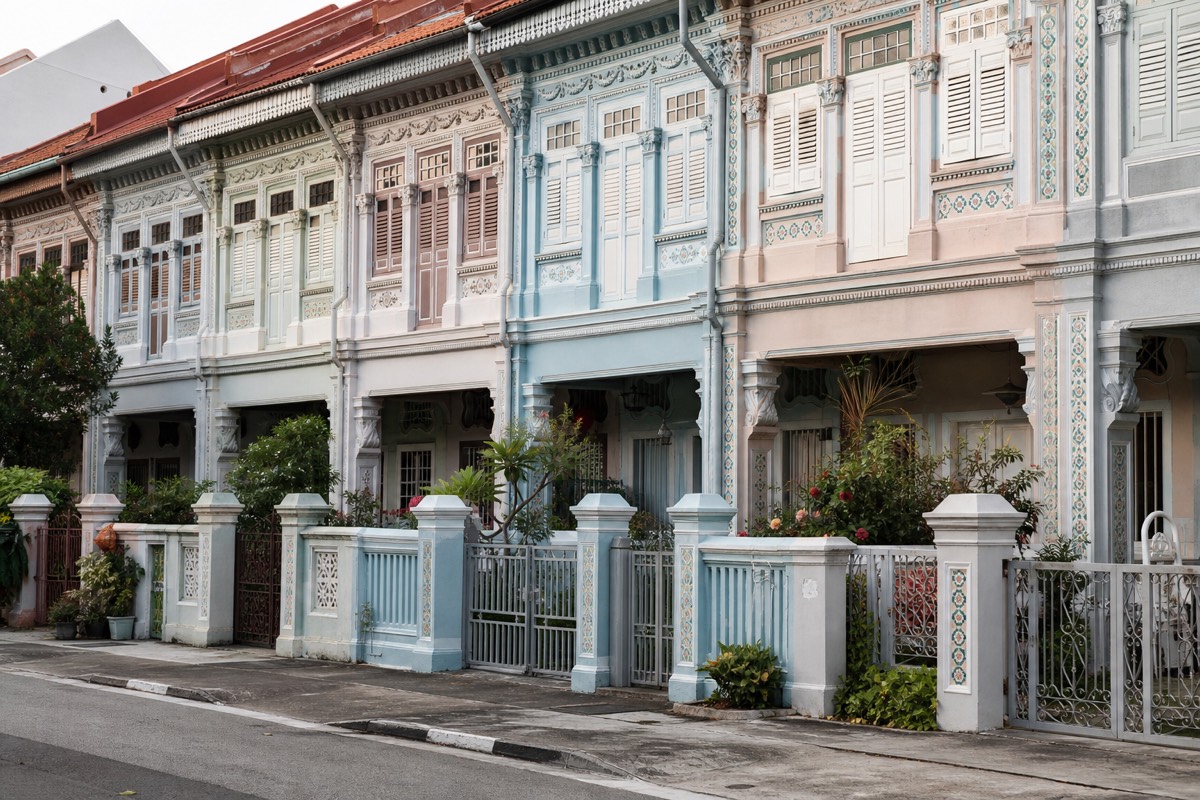
Ask a hawker in Penang and a hawker in Singapore's Katong district which country invented laksa, and you'll get two confident, completely different answers, often about two dishes that don't taste anything alike.
So Is Laksa Malaysian or Singaporean?
Laksa isn't a single invention that either country can fully claim: it's a Peranakan (Straits Chinese) creation that developed across the old Malacca Strait trading ports, Penang, Malacca and Singapore among them, generations before the modern border between Malaysia and Singapore existed. The Peranakans were descendants of Chinese immigrants who settled the Strait and married into local Malay families, and their food, laksa included, blended Chinese ingredients with Malay and Indonesian spice traditions. National Geographic's reporting on the dish frames it accurately: a fusion of cultures as much as a fusion of ingredients, with a history that predates the 1965 split between Singapore and Malaysia by a long way. The National Library Board's Infopedia entry notes that even the name's origin is disputed, possibly from the Hindi "lakshah" (a hundred thousand, a nod to the number of ingredients) or the Persian "lakcha" (vermicelli in broth).
Peranakan cooking generally works this way: Chinese ingredients and techniques folded into Malay and Indonesian spice pastes and coconut milk, the same pattern behind other Peranakan dishes like ayam buah keluak and babi pongteh. Laksa simply became the most famous export of that blend, adapted a little differently in each port town it passed through. Singapore and Malaysia have sparred publicly over shared dishes before, from chilli crab to nasi lemak, and laksa is just the most argued-over entry on that list; food-nationalism debates aside, both countries' tourism boards now promote their own version rather than disputing the other's right to serve it.
What's the Actual Difference Between Assam Laksa and Curry Laksa?
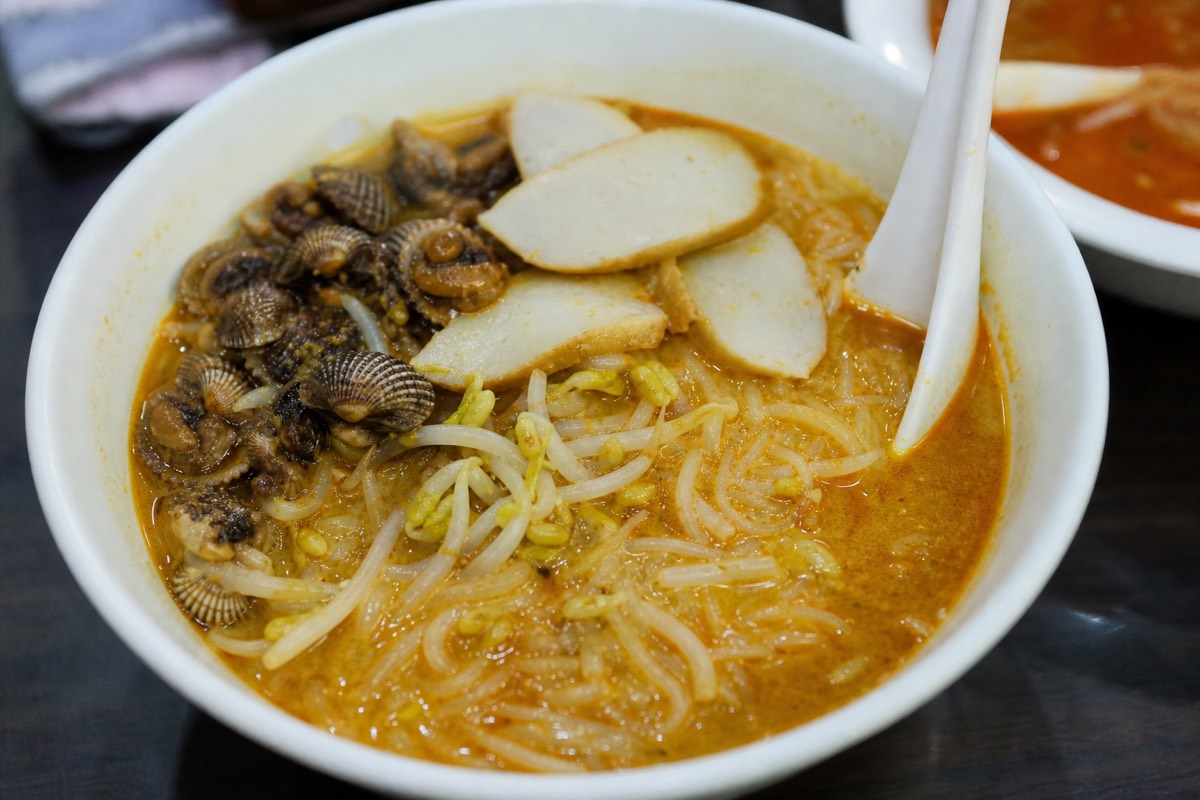
Assam laksa, Penang's signature version, is a sour, tamarind-based fish broth built on shredded mackerel with no coconut milk anywhere near it, while curry laksa, the style Singapore's Katong district made famous, is a rich, orange-yellow coconut and dried-shrimp broth, and the two share little beyond noodles and the word "laksa." Assam laksa gets its tang from asam gelugur (dried tamarind peel) and a dab of shrimp paste, and it's typically topped with pineapple, cucumber, mint and torch ginger flower rather than cockles or prawns. Curry laksa runs in the opposite direction entirely: thick, creamy, sweet from coconut milk, and topped with cockles, prawns and fish cake instead of raw vegetables. The other split is in how each broth gets its underlying savouriness: Penang's version relies on the mackerel itself, simmered down into stock, while Singapore's curry laksa often builds its depth from prawn heads and shells simmered into the base, giving the broth a bisque-like sweetness that coconut milk alone wouldn't produce.
| Feature | Assam Laksa (Penang) | Curry Laksa (Singapore/Katong) |
|---|---|---|
| Broth base | Tamarind, mackerel stock (sour) | Coconut milk, dried shrimp (rich) |
| Colour | Reddish-brown | Orange-yellow |
| Typical toppings | Shredded mackerel, pineapple, mint | Cockles, prawns, fish cake |
| Coconut milk | None | Central to the broth |
Why Does Singapore's Katong Laksa Get Its Own Name?
"Katong laksa" refers specifically to the coconut curry-style laksa that took its current shape in Singapore's Katong district from the 1950s onward, popularized by hawkers, including the vendor behind the well-known Janggut Laksa, who cut the rice noodles into short lengths so the whole bowl could be eaten with a spoon alone, no chopsticks needed. That detail, cut noodles eaten one-handed, is now the defining signature of the Singapore style specifically, distinct from how laksa is eaten almost everywhere else in the region. Katong laksa is now sold well beyond its original neighbourhood, including at many of Singapore's best-known hawker centres, not just in Katong itself. It's also worth knowing that laksa's regional diversity doesn't stop at these two styles: Sarawak laksa, from Malaysian Borneo, adds its own spin again, a tamarind-and-coconut hybrid broth topped with shredded chicken, prawns, beansprouts and egg strips, which is proof the Malaysia-versus-Singapore framing undersells how many real regional versions exist. For the deeper dive into where the Singapore style came from and where to try it, see our Katong laksa guide.
So Who's "Right" in the Rivalry?
Neither side is wrong, exactly: Malaysia and Singapore share the same Peranakan root, but each region shaped its own legitimate, distinct dish over roughly a century of separate local ingredients, immigration patterns and taste. Treating it as a zero-sum "who invented it" contest misses what's actually interesting, which is that one dish name covers at least half a dozen real regional variants, from Penang's assam laksa to Sarawak laksa to Singapore's Katong curry style, each shaped by what was locally available and who was cooking it. If you're ordering laksa in Singapore specifically, you're almost certainly getting the curry-style Katong version by default, since that's what most hawker centres and food courts stock; asking for "Penang-style" or "assam laksa" by name is the more reliable way to seek out the sour version if that's what you're after, and most hawkers will know exactly what you mean even if their own stall doesn't serve it. Curious what actually separates a good bowl of the Singapore style from a mediocre one once you've settled which laksa you're eating? Our piece on what makes a laksa worth ordering twice breaks that down, and it's one of the dishes worth prioritizing on our broader first-timer's cheat sheet for what to eat in Singapore.