Lau Pa Sat: Satay Street, Hours, Parking & MRT Guide
Lau Pa Sat is a working Victorian market building from 1894 that turns into an open-air satay grill every night, when the street beside it closes to cars and the smoke takes over.
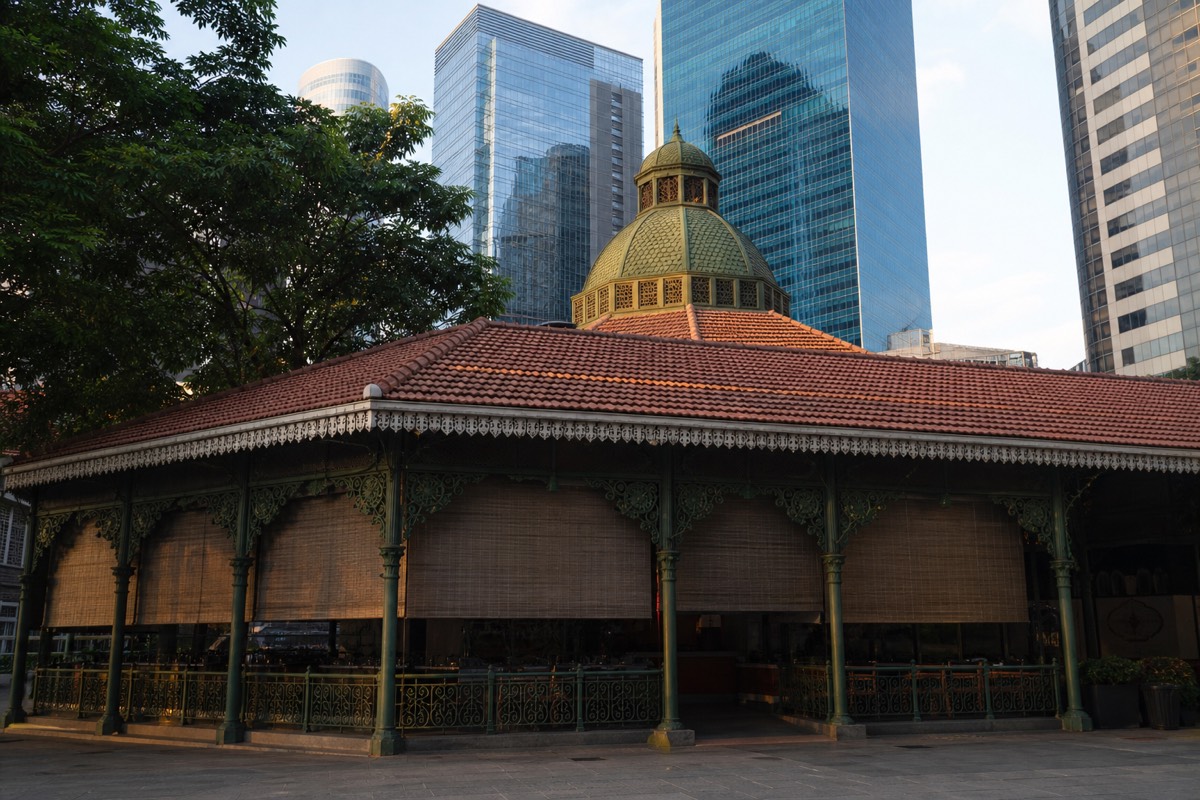
Lau Pa Sat stands in the middle of Singapore's financial district, an octagonal cast-iron building that has survived longer than almost anything else around it. By day it is a lunch spot for the office towers of Raffles Place and Tanjong Pagar. By night, once the surrounding street closes to traffic, it becomes Satay Street, rows of open-air grills sending smoke into the CBD skyline. Few hawker sites in Singapore carry this much architectural history while also functioning as a genuinely good place to eat.
This guide covers what a first-time visitor needs: the building's real history, how to get there by MRT, where to park if you must drive, how Satay Street ordering actually works, and the honest answer to whether Lau Pa Sat counts as a hawker centre at all, since parts of it are enclosed and air-conditioned in a way most hawker centres are not.
It is also a useful comparison point if you are trying to decide how to spend a limited number of hawker meals during a short trip. Chinatown's Maxwell Food Centre is closer to a classic, un-air-conditioned hawker experience, while Lau Pa Sat gives you architecture, a night market atmosphere and a slightly more comfortable fallback if the heat becomes a problem partway through your visit.
What a stick of satay costs on Satay Street
Prices are approximate, gathered from current visitor reports; each stall sets its own menu and pricing can vary from stall to stall.
What Is Lau Pa Sat and Why Is It a National Monument?
Lau Pa Sat is a Victorian-era cast-iron market building completed in 1894 on newly reclaimed land at what was then Collyer Quay, gazetted as a national monument, and now one of the largest surviving Victorian cast-iron structures of its kind in Southeast Asia. According to Singapore's National Heritage Board, the octagonal structure standing today was designed by municipal engineer James MacRitchie and built between 1890 and 1894, with the ironwork cast and shipped from the Walter MacFarlane foundry in Glasgow, Scotland, an unusually international supply chain for a Singapore building of that era. The market traded as a wet market for decades before the surrounding area grew into the financial district it sits in today, and it converted to a hawker centre in 1972 as that shift took hold.
The building's more recent history explains why it does not look purely Victorian up close: it was dismantled and carefully reconstructed in the mid-1980s to allow an MRT tunnel to be built beneath it, then reopened and officially renamed Lau Pa Sat in 1989 as a festival market, with a further major refurbishment completed in 2014. The name itself is a piece of local shorthand: "lau" means old in Hokkien, and "pa sat" comes from the Malay word for market, "pasar," so Lau Pa Sat translates loosely to "old market," a name that stuck once other, newer markets opened elsewhere and Singaporeans needed a way to tell them apart. For the fuller documented history, the National Heritage Board's record on the former Telok Ayer Market lays out the building's full timeline, and the National Library Board's archive entry covers the same ground from a slightly different angle, including its years as a working wet market before the food centre era began.
Key fact: Lau Pa Sat is one of Singapore's national monuments, protected the same way a listed historic building would be. Eating there means eating inside a structure the government has formally decided is worth preserving, not just a functional hawker shed, even though the building you see today has been carefully dismantled and rebuilt at least once in its lifetime.
| Year | What happened |
|---|---|
| 1890-1894 | Cast-iron octagonal market building constructed and completed on reclaimed land |
| 1972 | Converted from a wet market into a hawker/food centre as the district grew up around it |
| Mid-1980s | Dismantled and reconstructed to allow an MRT tunnel to be built underneath |
| 1989 | Reopened and officially renamed Lau Pa Sat as a festival market |
| 2014 | Completed its most recent major refurbishment |
Where Is Lau Pa Sat and How Do You Get There by MRT?
Lau Pa Sat sits on Raffles Quay in the Central Business District, within easy walking distance of both Telok Ayer MRT station on the Downtown Line and Raffles Place MRT station on the North South and East West Lines. Telok Ayer is the closer of the two for most approaches, roughly a three to five minute walk along Cross Street and Robinson Road. Raffles Place takes slightly longer, closer to seven or eight minutes, but is a useful option if you are arriving from the North South or East West Line and do not want to change trains.
Because it sits at the heart of the financial district, Lau Pa Sat is easy to fold into a walking route that also covers Chinatown or the Singapore River, unlike some hawker centres that require a dedicated trip. If you want a wider sense of how it stacks up against the city's other big hawker sites before deciding how much time to give it, the guide to Singapore's best hawker centres covers the full field.
Downtown MRT station, also on the Downtown Line, is a third option worth knowing about if you are approaching from that direction, roughly eight to ten minutes on foot through a stretch of Shenton Way lined with office towers rather than shops or food stalls. None of the three approaches involve stairs-heavy interchanges, which matters if you are travelling with luggage straight from the airport or a hotel check-in, since Lau Pa Sat sits close enough to the CBD's hotel cluster that a same-day arrival visit is realistic.
| MRT station | Line | Approx. walk time |
|---|---|---|
| Telok Ayer | Downtown Line | 3-5 minutes |
| Raffles Place | North South / East West Line | 7-8 minutes |
| Downtown | Downtown Line | 8-10 minutes |
What Are Lau Pa Sat's Opening Hours?
Lau Pa Sat is open through most of the day and well into the night, roughly 24 hours in practice since different stalls rotate through breakfast, lunch, dinner and the late-night Satay Street crowd, though the exact mix of open stalls shifts by hour. Daytime is dominated by office lunches from the surrounding CBD towers, heaviest between 12pm and 2pm on weekdays. The character changes completely after dark, once the dinner crowd arrives and Satay Street sets up outside, running roughly from early evening until well past midnight on weekends.
Because it never fully closes, Lau Pa Sat is one of the more flexible hawker sites in Singapore to work into a trip. Arriving mid-afternoon avoids both the lunch crush and the evening satay queues, though you will miss Satay Street itself, which only exists once Boon Tat Street closes to cars.
Breakfast at Lau Pa Sat is a smaller, quieter affair than lunch or dinner, mostly local office workers grabbing coffee and toast before heading into nearby towers, and a handful of stalls that open early enough to catch that crowd. If your itinerary has an early flight or an early meeting nearby, it is one of the few hawker sites in the CBD reliably open before most of the city's cafes.
The gap between the afternoon lull and the evening satay rush is a genuinely good window for a first visit if you want to see the building itself without a crowd competing for your attention. Roughly 3pm to 5pm on a weekday, after the lunch stalls have wound down and before the dinner crowd or Satay Street set-up begins, is when the octagonal hall is at its emptiest, which makes it easier to appreciate the ironwork and take unobstructed photos before the space fills back up.
| What | Detail |
|---|---|
| Address | 18 Raffles Quay, Singapore, at the corner with Boon Tat Street |
| Hours | Effectively round-the-clock, with stall mix shifting through the day; Satay Street runs evenings only |
| Nearest MRT | Telok Ayer (Downtown Line), 3-5 min walk |
| Nearest tour on this site | Night Out in Singapore, built around a Lau Pa Sat dinner stop |
| Typical spend | Around $10-20 for a satay meal for one, check current stall pricing |
Is There Parking Near Lau Pa Sat?
Parking near Lau Pa Sat is available but expensive and often full during CBD office hours, since it sits in the middle of Singapore's most built-up commercial district, so most visitors, locals included, arrive by MRT instead. The nearest option is the multi-storey car park directly beneath and around the building itself, supplemented by several commercial car parks in the surrounding Raffles Quay and Robinson Road towers that open their parking to the public outside of business hours.
If you are driving in specifically for a Satay Street dinner, evenings and weekends are noticeably easier for parking than a weekday lunch, when the surrounding car parks are full of office workers' cars for the entire day.
Ride-hailing is genuinely the easiest option for most visitors, since Raffles Quay has clear pick-up and drop-off points and CBD traffic thins out considerably once the evening office exodus finishes around 7pm. If you are combining a Lau Pa Sat dinner with a later stop, such as a riverside bar or one of the light shows further along the bay, a taxi or ride-hail booking avoids the hassle of retrieving a car from a full car park at the end of the night.
Cyclists and scooter riders occasionally use Lau Pa Sat as a stop too, since Singapore's CBD has become steadily more bike-friendly in recent years, though the building itself has no dedicated bike parking beyond whatever is available on the surrounding streets. For most international visitors without their own vehicle, none of this matters much beyond confirming that a car is genuinely the least convenient way to reach the place.
| Option | Notes |
|---|---|
| Lau Pa Sat basement/surrounding car park | Closest option, fills during weekday office hours |
| Commercial building car parks nearby | Some open to the public evenings and weekends |
| Street parking | Very limited in the CBD, not a reliable option |
What Is Satay Street and How Does It Work?
Satay Street is the stretch of Boon Tat Street beside Lau Pa Sat that closes to traffic every evening so a row of open-air satay stalls can set up grills directly on the road, a Singapore institution that has run this way for decades. The format is different from ordering inside a typical hawker centre. Diners usually sit down at one of the outdoor tables first, and staff or table cards note down a table number. From there, you walk along the row of grill stalls, order by the stick and protein type, and give your table number so the food is delivered once it is cooked.
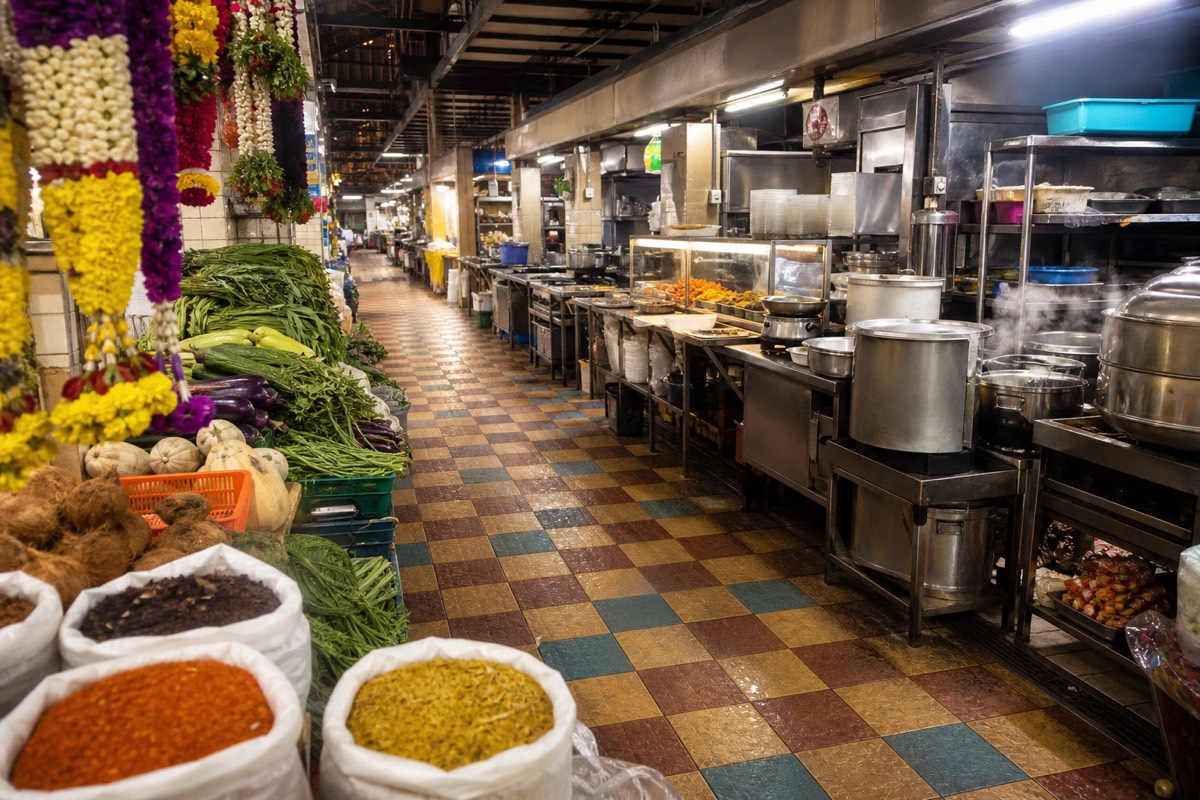
Chicken and beef satay are the most commonly ordered, with mutton and prawn as pricier options at most stalls. Minimum orders of around ten sticks per type are common practice at Satay Street stalls, though this varies, so it is worth asking before you order if you are trying to keep a tab modest. Expect a short wait, typically ten to fifteen minutes on an average night, longer if you arrive during a weekend peak. Peanut sauce, cucumber, onion and compressed rice cakes (ketupat) come standard with most orders.
If hawker ordering customs generally feel unfamiliar, the guide to hawker centre etiquette covers the broader unwritten rules, table-claiming and tray-return norms that apply across Singapore's hawker scene, Satay Street included, even though the ordering flow here is slightly different from a typical indoor hawker centre.
One quirk worth knowing before you sit down: because roughly a dozen satay stalls operate side by side along the same stretch of road, competition among them is direct and visible, staff from neighbouring stalls will sometimes call out to steer you toward their grill rather than the one next door. None of this is dishonest, the quality across most of the stalls is broadly comparable, but it means the friendliest-seeming stall is not necessarily objectively the best one, and it is fine to walk the row once before committing to an order. Groups splitting a large order across two or three stalls is common and lets everyone compare without overcommitting to a single grill.
| Step | What happens |
|---|---|
| 1. Find a table | Sit down first, outdoors along Boon Tat Street or Lau Pa Sat's perimeter |
| 2. Note your table number | Staff or a table card record it for delivery |
| 3. Walk the grill row | Compare stalls, order by stick count and protein type |
| 4. Wait | Roughly 10-15 minutes on an average night |
| 5. Pay on delivery or at the stall | Confirm the stall's own payment method, cash and card both common |
Is Lau Pa Sat a Hawker Centre or a Food Court?
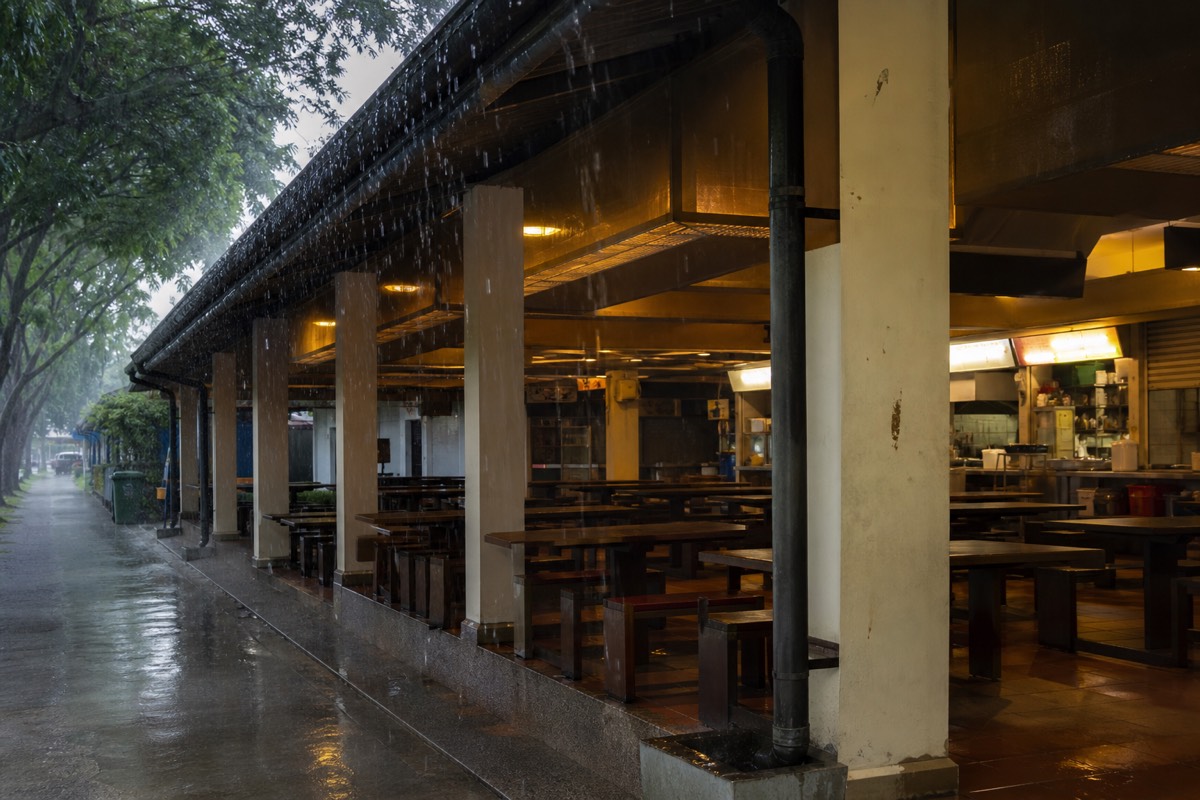
Lau Pa Sat is generally classified as a hawker centre, but honestly it sits closer to a hybrid than most: the core seating around the historic building is open-air and fan-cooled rather than air-conditioned, in keeping with a traditional hawker centre, while a number of enclosed mini-restaurants within the same complex do offer full air-conditioned seating. That mix is unusual. Most hawker centres in Singapore are entirely open-air with ceiling or standing fans; most food courts are entirely enclosed and air-conditioned, usually inside a mall. Lau Pa Sat does both under one roof, which is exactly why it comes up in debates about which category it belongs to.
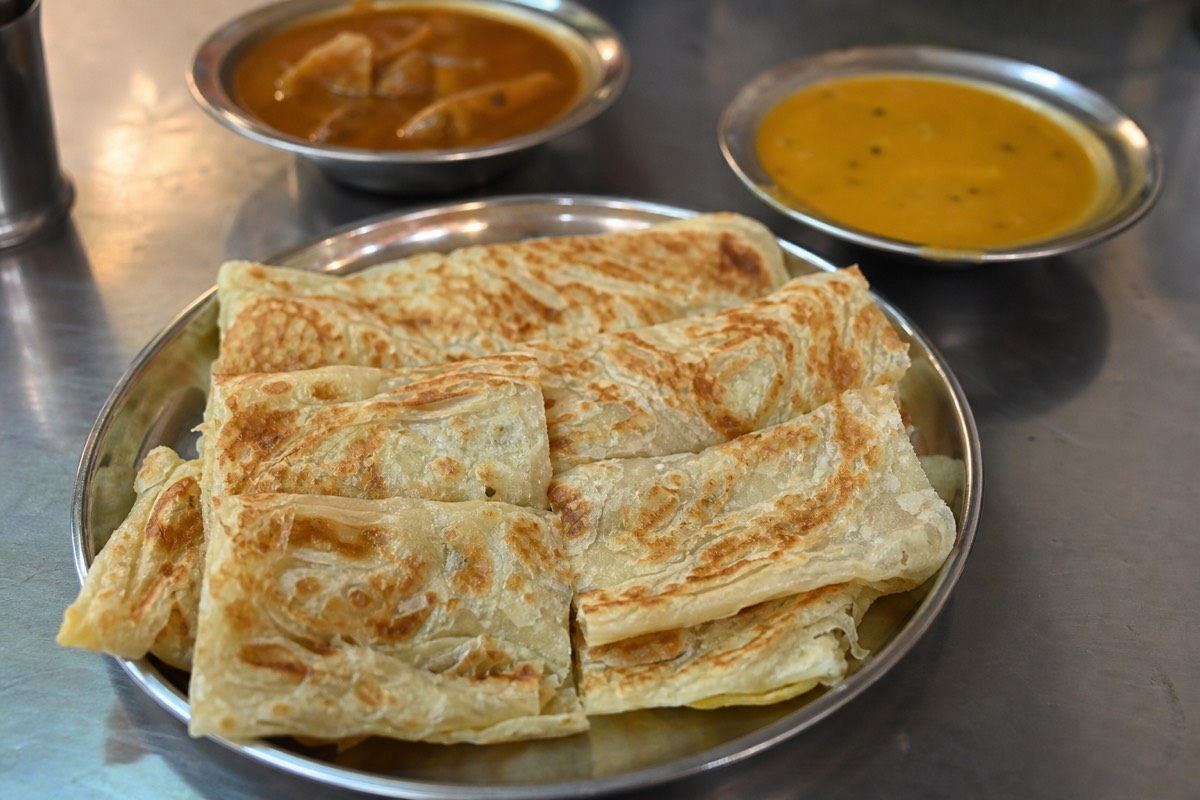
For a visitor, the practical difference matters less than it sounds. The outdoor tables around the historic ironwork and along Satay Street are the classic, photogenic Lau Pa Sat experience, and that is where most tourists sit. The air-conditioned mini-restaurants are a genuine option if the tropical heat is too much, but choosing them means trading some of the atmosphere for comfort. For a fuller breakdown of what actually separates a hawker centre from a food court beyond just this one example, the difference between a hawker centre and a food court lays out the distinction in more general terms.
Singapore's hawker culture as a whole, including sites like Lau Pa Sat, was formally recognised by UNESCO in 2020 as intangible cultural heritage, a designation that covers the communal, open-air dining tradition itself rather than any single building. That recognition is part of why the debate over Lau Pa Sat's classification is not just pedantic: a site built for that communal open-air tradition sitting alongside enclosed, air-conditioned restaurants is a live example of how the tradition is adapting, not just a technicality for a guidebook to sort out.
| Feature | Classic hawker centre | Lau Pa Sat |
|---|---|---|
| Cooling | Open-air, fans | Mostly open-air and fan-cooled, with some enclosed air-conditioned units |
| Stall ownership | Independent hawkers | Mix of independent hawkers and branded mini-restaurants |
| Typical setting | Standalone building or void deck | National monument, historic cast-iron structure |
| Street-level food | Rare | Satay Street, on Boon Tat Street, evenings only |
What Else Is Worth Eating at Lau Pa Sat Beyond Satay?
Beyond Satay Street, Lau Pa Sat's indoor stalls cover a wide spread of Singaporean and regional dishes, with a noticeable cluster of seafood options given the venue's central, tourist-heavy location. Chili crab and other seafood dishes show up at several stalls here, a useful option if you are staying in the CBD and do not want to travel out to a dedicated seafood restaurant. Noodle stalls, Indian food and Western hawker fare round out the rest of the indoor selection, reflecting the office-lunch crowd the centre serves for most of the day.
If chili crab specifically is on your list, it is worth knowing that the dish varies significantly in quality and price depending on where you order it in Singapore. The full guide to chili crab in Singapore covers what the dish should cost and where it is consistently done well, which is useful context since a CBD location like Lau Pa Sat can carry a premium compared to a neighbourhood hawker centre further out.
Because the indoor stalls skew toward the weekday office crowd, the mix of what is open shifts noticeably between a Tuesday lunch and a Saturday evening. Some noodle and rice stalls that thrive on the lunchtime rush close earlier on weekends when the office towers empty out, while the seafood and Western stalls tend to stay open later since they cater more to the evening and weekend visitor crowd rather than the CBD's own workforce.
| Category | What to expect | Best time |
|---|---|---|
| Satay | Open-air grills on Boon Tat Street | Evening onward |
| Seafood, chili crab | Several indoor stalls, CBD pricing | Lunch or dinner |
| Noodles and rice | Standard hawker staples, office-crowd focused | Weekday lunch |
| Coffee, toast, breakfast | A handful of early-opening stalls | Early morning, weekdays |
If your visit centres on the broader question of what is genuinely worth eating across Singapore's hawker scene rather than just at this one site, the first-timer's cheat sheet on what to eat in Singapore is a useful companion, and the wider guide to the best hawker food in Singapore covers dishes beyond what any single centre, Lau Pa Sat included, can offer on its own.
What Do Visitors Say About Lau Pa Sat?
Lau Pa Sat draws a mixed but generally positive reaction from visitors: praise for the building itself and the Satay Street experience after dark, alongside recurring notes that daytime prices run higher than a typical neighbourhood hawker centre, which tracks with its CBD location. This site does not invent star ratings or review counts for individual stalls, since those numbers shift constantly and belong to the platforms that track them, not to a third-party guide. What can be said honestly is that the building's reputation rests on genuine, verifiable ground: national monument status, a working piece of colonial-era architecture, and an evening ritual, satay grilled in the open air on a closed-off street, that has no real equivalent elsewhere in the city.
The most common criticism in visitor discussion is less about food quality and more about price, since a CBD tourist landmark tends to charge more than a hawker centre in a residential neighbourhood. Coming with that expectation set correctly avoids most of the disappointment first-timers report.
Another recurring theme in visitor discussion is timing expectations. People who arrive at Lau Pa Sat expecting Satay Street to be running at 3pm are sometimes disappointed to find only the indoor lunch stalls open, since the satay grills genuinely do not set up until the street closes to traffic in the evening. Knowing that ahead of time, rather than discovering it on arrival, is one of the simplest ways to avoid a mismatched first impression of the place.
Weather is the other variable worth setting expectations around. Satay Street is entirely open-air, and Singapore's tropical downpours can arrive with little warning, particularly in the late afternoon. A sudden shower does not usually close the stalls, most keep grilling under whatever cover they have, but the outdoor seating can empty out fast, and it is worth having a backup plan, indoor seating within Lau Pa Sat itself or a short walk to a covered walkway nearby, if you are visiting during Singapore's wetter months.
Should You Visit Lau Pa Sat on a Guided Tour or Alone?
A guided evening tour is a strong option for Lau Pa Sat specifically because Satay Street's ordering system can be confusing on a first visit, and a guide who already knows which grill stalls are strongest saves both time and a wasted order. The Night Out in Singapore walk routes through this part of the CBD in the evening and combines Lau Pa Sat's satay dinner with nearby CBD or riverside sights, turning a meal into a fuller evening out rather than a single stop.
Visiting alone works fine too, especially if you already know the Satay Street ordering flow described above, and it gives you full control over which stalls you try and how long you linger under the ironwork. Either way, evening is the better time to go: the building's night lighting against its Victorian ironwork, combined with the smoke and noise of Satay Street, is the version of Lau Pa Sat most people come away remembering.
If you are still deciding whether a guided food outing is worth building into your trip at all, rather than just for this one stop, an honest look at whether a Singapore food tour is worth it weighs the trade-offs in more general terms. Lau Pa Sat in particular tends to reward the guided option more than most single hawker centres, simply because Satay Street's ordering system is unlike anything most first-time visitors have handled before on their own.
Whichever way you visit, give the building itself a few minutes of attention beyond the food. Standing under the octagonal ironwork and looking up at the clock tower is easy to skip when you are focused on finding a seat and ordering satay, but it is the one part of the experience that no other hawker site in Singapore can really replicate, a working market that has done the job in some form for well over a century.