Char Kway Teow: Singapore's Smoky Wok-Fried Noodles
A hawker stirs a blackened wok over the loudest flame in the row, and for a few seconds the whole stall disappears in smoke. That is char kway teow cooked properly: flat rice noodles tossed hard and fast until they pick up a charred edge no home stove can copy.
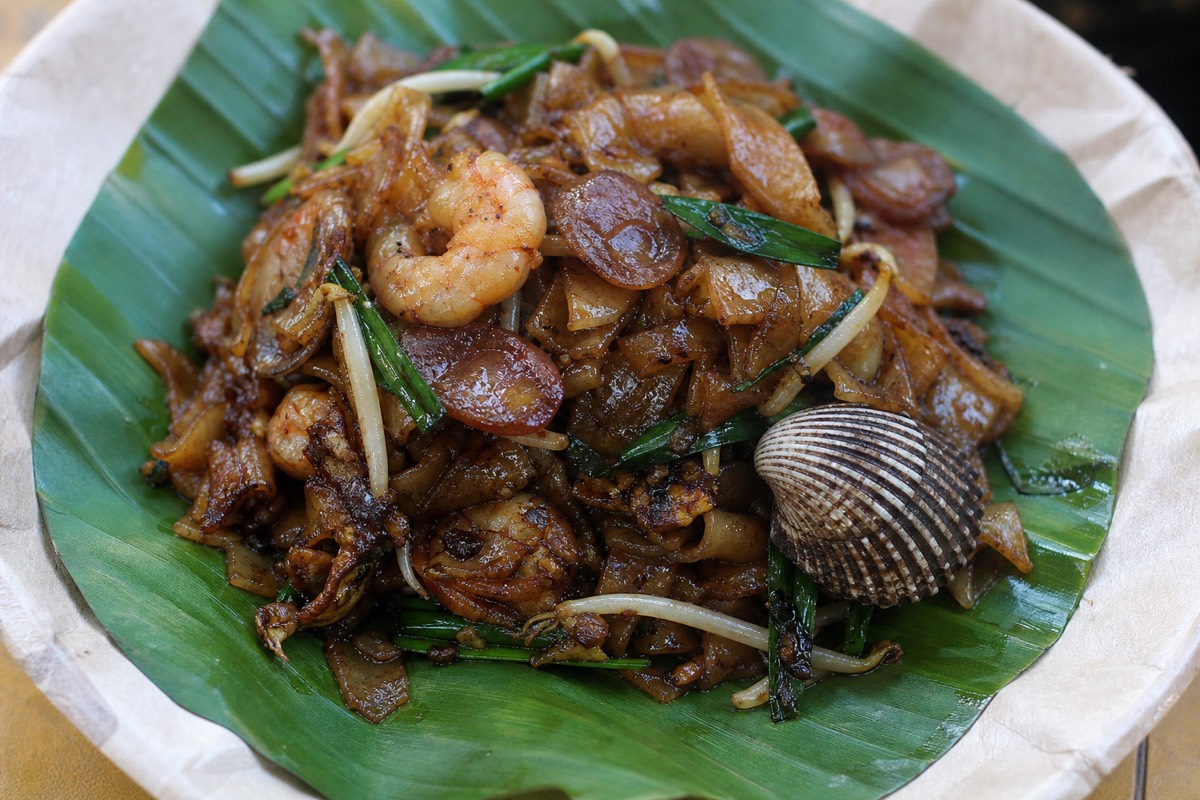
Char kway teow is one of the first dishes visitors ask about before they have even landed, and one of the easiest to get wrong if you order it from a stall that has stopped bothering with the wok work that makes it worth eating. It sits alongside Singapore's other most famous hawker dish as a genuine national favourite, but it is a very different plate: dark, oily, smoky and unapologetically rich rather than clean and light.
Ask five Singaporeans for their favourite stall and you will likely get five different answers, sometimes fiercely defended. That loyalty says something about how personal this dish is here: it is not fine dining, it never claimed to be, and its reputation rests entirely on whether the person at the wok that day still bothers to cook it hot and fast rather than pre-portioning noodles into a lukewarm holding pan before the lunch rush hits.
Char Kway Teow: From Dockside Cart to Michelin Recognition
A rough timeline drawn from published hawker-heritage records and Michelin Guide announcements, not an exact chronology of any single stall.
What Exactly Is Char Kway Teow?
Char kway teow is flat rice noodles wok-fried with dark and light soy sauce, Chinese sausage, prawns, cockles, bean sprouts, chives and egg, traditionally cooked in pork lard over very high heat. "Kway teow" refers to the flat rice noodle itself, wide and slightly translucent, and "char" simply means fried. The classic build layers a few components in quick succession: noodles hit the wok first with the sauces, then Chinese sausage (lap cheong) and prawns go in for a short sear, an egg gets cracked in and half-scrambled through the noodles, and bean sprouts and chives are folded in right at the end so they stay barely wilted. Cockles, locally called "see hum," are stirred through last since they only need a few seconds of heat.
The dish is almost always served on a small paper-lined plate or in a plastic takeaway box, no cutlery ceremony involved, chopsticks or a fork and spoon depending on the stall. A squeeze of chilli paste on the side is standard, and most hawkers will ask whether you want it spicy without being asked.
Texture matters as much as flavour here. A good plate should have some noodles that caught real char against the wok surface and others that stayed pale, a mix rather than a uniform colour, because uniform usually means the noodles were tossed too gently or too briefly to pick up wok hei at all. The sausage should still show a little sheen of rendered fat, and the egg should be visible in ribbons through the noodles rather than cooked into a separate omelette layer on top.
| Ingredient | Role in the dish |
|---|---|
| Flat rice noodles (kway teow) | The base; needs to stay separate and slightly chewy, not clumped or mushy |
| Dark soy sauce | Colours the noodles near-black and adds a caramelised sweetness |
| Chinese sausage (lap cheong) | Adds sweet, fatty bursts and a little rendered oil to the wok |
| Prawns | Fresh seafood note, usually a few small to medium prawns per plate |
| Cockles (see hum) | A briny, slightly metallic bite; the most polarising ingredient for visitors |
| Bean sprouts and chives | Added last for crunch and a green, grassy contrast to the richness |
| Egg | Cracked in and folded through, binding the noodles and adding richness |
| Pork lard | The traditional cooking fat; some stalls now use vegetable oil instead |
What Is "Wok Hei," and Why Do Cooks and Diners Obsess Over It?
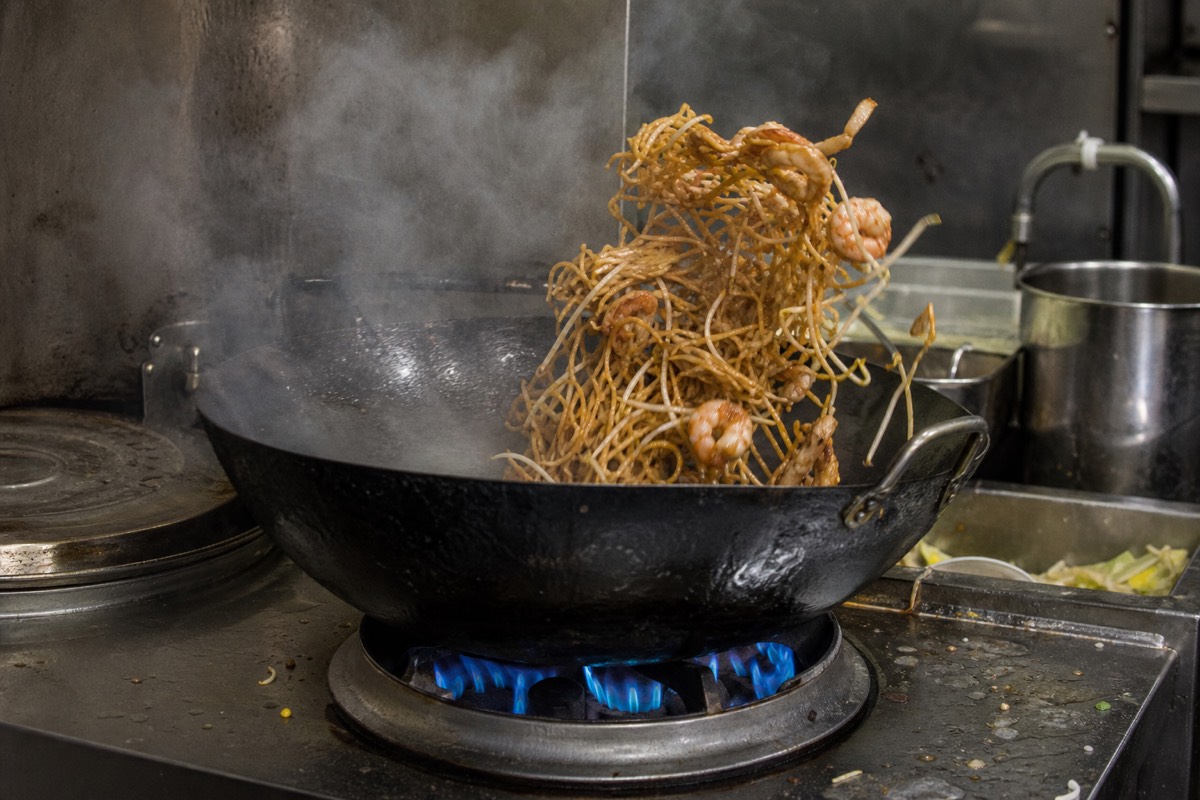
Wok hei, literally "breath of the wok," is the smoky, slightly charred aroma that food picks up when it is tossed hard and fast over an extremely hot wok, and it is the single biggest thing separating a great plate of char kway teow from an average one. It is not a spice or a sauce, it is a cooking effect: intense heat plus rapid tossing causes brief flare-ups and a Maillard-style char on the noodles and sausage that no amount of seasoning can fake. Hawkers who cook it well are working over gas or charcoal burners hot enough to make most home stoves look decorative.
According to Roots.gov.sg, the heritage portal run by Singapore's National Heritage Board, learning the stir-fry technique behind the dish "takes at least a month to pick up" even for someone already working a hawker stall, which is one reason veteran cooks worry about who will carry the skill forward. The same page traces the dish's roots to the migratory experience of Teochew communities from the Chaoshan region of China, a detail worth knowing before you assume it is a purely local Singaporean invention with no wider Chinese lineage.
If a plate of char kway teow tastes flat, oily but not smoky, that is usually a heat problem, not a recipe problem. Wok hei fades fast too, which is why the best stalls cook to order rather than batching plates ahead of the lunch rush.
Part of why wok hei is so hard to reproduce outside a hawker stall is the equipment itself. Most hawker burners run on high-pressure gas jets built for commercial kitchens, far hotter than a domestic stove, and the wok itself is usually a well-seasoned carbon steel one that has absorbed years of use. A brand-new wok, however expensive, will not produce the same result on day one. That is also why wok hei is often described as a skill passed down through repetition rather than something you can read your way into, which is exactly the concern Roots.gov.sg raises about who continues cooking this way as older hawkers retire.
Source: Roots.gov.sg, char kway teow heritage entry.
Spotting a stall that is actually doing this well from a distance is easier than it sounds. Look for visible smoke or a brief flare from the wok during cooking, a queue made up mostly of returning regulars rather than tourists with cameras out, and a short wait between order and plate, since char kway teow made properly cannot be rushed but also should not sit finished for long before it reaches you. A stall with no smoke at all during a busy lunch service is often cooking in batches on lower heat, which is faster for the hawker but produces a noticeably blander plate. Portion turnover is another honest signal: a stall selling out and restocking noodles and sausage through the day is buying fresh ingredients more often than one with the same tray of prawns sitting out since morning.
Where Did Char Kway Teow Come From?
Char kway teow traces back to Teochew immigrants from the Chaoshan region of Guangdong province, who arrived in Singapore in waves from the mid-1800s through the 1930s and are believed to have first sold the dish from carts near Ellenborough Market, once nicknamed the Teochew Market. It started as cheap, calorie-dense food for manual labourers, dockworkers unloading cargo along the river and trishaw riders pedalling through the tropical heat, who needed something filling and fast between shifts rather than a delicate dish meant to be savoured slowly.
Over the following decades the ingredients crept upmarket. Cockles, prawns and Chinese sausage were not part of the original poor man's version, which leaned on lard, bean sprouts and soy sauce alone to keep costs down. As Singapore's economy grew through the mid-20th century, so did the plate, until the seafood-and-sausage version most visitors eat today became the standard rather than the exception. There is a real parallel here with bak kut teh's own working-class, dockside origins, another dish that started as cheap sustenance for labourers and later became a dish people travel across the island to eat.
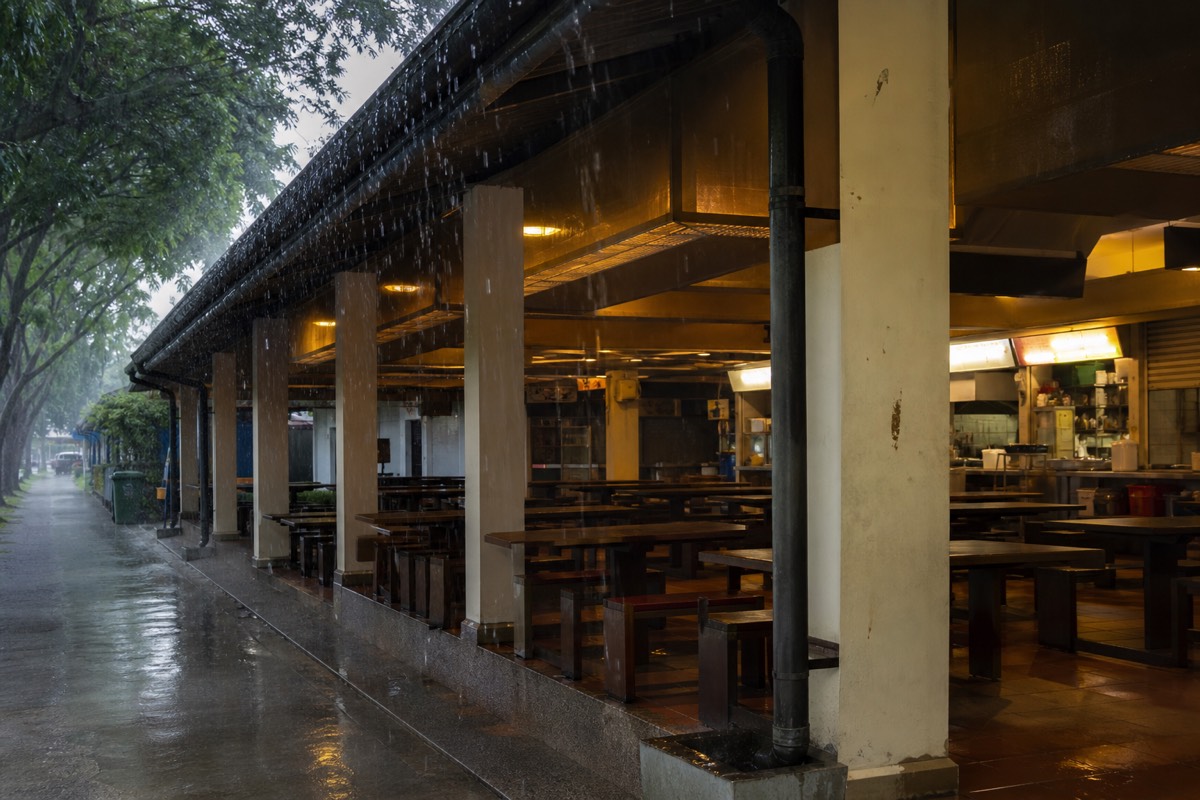
The carts themselves did not last. Between 1971 and 1986, Singapore's government relocated roughly 18,000 street hawkers, cart by cart, into purpose-built hawker centres with running water, electricity and proper drainage, part of a public health push under legislation like the 1969 Environmental Public Health Act. Char kway teow hawkers went through the same resettlement as everyone else, which is why a dish born on a mobile cart near the old harbour is now cooked from a fixed stall number inside a permanent building, a structural shift that shaped almost every hawker dish's modern form, not just this one.
Source: Roots.gov.sg, the history and evolution of Singapore's hawker culture.
How Much Does a Plate of Char Kway Teow Cost?
A basic plate at a standard hawker stall runs around $4 to $6 for a small or regular portion, with Michelin-recognised or seafood-heavy versions often landing closer to $8 to $12, so it pays to check the board before ordering rather than assume the cheapest hawker price applies everywhere. Prices below are approximate and change often, so treat them as a starting point and check the current listing at the stall.

| Portion / stall type | Typical price range | Notes |
|---|---|---|
| Small portion, standard hawker stall | Around $4 | Usually less seafood, smaller noodle volume |
| Regular portion, standard hawker stall | Around $5 to $6 | The most common order size for one adult |
| Large or "special" portion, extra prawns/sausage | Around $7 to $9 | Ask the stall what "special" adds before ordering |
| Michelin Bib Gourmand or well-known stall | Around $8 to $12 | Queue times are usually longer too |
Food tours built around Singapore's hawker scene, including a small-group walk that stops at Michelin Bib Gourmand stalls, typically fold a char kway teow tasting into a wider spread of dishes rather than charging for it as a standalone plate, which can work out cheaper per dish than chasing individual stalls yourself across the island.
Is Char Kway Teow Healthy? An Honest Look at the Numbers
No, not by any reasonable definition: a standard serving runs around 744 calories with roughly 38 grams of total fat, of which about 29 grams is saturated, figures that on their own can exceed a full day's recommended saturated fat intake for an adult. That is not a scare tactic, it is simply what a wok, a generous hand with lard, Chinese sausage and cockles adds up to. HealthXchange, the patient-education platform run by Singapore's SingHealth group, lists the dish in its "high fat, high saturated fat" category alongside a warning that a single plate can also provide 70 percent or more of a day's recommended cholesterol and sodium allowance.
| Nutrient (per ~384g serving) | Amount | Context |
|---|---|---|
| Calories | Around 744 kcal | Roughly a third of a typical adult's daily calorie budget in one meal |
| Total fat | Around 38g | Close to a full day's recommended fat allowance |
| Saturated fat | Around 29g | Can exceed the recommended daily limit on its own |
None of this means skip it. It means eat it as the treat it always was for the labourers who first ate it, rather than a daily lunch habit, and pair the trip with lighter dishes elsewhere on the itinerary if you are eating hawker food across several meals in a day. Source: HealthXchange.sg, hawker Chinese food nutrition breakdown.
Splitting a plate between two people is a genuinely practical option if you are trying several hawker dishes in one sitting, which most visitors on a food-focused day are. A half portion still delivers the wok hei and the full flavour profile, it simply halves the fat and calorie load, and most stalls have no issue with two people sharing one plate and two sets of chopsticks.
Which Stalls Are Actually Worth the Queue?
Lao Fu Zi Fried Kway Teow at Old Airport Road Food Centre is the name most visitors will hear first, a stall that has held a Michelin Bib Gourmand recommendation for multiple consecutive years, though reviews on recent visits are mixed on price and consistency, which is worth knowing before you queue. The Michelin Guide first arrived in Singapore in July 2016 with 34 Bib Gourmand picks spread across food centres, restaurants and other street-food spots, and hawker stalls specialising in dishes like char kway teow have appeared on that list in most editions since.
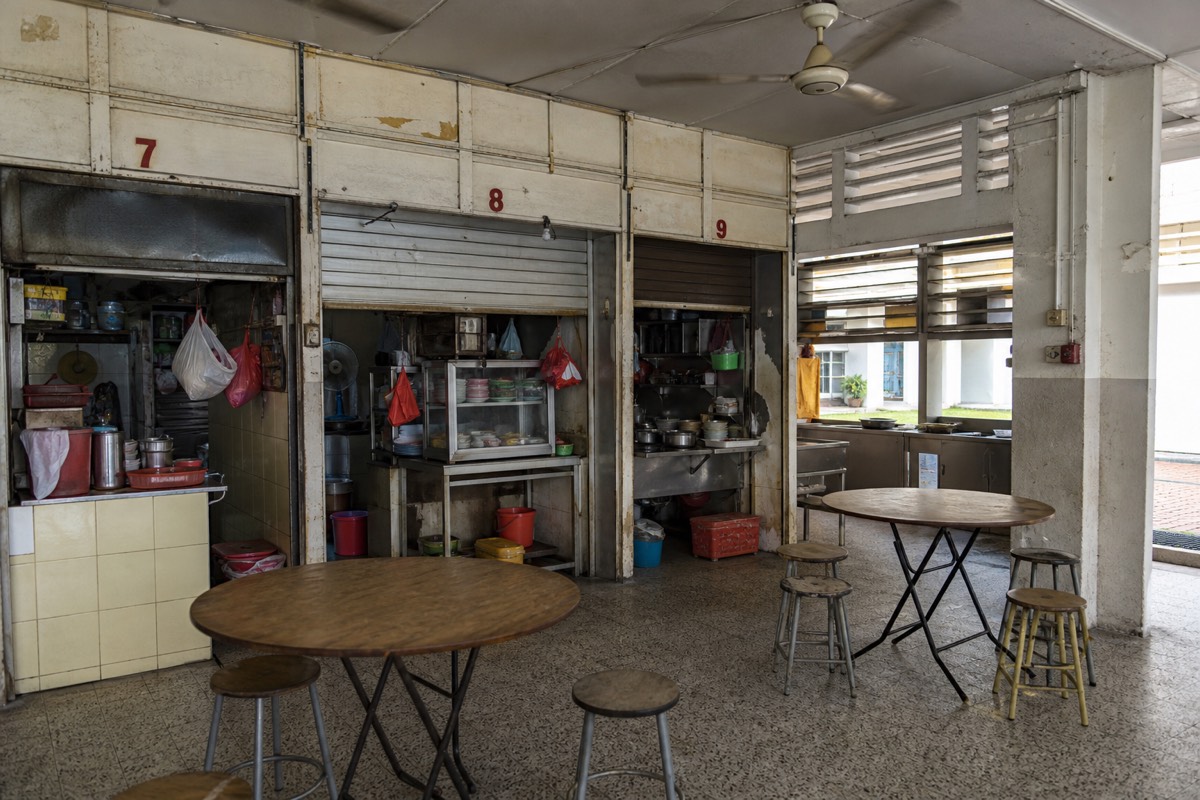
Old Airport Road Food Centre itself is worth the detour beyond this one stall, and it comes up again in a separate guide to hawker centres worth a special trip. If Lao Fu Zi's queue looks unreasonable on the day, most Old Airport Road regulars will point you to at least one or two other char kway teow stalls in the same building, since a hawker centre this size rarely has just one option for a signature dish.
It is worth being upfront that Michelin recognition and personal taste do not always line up. Reviews of Lao Fu Zi from recent visits note both genuine fans of the smoky, well-charred plate and diners who found the price high relative to portion size, or felt the quality had slipped from earlier years. Michelin's Bib Gourmand is a value-and-quality signal, not a guarantee that every single plate on every single visit will land the same way, and that is true of hawker food generally, since one stall can vary from cook to cook depending on who is working the wok that shift.
| Stall | Hawker centre | Recognition |
|---|---|---|
| Lao Fu Zi Fried Kway Teow | Old Airport Road Food Centre | Michelin Bib Gourmand, multiple consecutive years |
| Other Old Airport Road CKT stalls | Old Airport Road Food Centre | Not individually Michelin-listed but locally recommended alternatives |
Source: Michelin Guide Singapore, Lao Fu Zi Fried Kway Teow listing.
How Do You Order Char Kway Teow Like a Regular?
Ordering is simple: state the portion size (small, regular or "special"), then flag any adjustments, less lard, no cockles, less spicy, before the hawker starts cooking, since char kway teow is made to order and changes are easy at that stage but not once it hits the plate. "Da bao" means take away if you want it in a box rather than eating at the centre. Most stalls are used to visitors asking questions and will not mind a request for less oil or a milder chilli level.
| What to say | What it changes |
|---|---|
| "No cockles" / "no see hum" | Removes the shellfish some visitors find too briny or are allergic to |
| "Less oil" / "less lard" | A lighter, less greasy plate; taste and wok hei may be slightly reduced |
| "Not spicy" / "no chilli" | Chilli paste is usually mixed in or served on the side; easy to skip |
| "Extra prawns" / "special" | More seafood and sausage for a higher price, ask the amount first |
Worth knowing plainly: because it is traditionally cooked in pork lard and typically includes cockles and prawns, standard char kway teow is not halal by default, which is a real consideration covered in more depth in a guide to halal-friendly hawker eating if that matters for your trip. If you are new to hawker centres generally, the unwritten rules around chope-ing a table and returning trays are worth a quick read before your first visit, and a wider first-timer's cheat sheet is covered in a separate rundown of what to eat in Singapore as a tourist.
Vegetarians should approach with caution rather than assume a swap fixes it. Removing cockles and prawns still leaves egg, and the wok itself is often used all day for meat and seafood dishes, so cross-contact is close to unavoidable at a typical stall even if lard is substituted for vegetable oil on request. A handful of vegetarian-focused hawker stalls cook a meat-free version from a dedicated wok, but that is the exception, not something to expect by default at a random char kway teow stall.
How Does Char Kway Teow Compare to Singapore's Other Fried Noodles?
Char kway teow uses flat rice noodles and dark soy sauce for a smoky, sweet-salty plate, while Hokkien mee uses yellow egg noodles and bee hoon simmered in a prawn and pork stock for a wetter, more savoury bowl, so the two are easy to confuse by name but taste nothing alike. Mee goreng, a Malay-style fried noodle, leans on a tomato-and-chilli-forward sauce instead of dark soy, giving it a tangier, redder finish. Chai tow kway, often translated as fried carrot cake despite containing no carrot and no cake, is another wok-fried dish that gets lumped in with char kway teow by unfamiliar visitors purely because both are dark, glossy and cooked in the same kind of blackened wok, but it is made from a steamed radish flour cake cut into cubes and fried with egg and preserved radish, nothing like a noodle dish at all.
| Dish | Noodle or base | Flavour base |
|---|---|---|
| Char kway teow | Flat rice noodles | Dark soy sauce, lard, smoky wok hei |
| Hokkien mee | Yellow egg noodles + bee hoon | Prawn and pork stock, braised until absorbed |
| Mee goreng | Yellow noodles | Tomato and chilli sauce, tangier and redder |
| Chai tow kway | Steamed radish flour cake, cubed | Egg, preserved radish, dark or "white" (no dark soy) versions |
Anyone building a full hawker itinerary rather than chasing one dish should look at a first-timer's guide to Singapore's full spread of hawker classics, which covers all three of these noodle dishes alongside chicken rice, laksa and chili crab.
Where to Try It Without Guessing
Chasing a single Michelin stall across an unfamiliar city is not everyone's idea of a good afternoon, and this is exactly the gap a guided food tour fills: a local operator who already knows which stalls are cooking well that week takes the guesswork out of it, folding a char kway teow tasting into a wider hawker crawl rather than leaving you to queue and hope. Some routes also cover the ground by bicycle rather than on foot, which is a genuinely different, faster way to see several hawker centres and dish styles in one outing rather than picking just one, useful if a single afternoon is all the time you have to cover ground that would otherwise take a full day on foot.
Either format solves the same underlying problem: on your own, you are guessing between two or three near-identical-looking stalls based on queue length alone. With someone who already eats at these places regularly, that guesswork disappears, and the plate that arrives is more likely to be the one worth the calories in the first place. It also saves the awkward moment of ordering blind at a stall with no English menu, since a local guide handles that exchange for you while explaining what is actually in the dish as it lands on the table.