Bak Kut Teh: Peppery vs Herbal, What to Order & Where
Order bak kut teh in Singapore and the first real question isn't how many bowls, it's peppery or herbal. Get that wrong for your taste and the two versions of this pork rib soup won't taste anything alike, despite sharing a name and a bowl of rice on the side.
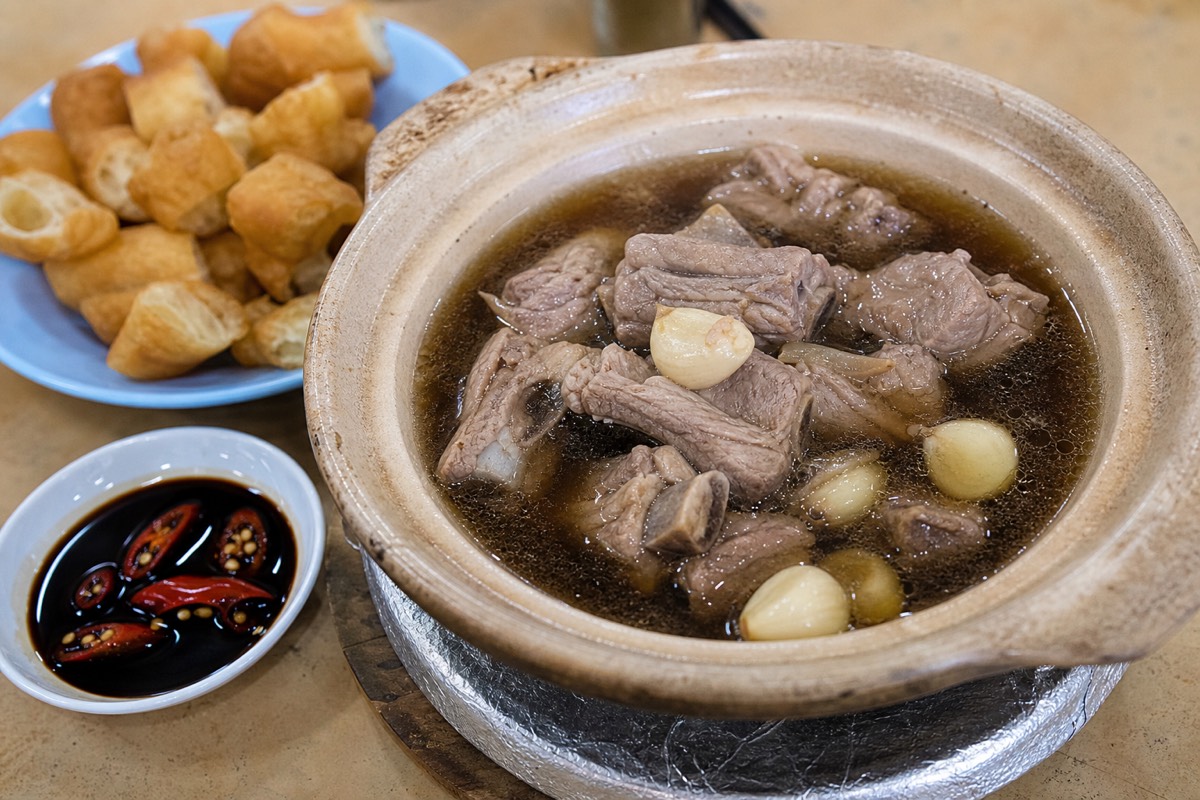
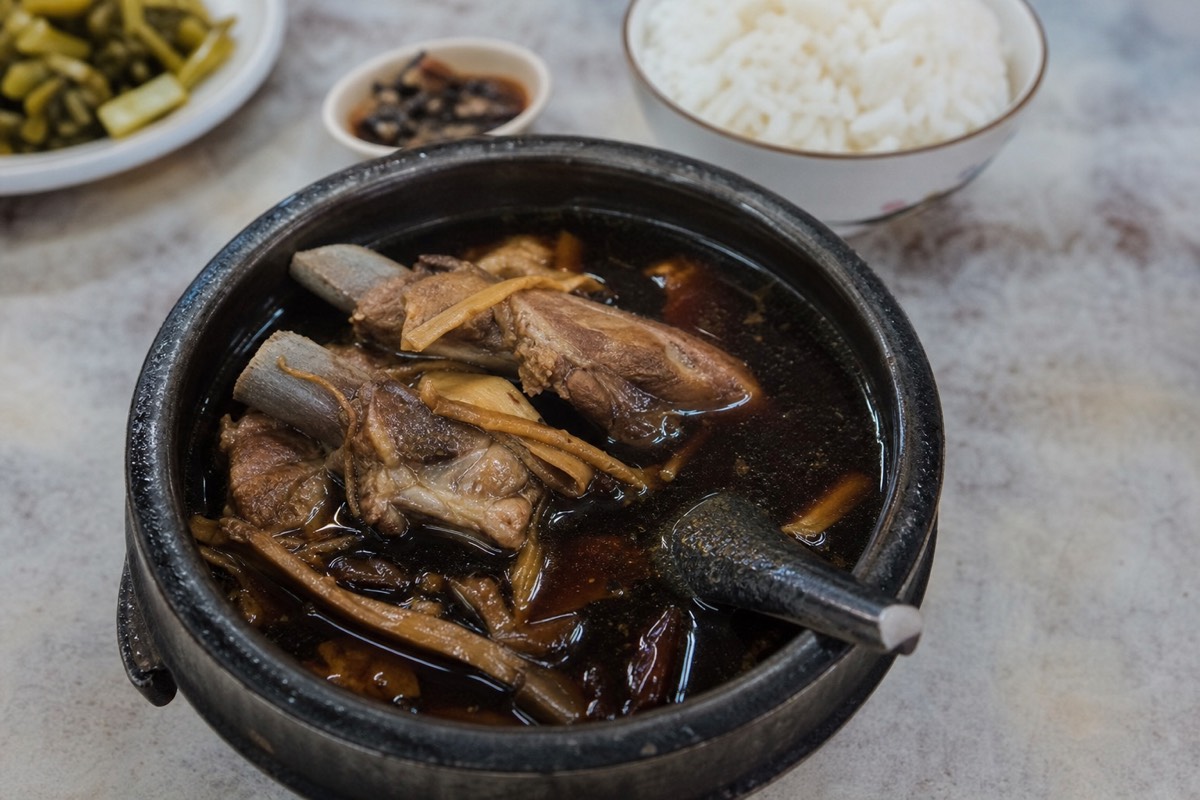
Two bowls can sit on the same table, both called bak kut teh, and taste like entirely different dishes. One is clear, sharply peppery, almost brothy. The other is dark, soy-heavy and faintly medicinal, built on a stack of Chinese herbs that took hours to give up their flavour. Both are correct. Neither is the "real" one, whatever a rival stall owner might tell you.
The dish's name translates roughly to "meat bone tea," which confuses first-timers looking for tea leaves in the bowl. There aren't any. Understanding why the name stuck, and which style is which, makes ordering a lot less of a guessing game.
What follows covers where the dish actually came from, why two such different broths share one name, how a bowl is traditionally eaten, which shops carry real recognition for each style, and what a first-time visitor should expect to order and pay.
Bak kut teh's two branches: a rough timeline
Dates are drawn from published stall histories, National Library Board records, SCMP reporting and the Michelin Guide; the earliest immigration-era date is an approximate range.
What Is Bak Kut Teh?
Bak kut teh is a Chinese-Singaporean and Malaysian dish of pork ribs simmered for hours in broth, either a clear, garlicky, heavily peppered stock (the Teochew style common in Singapore) or a darker broth built on soy sauce and medicinal herbs (the Hokkien style associated with Klang, Malaysia). The name translates to "meat bone tea," though no tea goes into the pot itself.
The "tea" in the name most likely refers to the strong Chinese tea traditionally served alongside the soup, meant to cut the richness of the pork and aid digestion, rather than an ingredient in the broth, according to Singapore's National Library Board's account of the dish. What both styles share is the format: pork ribs, sometimes with other cuts like pork belly or offal added, cooked low and slow until the meat sits close to falling off the bone, served in a bowl of broth with steamed white rice on the side and usually a plate of youtiao, Chinese fried dough, for dipping.
Beyond ribs, many shops add extra cuts to the pot for customers who order them specifically: pork belly for a fattier, richer bite, pig trotter for extra collagen and a stickier texture, or offal like intestine and liver for diners who grew up with that style of nose-to-tail cooking. None of these are required to order a proper bowl; ribs alone are entirely standard and, at most shops, the default order without anyone needing to specify further. A single garlic clove or two, left whole and slow-cooked until soft, is another common addition that ends up almost as tender as the meat itself by the time the pot is served.
For the shortest possible version of what makes this dish distinctive, our companion piece explains the meaning and origins of bak kut teh in brief. This guide goes considerably deeper, including a side-by-side comparison of the two styles and where to try each one.
Where Does Bak Kut Teh Actually Come From?
Bak kut teh is generally traced to Hokkien immigrants from China's Fujian province who settled around Port Klang, Malaysia, in the early 20th century, where it became a hearty, affordable breakfast for dock coolies before a day of manual labour. Singapore later developed its own Teochew-style version, sold along the Singapore River near Clarke Quay and River Valley after the Second World War, which is now the more common style in the city.
The Hokkien-Klang version leans on a mix of dried herbs and spices, dang gui, star anise, cinnamon, sometimes ginseng, alongside dark soy sauce, giving it a darker, more medicinal, almost sweet-savoury broth. The Teochew version stripped that back almost entirely: mostly garlic and white or black pepper, no dark soy, no medicinal herbs, resulting in a clear, peppery, more immediately punchy broth that's now considered the default across Singapore.
Origin is genuinely disputed rather than settled. In 2009, Malaysia's then-tourism minister publicly claimed bak kut teh as a Malaysian invention credited to a Chinese physician in Klang during the 1930s, a claim that the South China Morning Post and other outlets have noted sits at odds with the more widely cited account of the dish's earlier Hokkien-Chinese roots. Singapore and Malaysia have run versions of this argument over more than one shared dish, chicken rice and laksa included, and bak kut teh is one of the more openly contested. What's less disputed is that Singapore's Teochew-style broth developed as its own distinct branch after the war, largely independent of exactly how the Klang version got started decades earlier.
The coolie-breakfast origin matters for understanding how the dish is eaten even now. A bowl built to fuel a full day of dock or construction labour was never meant to be dainty: hearty portions, rice on the side rather than mixed sparingly through the broth, and a tradition in some old-school shops of topping up the broth for free once a customer had bought the first bowl.
Singapore's own Teochew community had settled heavily around the river well before bak kut teh became a fixture there, working as boatmen, porters and traders along what was then a working waterway rather than the restaurant and nightlife district it is today. Selling a cheap, filling bowl of soup to that same labouring population was less an act of culinary invention and more a practical response to who was actually eating breakfast along the river each morning. That practical, working-class origin is a large part of why the dish still reads as unpretentious even at shops that have since become tourist destinations in their own right.
Peppery vs Herbal: The Two Real Styles
The two real styles of bak kut teh are Teochew (peppery), a clear broth built almost entirely from white pepper and garlic with no dark soy or medicinal herbs, and Hokkien or Klang-style (herbal), a darker broth built on dark soy sauce and a mix of Chinese herbs like dang gui and star anise. Singapore defaults to Teochew-style, though both are available if you know where to look.

The difference isn't subtle once both have been tasted. Teochew-style broth is nearly transparent, sharply peppery in a way that can genuinely make a diner's nose run if a stall goes heavy-handed, and it tastes cleaner, almost brothy rather than rich. Herbal-style broth is a deep amber-brown, tastes rounder and more complex, with a faint sweetness from the soy and a medicinal note from the herbs that some diners love and others find overwhelming, especially if they aren't used to Chinese herbal cooking. Neither style is spicier in the chilli sense; the "heat" in the peppery version comes entirely from white pepper, not chilli at all.
The two styles also cook differently, which shows in the meat as much as the broth. Teochew-style ribs simmer in a comparatively thin, fast-moving liquid, so the meat tends to stay a little firmer and the fat renders out cleanly into the pepper-forward stock. Herbal-style broth simmers longer and thicker, closer to a braise than a soup at some shops, and the meat often comes out softer, almost falling apart, because the dark soy and herb mixture is built to coat and tenderize rather than stay light. Neither approach is faster or more "authentic" than the other; they're simply two different cooking philosophies that happened to end up sharing one name.
| Teochew (peppery) | Hokkien / Klang (herbal) | |
|---|---|---|
| Broth colour | Clear, almost transparent | Dark amber-brown |
| Dominant flavour | White pepper, garlic | Dark soy, medicinal herbs (dang gui, star anise) |
| Typical region of origin | Developed in Singapore, along the Singapore River | Associated with Port Klang, Malaysia |
| What to order alongside | Youtiao, plain rice, extra pepper on request | Beancurd skin, mushrooms, claypot for extra richness |
How Bak Kut Teh Is Eaten
Bak kut teh is eaten with a bowl of steamed white rice on the side, not mixed into the broth, youtiao torn into pieces and dunked in the soup until softened, and a small dish of dark soy sauce with sliced red chilli for dipping the meat. It's traditionally a breakfast dish, though in Singapore it's now eaten at almost any hour, including as a late-night meal.
The ritual matters more than it looks like it should. Youtiao, the long, airy fried dough stick sold at breakfast stalls across the region, is meant to sit in the hot broth for a minute or two so it soaks up fat and flavour without turning fully soggy. Pulled out too early, it's just fried dough; left in too long, it falls apart in the bowl. Most stalls serve rice separately rather than as congee or mixed rice, and some old-school shops still refill the broth on request, a holdover from the dish's coolie-breakfast origins, when a working man needed a meal that stretched as far as the price of one bowl would allow.
Tea remains part of the ritual too. Traditional shops serve a strong, plain Chinese tea, usually oolong or something similar, meant to be drunk throughout the meal to cut the fattiness of the pork and settle the stomach afterward. It's a small detail, but it's a large part of why the dish carries "tea" in its name even though none goes into the pot.
These days the dish has also become something of a comfort food and a late-night supper option, not strictly a morning meal. Groups often order bak kut teh together family-style, with a shared claypot or two in the middle of the table alongside individual bowls of rice, closer to how a hotpot gets shared than how a single bowl of noodle soup would typically be eaten.
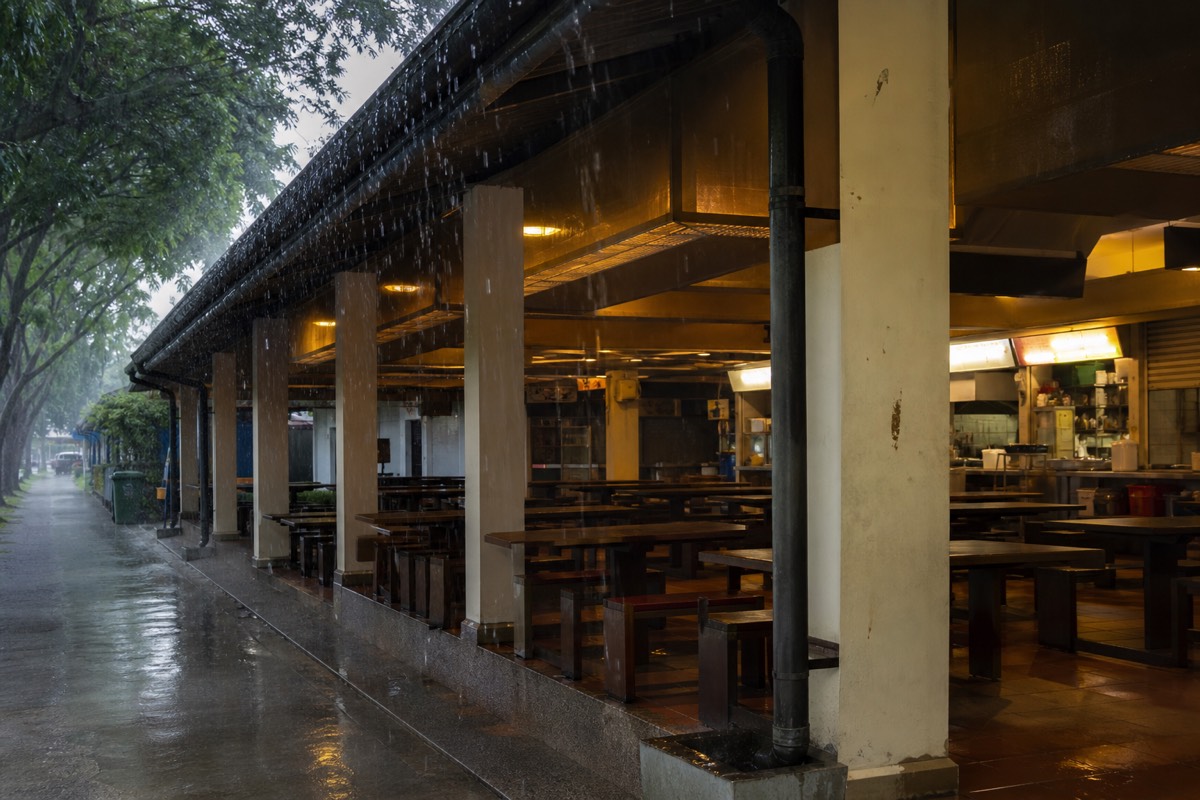
Fresh red chilli in light soy, and sometimes a small dish of minced garlic in oil, often sit alongside the standard dark soy and chilli dip, giving diners a second and third way to season each bite of pork rather than relying on the broth alone to carry every flavour. Weather plays a role in ordering too, in a place as consistently warm as Singapore. Locals will often point out that a scalding bowl of peppery soup makes more sense on a rainy or overcast day, even though the dish is eaten year-round regardless of what the forecast says.
| Accompaniment | What it is | Why it's there |
|---|---|---|
| Steamed white rice | Plain rice, served in a separate bowl | Balances the pepper or the richness of the broth |
| Youtiao | Long fried dough stick, torn into pieces | Dunked in broth to soak up fat and flavour |
| Dark soy and chilli dip | Small dish of soy sauce with sliced red chilli | For dipping individual pieces of meat |
| Chinese tea | Usually oolong or a similar dark tea | Cuts the richness of the pork through the meal |
Notable Bak Kut Teh Spots Worth Seeking Out
Song Fa Bak Kut Teh, founded as a pushcart in 1969, has held a Michelin Bib Gourmand across every edition of the Singapore guide and is the most consistently recommended Teochew-style option. Ng Ah Sio, tracing back to a 1955 stall near Clarke Quay, is another long-running Teochew name, while Sin Heng Claypot Bak Koot Teh represents the darker Hokkien-Klang herbal style with its own Bib Gourmand recognition.

Song Fa's broth is built around Sarawak pepper roasted in-house before going into the pot, and the shop still takes orders by waitstaff in person rather than at a self-service counter, a deliberate choice by its second-generation owners according to the Michelin Guide's own profile of the shop. It now runs more than ten outlets across Singapore, including one inside Jewel Changi Airport, which makes it one of the easiest versions to reach on the way in or out of the country.
Ng Ah Sio traces its lineage to 1955, when Ng Mui Song ran a street-side stall at what's now Clarke Quay and began tweaking the broth by removing most of the herbs and leaning harder on pepper, a shift his son continued after taking over the business in 1977 and relocating it to its current Rangoon Road address in 1988. It's widely credited as one of the shops that shaped what Teochew-style bak kut teh means in Singapore today.
For the herbal side, Sin Heng Claypot Bak Koot Teh on Joo Chiat Road serves the darker Hokkien-Klang-style broth, simmered with soy and Chinese herbs and finished in individual claypots with beancurd skin and mushrooms, and it carries a Bib Gourmand in the 2026 Michelin Guide Singapore Bib Gourmand selection. Joo Siah Bak Koot Teh, near Chinese Garden MRT, is another peppery-style Bib Gourmand pick worth knowing about if you're already on the western side of the island. For more on what the Bib Gourmand distinction actually means across hawker stalls generally, see our guide to Michelin Bib Gourmand hawker stalls in Singapore.
What the Bib Gourmand recognition really signals here is consistency over decades rather than novelty. Song Fa's inclusion across every edition of the Singapore guide points to a broth that hasn't drifted from what built the shop's reputation in the first place, even as it expanded from a single pushcart to more than ten locations. That kind of scaled consistency is genuinely hard to pull off with a dish that depends on hours of unattended simmering, which is part of why food writers keep returning to the same handful of names rather than a constantly rotating list of new favourites.
| Stall | Style | Neighbourhood | Known for |
|---|---|---|---|
| Song Fa Bak Kut Teh | Teochew (peppery) | New Bridge Road, plus multiple outlets | Bib Gourmand every guide edition, founded 1969 |
| Ng Ah Sio Bak Kut Teh | Teochew (peppery) | Rangoon Road | Traces to a 1955 Clarke Quay stall, heavy on pepper |
| Sin Heng Claypot Bak Koot Teh | Hokkien / Klang (herbal) | Joo Chiat Road | Michelin Bib Gourmand, served in individual claypots |
| Joo Siah Bak Koot Teh | Teochew (peppery) | Near Chinese Garden MRT | Michelin Bib Gourmand, family recipe |
Peppery or Herbal: Which Should You Order First?
First-timers should order the Teochew peppery style first: it's the more common version in Singapore, the flavour is more immediate and easier to place, and it's a fair baseline before deciding whether the richer, more medicinal herbal style is worth seeking out separately.

That's not to say the herbal version is an acquired taste only serious fans should attempt. Plenty of first-time visitors prefer it, especially anyone who already likes Chinese herbal soups or darker, soy-forward braises. But because Teochew-style is the default at most Singapore stalls, starting there gives a clearer reference point. If a first bowl leaves someone wanting something richer and more complex, that's exactly the gap the herbal style fills, and a stall like Sin Heng makes an easy next stop.
One practical note: pepper level varies more between stalls than most people expect, even within the Teochew style itself. Some shops serve a broth mild enough for a first-timer; others make something aggressive enough to clear a stuffy nose in one bowl. Anyone sensitive to pepper should ask a stall how strong theirs runs before committing to a full order, since a free refill isn't guaranteed everywhere.
Travelling with a group makes the choice easier to sidestep entirely: ordering one claypot of each style and sharing both, alongside a couple of bowls of rice, gives everyone a direct comparison in a single sitting rather than forcing a single pick. It's a genuinely useful way to settle the peppery-versus-herbal debate for yourself rather than taking anyone else's word for which is better, since the honest answer is that it depends entirely on what a diner already likes in a bowl of soup.
How to Order and What It Costs
Order by specifying the pork cut, ribs are the standard choice, though some stalls also offer pork belly, trotter or offal, along with rice and however much youtiao is wanted on the side. A standard bowl at a hawker stall typically runs a modest few dollars, with claypot or premium-cut versions costing more, so check the current listing at the stall rather than assuming a fixed price.
Most stalls price by the ingredient: a base bowl of ribs, then extra charges for additional meat, a claypot presentation, or a larger "big bone" cut with more meat attached. Rice and tea are usually ordered and priced separately, and youtiao almost always comes as a side order rather than something included automatically with the bowl. As with chicken rice and most hawker food, cash is accepted everywhere and most established shops now also take PayNow or cards.
Vocabulary at the counter is generally forgiving. Pointing at a photo on the menu, or simply asking for "bak kut teh, one bowl," gets the standard order at almost any shop without needing to know the dialect terms for individual cuts. If a specific cut matters, ribs versus belly versus trotter, it's worth asking staff directly rather than guessing, since menu boards don't always spell out every option in English and some shops keep their fuller range of cuts unlisted, available only on request.
Anyone new to hawker centre norms in general should read our guide to hawker centre etiquette, which covers table-choping, tray return and other unwritten rules that apply just as much over a bowl of bak kut teh as anywhere else. It's worth a quick read before a first hawker meal in Singapore regardless of what ends up on the table.
| Order type | Typical portion | Roughly what to expect to pay |
|---|---|---|
| Standard bowl of ribs | 3 to 5 pieces of pork rib in broth | Around $6 to $9, check the current listing |
| Claypot or herbal premium | Larger portion with beancurd skin, mushrooms | Around $10 to $16, check the current listing |
| Youtiao (side order) | 1 to 2 pieces of fried dough | A couple of dollars extra, check the current listing |
Bak Kut Teh vs Char Kway Teow: Two Very Different Hawker Classics
Bak kut teh and char kway teow have almost nothing in common beyond both being hawker classics: one is a slow-simmered pork rib soup traditionally eaten for breakfast, the other is a fast, high-heat wok-fried noodle dish usually eaten for lunch or dinner. Pairing the two on one hawker crawl gives a much better sense of the range hawker food actually covers than sticking to one style alone.
If bak kut teh is about patience, hours of simmering before anyone gets a bowl, char kway teow is close to the opposite: flat rice noodles tossed hard and fast in a blazing wok with dark soy, chilli, cockles and Chinese sausage, ready in a couple of minutes per plate. Trying both on the same trip, ideally at different times of day given how differently a slow breakfast soup and a smoky wok-fried noodle dish sit in the stomach, is a reasonable way to understand why Singaporeans can debate hawker food for hours without repeating a single point. Our guide to char kway teow covers where to find a good plate and what makes the dish work.
| Bak kut teh | Char kway teow | |
|---|---|---|
| Cooking style | Slow-simmered broth, hours of preparation | Fast wok-fried, a couple of minutes per plate |
| Traditional meal time | Breakfast, now eaten any time | Lunch or dinner, common as supper too |
| Signature flavour | Pepper or herbal broth, savoury and warming | Smoky wok char, dark soy, chilli, cockles |
Where to Find Good Bak Kut Teh Beyond a Standalone Shop
Most of Singapore's best-known bak kut teh comes from standalone shops rather than hawker centre stalls, Song Fa, Ng Ah Sio and Sin Heng all operate their own shopfronts, but hawker centres and food streets still carry their own versions worth trying if folding the dish into a wider hawker crawl matters more than seeking out one specific name.
That's a genuine difference from a dish like chicken rice or char kway teow, where the most famous versions live inside hawker centres. Bak kut teh's biggest names tend to run their own small restaurants or kopitiam-style shopfronts, in part because the hours-long simmering process suits a dedicated kitchen better than a single hawker stall's cramped setup. Anyone building a route around Singapore's best hawker centres generally, rather than seeking out bak kut teh specifically, should check our first-timer's guide to the best hawker food in Singapore and our roundup of the best hawker centres, both of which cover where bak kut teh fits into a broader food itinerary. Our guide to Newton, Old Airport Road and Tekka also notes a centre or two where a solid bowl sits alongside other dishes worth trying, if a separate stop isn't in the plan.
| Venue type | What to expect | Best for |
|---|---|---|
| Standalone shop (Song Fa, Ng Ah Sio, Sin Heng) | Dedicated kitchen, longer-simmered broth, sometimes a wait | Seeking out one specific, well-known version |
| Hawker centre stall | Faster service, easier to combine with other dishes | Folding bak kut teh into a wider hawker crawl |