Best Halal Hawker Food in Singapore
Not every stall in a Singapore hawker centre is halal, and not every hawker centre is either, which surprises a fair number of Muslim travellers who assume Southeast Asian street food is a safe default. It is not automatic here, but it is easy to get right once you know what to look for.
Singapore's hawker centres grew out of three overlapping food cultures, Chinese, Malay and Indian, sharing the same open-air buildings, and that mix is exactly why the halal picture is not simple. A single hawker centre can have a MUIS-certified Malay stall next to a Chinese noodle stall using pork lard, sharing the same tables, sometimes the same drink stall. Understanding that mixed reality up front saves a wasted meal.
None of this makes Singapore a hard place to eat well as an observant Muslim traveller. It just means the approach is different from, say, a trip through a majority-Muslim country where nearly everything on offer is halal by default and no checking is needed. Here, the checking is part of the routine, and once you know the handful of signals to look for, it becomes second nature within a day or two.
How MUIS Halal Certification Actually Works
Steps summarised from MUIS's own published certification process; individual stall timelines vary and certificates are renewed periodically, not permanent.
Is Hawker Food in Singapore Automatically Halal?
No, hawker food in Singapore is not automatically halal, and assuming otherwise is the single most common mistake observant Muslim travellers make: individual stalls within a hawker centre are certified or not on a stall-by-stall basis, and a centre can house both certified and non-certified stalls under one roof. This is different from destinations where an entire street market leans one way culturally. In Singapore, a Malay-run satay stall might sit two doors down from a Chinese stall selling pork-based dishes, and neither stall's presence tells you anything reliable about the other.
The practical upshot: check the individual stall, not the hawker centre as a whole, and do not assume a centre with a Malay-sounding name or a Malay-heavy stall lineup means every stall inside is halal-certified. Some centres do lean heavily halal-friendly, covered further down, but even there, spot-checking individual stalls remains the safer habit.
Shared infrastructure adds another wrinkle worth knowing about honestly. Hawker centres typically share communal dishwashing stations, and while individual certified stalls use their own equipment during service, the general seating area, cutlery bins at self-service points and drink stalls are not automatically covered by one stall's halal certificate. For most travellers this level of caution is not necessary day to day, but it is worth knowing that certification applies to the specific stall and its food preparation, not the building as a whole.
How Does Halal Certification Actually Work in Singapore?
Halal certification in Singapore is run by MUIS, the Islamic Religious Council of Singapore, under a voluntary scheme: a stall applies, MUIS audits its ingredients, suppliers and premises, and if it passes, a certificate is issued that is typically valid for one to two years and must be renewed, not a one-time stamp. The scheme that covers hawker stalls, cafes and restaurants is called the Eating Establishment scheme, distinct from the schemes covering packaged food manufacturers or catering kitchens.
Because certification is voluntary rather than mandatory, plenty of genuinely halal-observant Malay or Indian-Muslim family stalls operate without a formal MUIS certificate simply because they have not gone through the paperwork, even though their food would likely qualify. That cuts both ways: a missing certificate does not automatically mean a stall is not halal, it just means you cannot verify it the fast way and should ask directly.
The audit stage is more thorough than many first-time applicants expect. MUIS reviews the sourcing of meat and poultry, checking that suppliers are themselves certified through the proper slaughter and handling chain, and reviews every sauce, stock and seasoning for hidden non-halal ingredients like cooking wine, gelatine or animal-derived emulsifiers that would not be obvious just from tasting the food. A stall that passes has effectively had its entire supply chain checked, not just the finished dish on the counter.
MUIS certificates are checked and renewed periodically rather than issued once and forgotten, so a certificate you see displayed should carry a validity date. If it looks old or faded beyond readability, it is reasonable to ask the stall or check the registry yourself.
Source: MUIS, About Halal Certification.
How Do You Actually Spot a Certified Stall?
Look for the official green MUIS certificate displayed at the stall, usually near the till or on a side panel where space allows, listing the stall name, address and a validity period, and treat phrases like "no pork, no lard" alone as marketing language rather than proof of certification. That distinction matters more than most travellers expect: a stall can honestly avoid pork and still not be MUIS-certified, because certification also covers things like cross-contact with alcohol in sauces, the sourcing of meat and seafood, and kitchen procedures that "no pork, no lard" signage says nothing about.
| What you see | What it actually tells you |
|---|---|
| Green MUIS certificate with stall name and date | Genuine certification, verified by MUIS, valid within the stated period |
| "No pork, no lard" sign only | A marketing claim, not MUIS certification; useful info but not proof |
| "Muslim-owned" sign | Tells you who owns the stall, not whether the food is certified halal |
| No signage either way | Ask the stall directly, or check the HalalSG registry before ordering |
For a definitive answer rather than a guess, the HalalSG portal and app run by MUIS lets you search certified establishments by name or address in real time, which is the most reliable option when a stall's signage looks ambiguous or you cannot read it clearly in a crowded centre. Source: MUIS, Halal-Certified Establishments registry.
What Should You Do If a Stall Has No Certificate Displayed?
Ask the stall directly, since most Malay and Indian-Muslim hawkers are used to the question and will answer honestly, or move to a nearby stall with a visible certificate if the answer is unclear or the stall seems unsure of its own status. Politeness goes a long way here, a simple "is this halal?" asked before ordering is a completely normal question at any Singapore hawker centre, not an awkward one, and hawkers who field it regularly rarely treat it as an inconvenience.
Checking the HalalSG app or registry before you leave your accommodation, rather than mid-queue, is the more reliable habit if a specific stall is on your must-try list. Search by the stall's name or its hawker centre unit number, both of which are usually printed on the signboard above the counter, and the registry will confirm current certification status along with the validity date. If a stall you were hoping to try turns out not to be certified, most hawker centres with a strong halal reputation, Tekka and Geylang Serai especially, have a certified alternative selling something comparable within the same building.
Which Hawker Centres Are the Safest Bet for Halal Food?
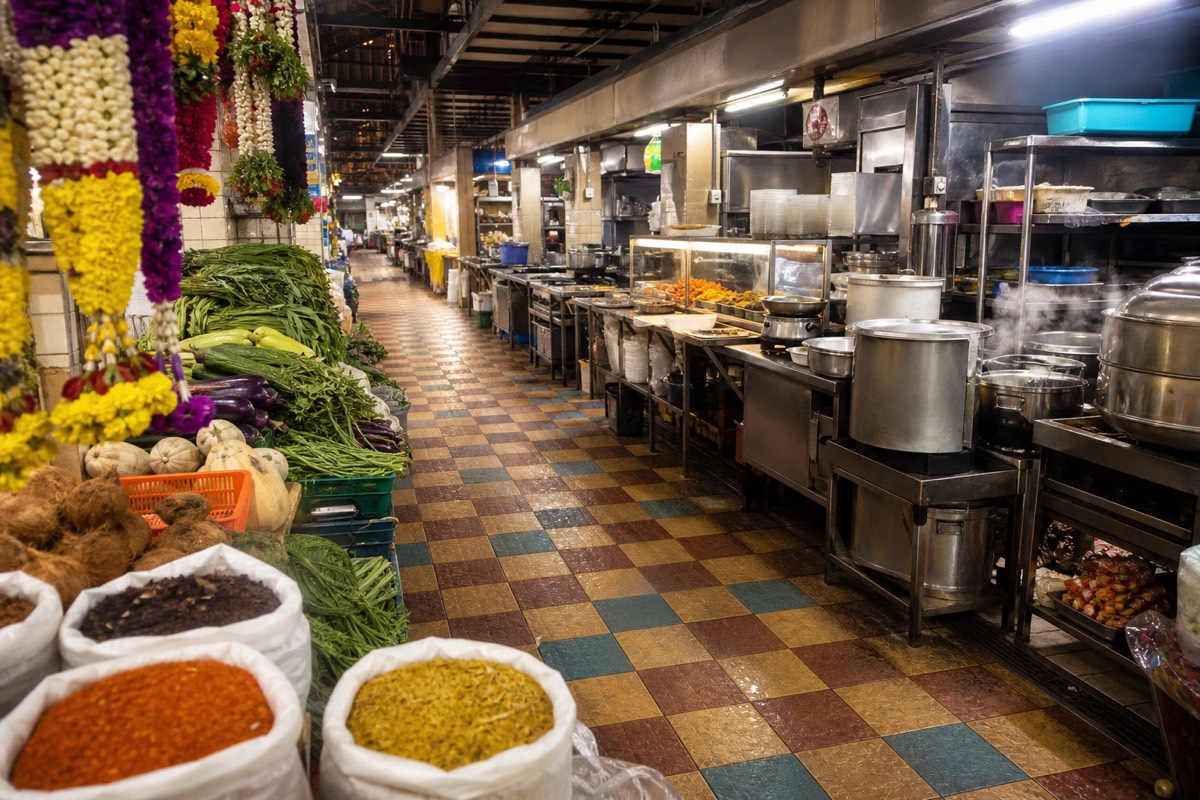
Kampong Glam and the surrounding Arab Street district are Singapore's most concentrated halal dining zone, anchored by Sultan Mosque, while Tekka Centre in Little India and Geylang Serai Market in the east are the two hawker centres most consistently recommended for reliable halal options. None of these guarantees every single stall inside is certified, but the odds run heavily in your favour compared with a random hawker centre elsewhere on the island.
| Area / hawker centre | Why it's a strong halal bet |
|---|---|
| Kampong Glam / Arab Street | Singapore's historic Muslim quarter; streets like Bussorah, Haji Lane and North Bridge Road are dense with halal-certified Malay, Middle Eastern and Turkish spots |
| Tekka Centre | Strongly Muslim-friendly hawker market known for Indian food, including a Michelin-recognised biryani stall running since the late 1960s |
| Geylang Serai Market | The cultural heart of Singapore's Malay community, especially busy and halal-forward during Ramadan's night market |
For a wider look at hawker centres beyond the usual tourist shortlist, a separate guide covers Tekka alongside two other centres worth a detour. Kampong Glam and Chinatown are also both covered from a broader visiting angle, not just a food one, so it's worth reading a bit before you go if this is your first stop in the district.
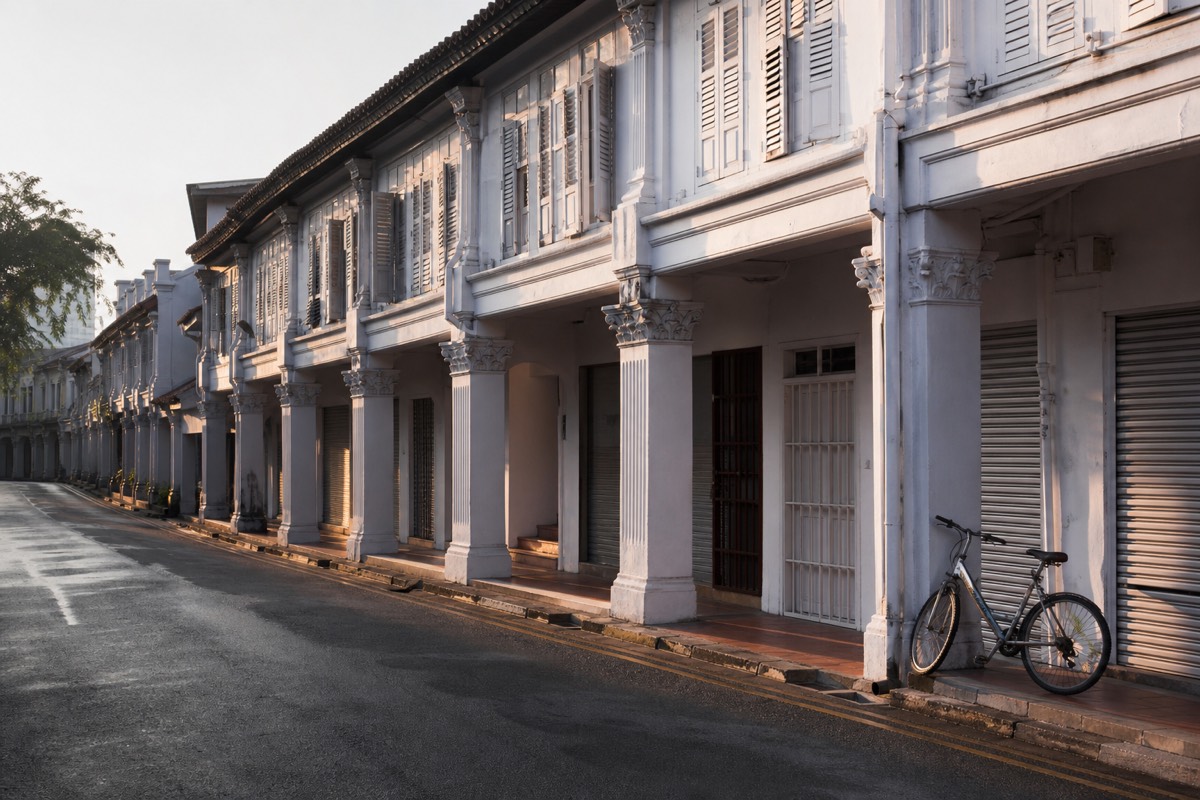
Kampong Glam itself is worth understanding as a neighbourhood, not just a food stop. Arab Street, Bussorah Street and Haji Lane grew up around the Sultan Mosque, first built in 1824 and rebuilt in its current gold-domed form, completed in 1932, and the streets around it have functioned as Singapore's Muslim quarter since the area was set aside for Arab, Bugis and Malay settlement under Raffles's 1822 town plan. That long history is part of why the food here skews so consistently halal: it grew up serving a Muslim community, rather than being retrofitted for one later.
Source: Roots.gov.sg, Sultan Mosque national monument entry.
Tekka Centre sits at the opposite end of the ethnic spectrum culturally, anchored in Little India rather than the Malay quarter, but lands in a similar place practically. Its ground floor wet market and food centre serve a largely South Indian and Indian-Muslim clientele, and the biryani, prata and rojak stalls there reflect that community's own everyday eating rather than a tourist-facing selection.
What Halal Dishes Should You Actually Order?
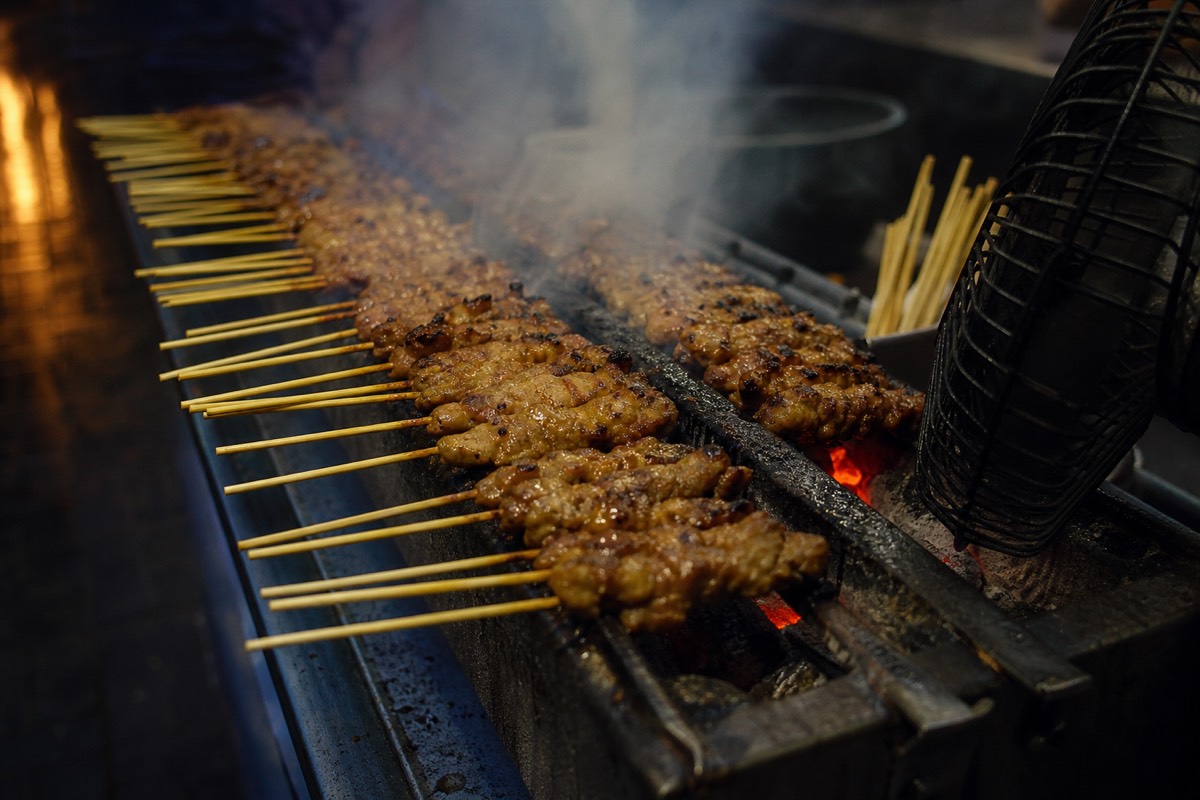
Nasi padang, mee rebus, roti prata, murtabak, satay and biryani are the six dishes worth learning by name before a halal hawker crawl, spanning Malay, Indian-Muslim and Middle Eastern traditions that make up Singapore's halal street food scene. Satay in particular is generally halal by nature at Malay-run stalls, since it is grilled meat on skewers with a peanut sauce, no pork or lard involved in the traditional recipe, though it is still worth confirming certification at any specific stall rather than assuming.
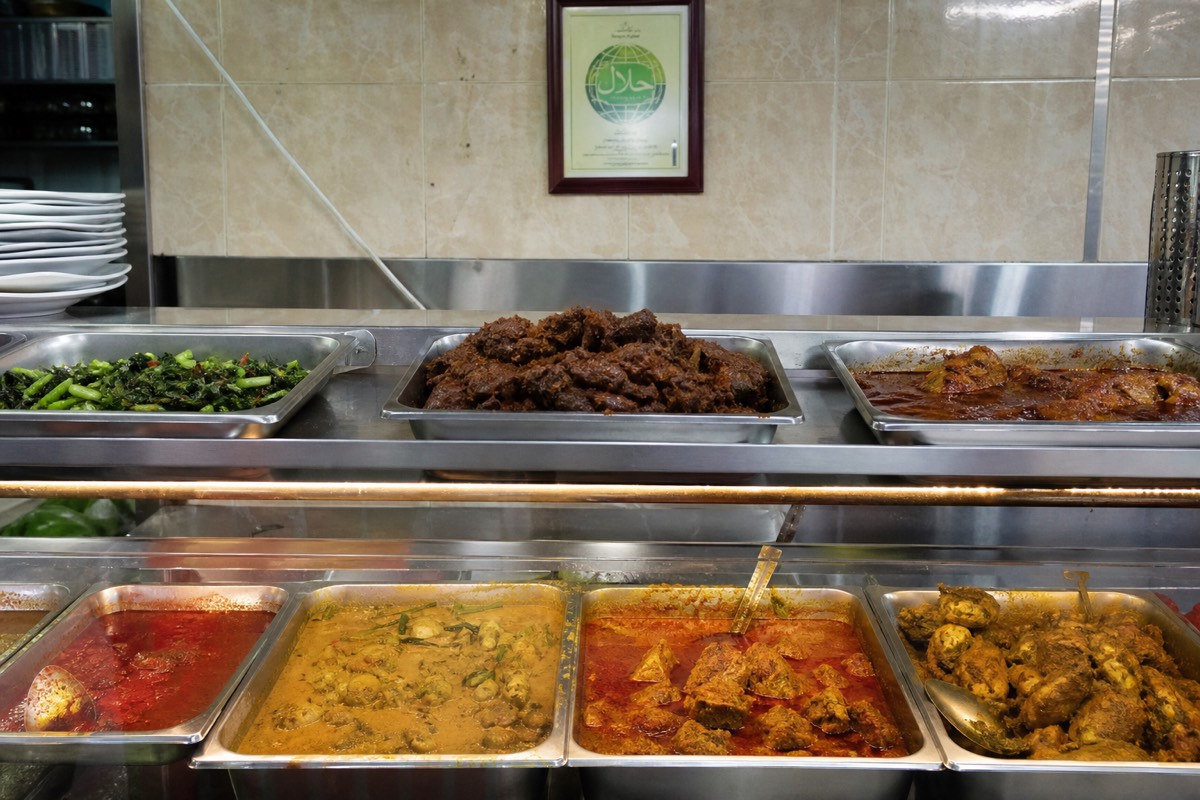
Nasi padang deserves a slightly longer explanation since it confuses first-timers more than the others. It is not one fixed dish but a format: a tray of rice with a rotating buffet of curries, fried items and vegetable dishes laid out at the counter, and you point at whatever combination looks good rather than ordering off a printed menu. This makes it one of the easier halal dishes to customise for taste or spice tolerance, since you build the plate yourself rather than receiving a single fixed preparation.
Roti prata is worth a specific mention too, since it shows up on almost every hawker menu across the island regardless of the stall's other specialities, plain or with a cracked egg folded in, torn apart by hand and dipped into a thin curry sauce on the side. It is one of the more consistently halal-friendly dishes to fall back on if you are somewhere unfamiliar, since prata stalls are usually run by Indian-Muslim hawkers, though the same rule applies here as everywhere else in this guide: a quick glance for the certificate is still worth the ten seconds it takes.
| Dish | What it is | Where to find it |
|---|---|---|
| Nasi padang | Steamed rice with a buffet-style choice of curries, fried chicken and vegetables | Malay stalls at most hawker centres, common in Geylang Serai |
| Mee rebus | Yellow noodles in a thick, sweet-savoury potato-based gravy | Malay hawker stalls islandwide |
| Roti prata | Flaky pan-fried flatbread, served plain or with egg, with curry for dipping | Indian-Muslim stalls, especially strong around Tekka Centre |
| Murtabak | Stuffed savoury pancake, usually minced meat, egg and onion, folded and grilled | Kampong Glam and Geylang Serai stalls |
| Satay | Grilled skewered meat with peanut sauce, rice cakes and cucumber | Malay satay stalls; also the centrepiece of Lau Pa Sat's evening Satay Street |
| Biryani | Spiced, layered rice with chicken or mutton, a Tekka Centre specialty | Indian-Muslim stalls at Tekka; see what Michelin's affordable-eats recognition actually means for context on why some hawker stalls get singled out |
A note on that last one: Lau Pa Sat's Satay Street is a popular tourist stop, but it is worth checking individual satay stalls there for certification rather than assuming the whole street is uniformly halal, since Lau Pa Sat itself is a mixed hawker centre with plenty of non-halal Chinese food stalls inside the main hall as well.
What About Drinks and Desserts, Are They Automatically Halal Too?
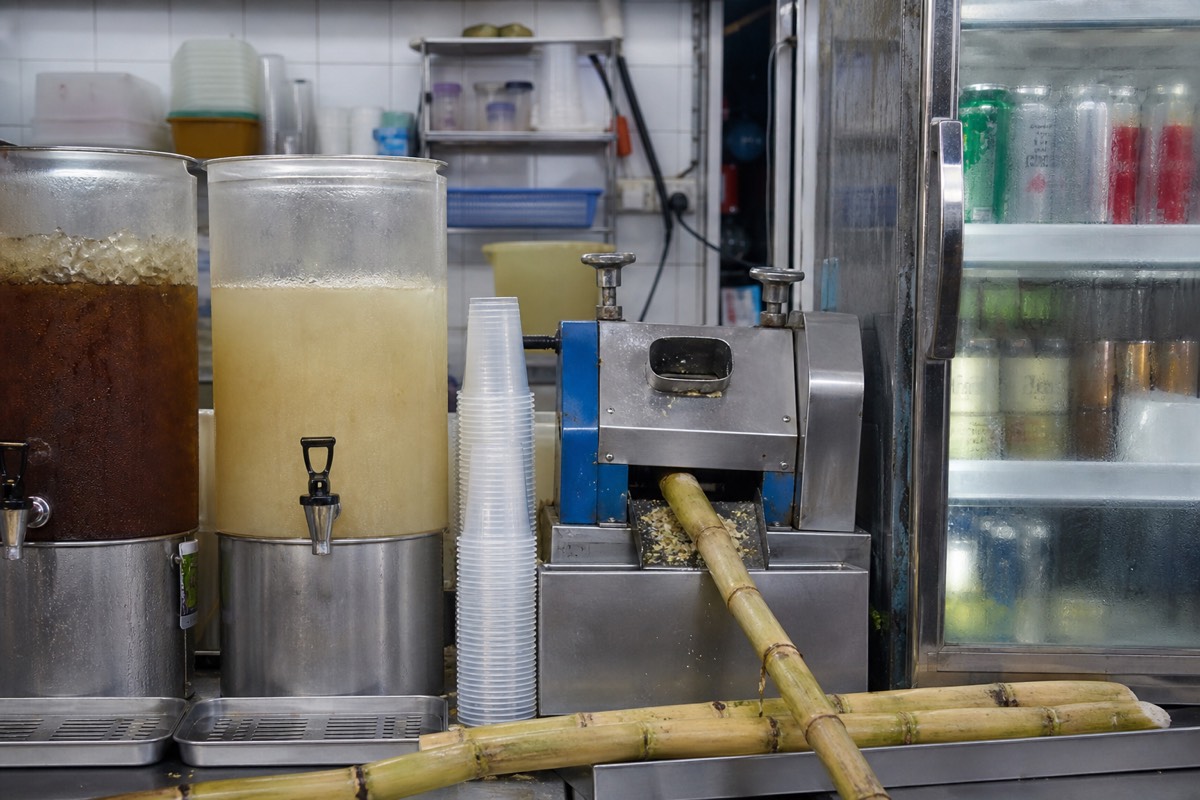
No: drink stalls and dessert stalls need their own separate MUIS certification, and a halal-certified food stall next door does not automatically mean the sugarcane juice or ice kacang stall beside it is certified as well, since these are typically run as independent businesses even within the same hawker centre. This catches out travellers who assume a centre's overall halal-friendly reputation extends to every drink and dessert stall inside it.
Alcohol-based flavourings and colourings occasionally appear in syrups and shaved-ice toppings, which is exactly the kind of ingredient MUIS certification checks for and a casual glance at a menu cannot. If a specific drink or dessert matters to you, treat it the same way as a food stall: look for the certificate, or ask.
| Item | What to check |
|---|---|
| Sugarcane juice, fresh fruit juice stalls | Generally low risk but still check for a displayed certificate if it matters |
| Ice kacang / air batu campur (ABC) | Check syrups and toppings; some use non-certified flavourings |
| Bandung, teh tarik, kopi stalls | Usually run by the same Malay or Indian-Muslim operators as certified food stalls, but confirm independently |
| Packaged snacks sold at the stall | Look for a MUIS logo on the packaging itself, separate from the stall's own certificate |
What About Chinese and Peranakan Hawker Dishes, Can They Ever Be Halal?
Yes, some can, but they are the exception rather than the rule: a handful of Chinese-style stalls do hold MUIS certification, usually by substituting pork and lard entirely, but the majority of Chinese hawker dishes, from char kway teow to bak kut teh, are cooked with pork or pork fat as standard and are not halal by default. Assuming a dish is safe simply because it looks like plain noodles or rice is a common and avoidable mistake.
Peranakan food sits in an even greyer zone for a visitor trying to judge quickly. Many Peranakan dishes use no pork at all in their base recipe, leaning on chicken, seafood and a heavy spice paste instead, but individual family recipes vary, and stock or seasoning bases occasionally include ingredients that would not pass MUIS review even when the finished dish looks meat-free. The safest approach with any unfamiliar Chinese or Peranakan-leaning stall is the same one that applies everywhere else in this guide: check for a certificate, or ask before you order rather than after.
| Dish | Halal by default? | Note |
|---|---|---|
| Char kway teow | No | Traditionally cooked in pork lard with Chinese sausage |
| Bak kut teh | No | Pork ribs are the entire point of the dish |
| Hainanese chicken rice | Sometimes | Chicken-based, but rice is often cooked in chicken fat rendered alongside other non-halal dishes at mixed stalls; check certification rather than assume |
| Laksa | Sometimes | Coconut curry base can be halal-friendly, but cockles and pork lard appear at many Chinese-run stalls |
| Nasi padang, mee rebus, satay, biryani | Generally yes at Malay/Indian-Muslim stalls | Still confirm certification at the specific stall |
If you are travelling with a mixed group where some members eat pork-based hawker food and others need certified halal options, the practical solution most private food-tour guides use is splitting a visit across two hawker centres or two zones of one large one, rather than expecting every stall in a single building to work for everyone. It is a more honest approach than treating any one hawker centre as a one-stop solution for every diet, and it is worth raising with a guide on a personalized street food tour before the day starts rather than discovering the mismatch mid-tour.
How Do You Plan a Halal Hawker Crawl in a Half Day?
A realistic halal hawker crawl covers Kampong Glam in the morning for pastries and prata, moves to Tekka Centre around midday for biryani and mee rebus, and closes with an evening walk through Geylang Serai if timing allows, giving three distinct culinary traditions in one day without doubling back across the island. Each of these areas sits on or near the North-East or East-West MRT lines, keeping travel time manageable between stops.
Timing this around prayer times is straightforward in Singapore, since Sultan Mosque in Kampong Glam and several mosques near Tekka and Geylang Serai are within easy walking distance of the food stops themselves, unlike destinations where mosques and food districts sit far apart. During Ramadan specifically, Geylang Serai hosts Singapore's largest Ramadan bazaar, running for roughly the length of the fasting month with hundreds of food and retail stalls set up around the market and staying open into the early hours ahead of Hari Raya, a very different scene from an ordinary weekday afternoon there. Outside that window, the market runs its regular daytime hawker centre hours with a smaller, steadier stall lineup.
Source: Timeout Singapore, on the Geylang Serai Ramadan bazaar.
| Time | Stop | What to eat |
|---|---|---|
| Morning | Kampong Glam / Arab Street | Turkish or Middle Eastern pastries, coffee, a light roti prata |
| Midday | Tekka Centre | Biryani, mee rebus, roti prata with curry |
| Evening | Geylang Serai Market | Satay, murtabak, nasi padang |
For readers building a broader eating itinerary rather than a halal-specific one, a first-timer's guide to Singapore's most famous hawker dishes covers the wider spread including the Chinese dishes that will not fit a halal itinerary, and a broader cheat sheet on what to eat as a first-time visitor is useful for planning meals across a full trip rather than one afternoon. First-time visitors to any hawker centre, halal-focused or not, also benefit from a quick primer on hawker centre etiquette, covering things like chope-ing a table with a packet of tissues and returning your own tray, both genuinely local customs that catch visitors off guard.
A guided walk through Kampong Glam and Little India solves a real, specific problem for Muslim travellers: you spend less time checking signage stall by stall in an unfamiliar language, because the stops are chosen in advance. That matters more here than on a general food tour, where a wrong guess just means a mediocre meal rather than a dietary rule broken without realising it. It is a small difference in stakes that makes a private food tour worth weighing seriously for anyone who would rather not spend a holiday afternoon second-guessing a hawker centre's signage.