What Is Bak Kut Teh, Really? (Meaning, Origins, Peppery vs Herbal)
The name sounds like it should describe a tea recipe. It doesn't, and the real story behind the words is more interesting than the misread.
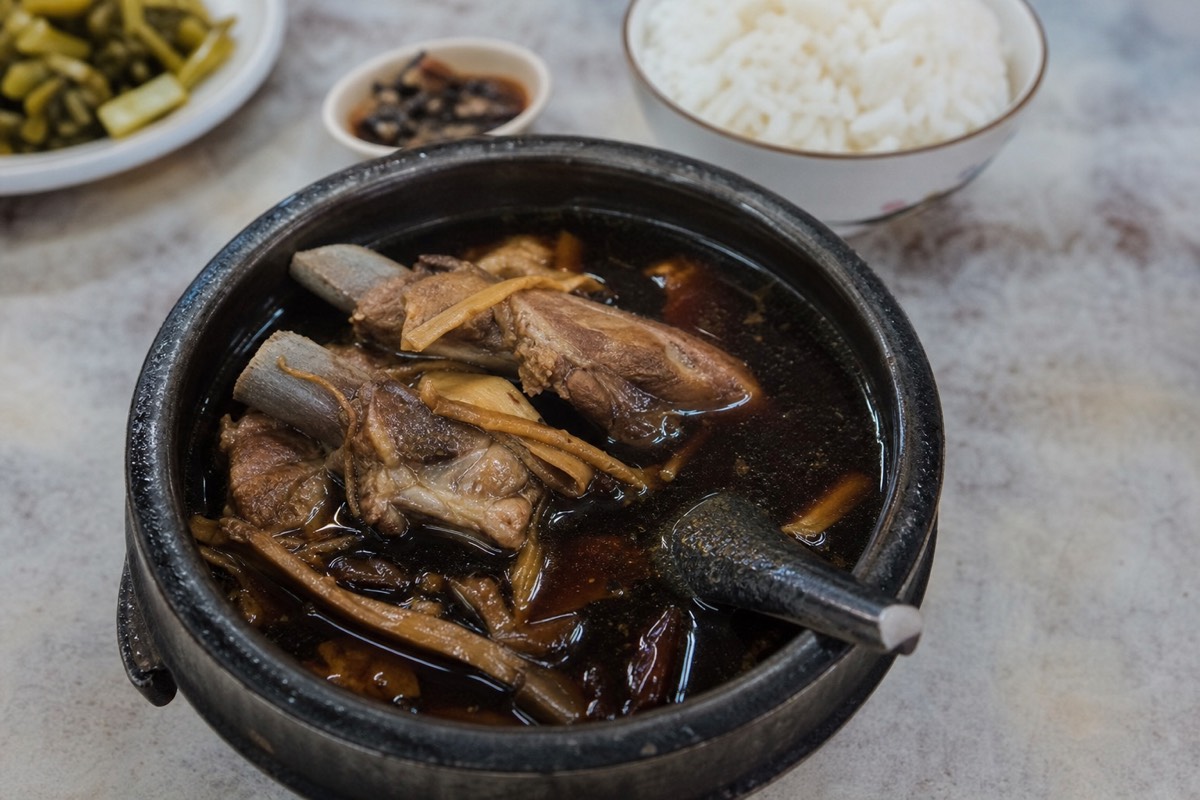
Order bak kut teh at a Singapore or Malaysian coffee shop before 8am and the scene tends to look the same: a claypot of pork ribs steaming over a portable burner, a small pot of Chinese tea on the side, and regulars cracking peanut shells while the broth cools enough to eat. Given the name, it's easy to assume the dish is some kind of tea. It isn't, and the actual story is more interesting than the misread.
What Does "Bak Kut Teh" Actually Mean?
"Bak kut teh" is Hokkien for "meat bone tea": bak means meat, kut means bone, teh means tea, and yet the bowl itself contains no tea leaves at all. The name describes the whole meal rather than a single ingredient in the pot. Per the National Library Board's Infopedia entry on the dish, bak kut teh is a pork rib soup stewed with garlic, cloves, cinnamon, star anise, fennel seeds and coriander. The "teh" most likely refers to the strong pot of Chinese tea traditionally served on the side, thought to cut the richness of the pork fat and settle the stomach after a meal that's otherwise heavy on oil and garlic. Order a bowl and a server will usually bring the tea unasked, poured into small handleless cups, exactly as it has been for decades.
Where Did Bak Kut Teh Come From?
Bak kut teh's roots trace to early-20th-century Hokkien immigrants working the docks of Port Swettenham, today's Klang in Malaysia, and Singapore's own harbour, who needed a cheap, restorative meal after hours of loading and unloading cargo. Pork bones were inexpensive scraps, and simmering them for hours with garlic and warming spices turned very little into something filling. Food-history accounts place the dish as already common in both Klang and Singapore coffee shops by the 1920s, long before it became the sit-down meal sold today, and it grew up as dock-worker food rather than restaurant food. That's part of why the ritual around it still feels informal: bare tables, a kettle of tea nobody has to ask for, and a shared bowl of rice. Klang and Singapore both lay some claim to the dish's origin, and the honest answer is that both port towns were developing near-identical versions of it around the same period, among the same wave of Hokkien laborers.
Peppery vs Herbal: What's the Real Difference?
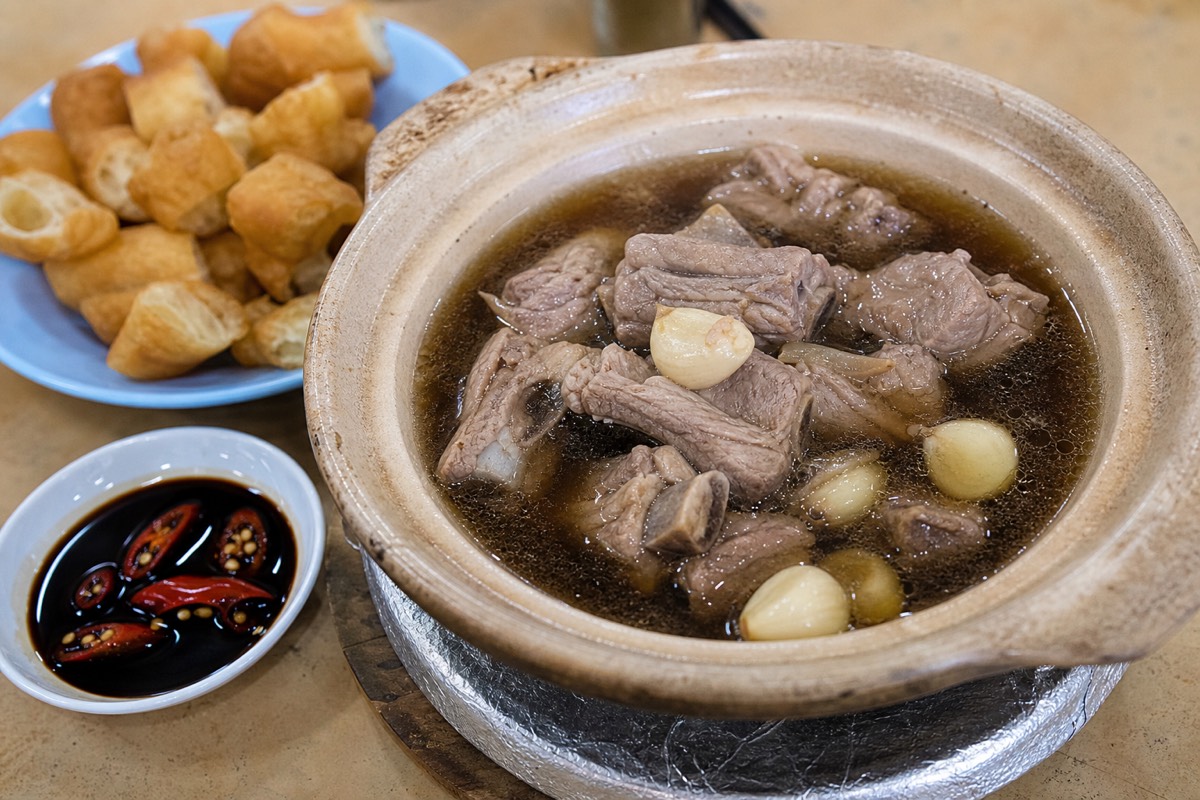
The two dominant styles differ mainly in how many spices go into the pot: Singapore's peppery Teochew-style broth leans almost entirely on white pepper, garlic and a little soy sauce for a clear, sharp soup, while Malaysia's herbal Hokkien-style, most associated with Klang, simmers a dozen or more ingredients, including dong quai, star anise, cinnamon and liquorice root, into a dark, medicinal-tasting broth. Neither version is more authentic than the other; they split from the same coolie-food root and each region kept refining its own direction. Tatler Asia's side-by-side comparison of the two styles puts it plainly: Singapore leaned into pepper and clarity, Malaysia leaned into herbs and depth. If a menu just says "bak kut teh" with no further description, it's worth asking which style the stall serves, since regulars tend to have a strong preference for one over the other.
| Style | Broth | Main seasoning | Most associated with |
|---|---|---|---|
| Peppery (Teochew) | Clear, light brown | White pepper, garlic, a little soy | Singapore |
| Herbal (Hokkien) | Dark, almost black | Dong quai, star anise, cinnamon, liquorice root | Klang, Malaysia |
What to Order When You Sit Down
A full bak kut teh order starts with the pork rib soup itself, usually a mix of rib and belly cuts, then fills out with sides built to soak up or cut through the broth. Classic additions include youtiao (fried dough fritters) torn up and dunked straight into the soup, silky tofu puffs, salted preserved vegetables (kiam chye) for a sour edge, braised peanuts, and a bowl of plain white rice. Most stalls set out a small dish of dark soy sauce with sliced chilli padi on the side for dipping the meat, kept separate from the broth itself so the soup stays clean. Many stalls also offer add-on ingredients beyond the base ribs, such as pig's stomach, liver or intestines, for diners who want to build the bowl out further, and some kitchens serve a dry version, often called bak kut teh goreng, where the ribs are stir-fried in a thick, dark chilli-and-garlic sauce instead of served in broth. For the full where-to-eat picture, including which stalls lean toward each style and which cuts to ask for, our complete bak kut teh guide covers that ground in more depth than this piece is trying to.

Is Bak Kut Teh Easy to Find as a Tourist?
Yes: bak kut teh is one of the more widely available hawker dishes in Singapore, sold at hawker centres, standalone coffee shops and dedicated restaurants across the island, and it's a common breakfast order rather than a niche specialty you need to hunt for, with many stalls doing steady business from the moment they open through late morning. It sits alongside dishes like Hainanese chicken rice as part of the wider hawker culture that earned UNESCO Intangible Cultural Heritage status in 2020, and it's a useful example of how much real regional variation hides behind what looks like a single "one dish" answer. Some of the older stalls still serve the soup in a charcoal-heated claypot brought straight to the table, a nod to how the dish would once have been kept hot through a meal; gas burners have replaced charcoal at most modern locations, but the tabletop ritual itself hasn't really changed. First-time visitors unsure where to start with hawker food generally, including how to order, how to pay and what the unwritten rules are, may find our hawker centre etiquette guide useful, and our broader first-timer's cheat sheet on what to eat in Singapore covers where bak kut teh fits next to the rest of the city's hawker staples.